Dorset Ancestors Rotating Header Image

Tryphena Sparks 1851-1890

She was born on the 20th of March 1851. Seven days later her mother went to the Registry Office and formally declared her daughter’s arrival in to the world. She was the sixth child so her parents were by now quite used to taking their children to St. Mary’s church at Puddletown for baptism and they were quietly confident this would be the last time – mother then being 46 years old. Although Tryphena was not baptised until she was six years old.

Fit and healthy, the girl sailed through school and at the age of 15 became a pupil teacher.  Her parents were justly proud when at the age of 18 she went on to a teacher training college in London.  On completion of her course in December 1871 she immediately applied for and was offered the position of headmistress at a day school for girls in Plymouth, Devon.  This was a prestigious post with a salary of about £100 a year – a princely sum for someone from a rural background well used to living amongst people scratching a living from the countryside.

Six years later she resigned her teaching post at Plymouth and married the proprietor of a public house. The couple had a daughter followed by three sons. After the birth of her last child there were complications from which she never fully recovered. Her health deteriorated and she passed away on the 17th of March 1890, just three days before her 39th birthday. She was buried at Topsham in Devon.

Her life had been full, interesting and worthwhile but not remarkable, which begs the question: why, when we enter her name into an Internet search engine, are we offered thousands of entries? Being the cousin of Thomas Hardy would not alone account for Tryphena Sparks’ posthumous celebrity.

In 1890 on hearing of her death Hardy penned a poem he entitled ‘Thoughts of Phena at News of Her Death’ in which he referred to her as “…my lost prize.”  The poem was first published as part of Wessex Poems in 1898 but  interest about a relationship between Tryphena and Thomas Hardy really took hold in 1962 with the publication of ‘Tryphena and Thomas Hardy’ by Lois Deacon in the ’Monographs on the Life, Times and Works of Thomas Hardy’ series.  Deacon claimed the couple had a child together and suggested Tryphena was the daughter of her “supposed elder sister,” Rebecca.  In 1968 Lois Deacon and Terry Coleman published their book ‘Providence and Mr Hardy’ repeating the sensational claim about their being a child.

A few Hardy scholars came out and supported Deacon in her claims and by the early 1970’s even the pages of The Dorset Year Book became part of the battlefield for warring scholars. The claims have been given no credence by Hardy biographers and we have failed to find any hard evidence such as a birth certificate, baptism register entry, census record, or death certificate and conclude that Lois Deacon read too much between the lines of the novels and poetry of Thomas Hardy and relied too much on the memories of a very old lady, Mrs. Eleanor Bromell, Tryphena’s daughter.

Accountants, we are told, can make figures say whatever you want them to say and so it is often the case with family historians who are tempted to bend the facts to fit in with their wishful thinking. It seems Lois Deacon may have fallen into this trap and read far too much into three little words and in the process elevated a young Dorset born school teacher into something approaching cult status.

There are photos of Tryphena Sparks in the photo gallery

Matthew Chubb of Dorchester

In the early years of the 17th century the wealthiest man in the prosperous trading town of Dorchester was Matthew Chubb. During his lifetime he held all the important offices of the borough and for a time he was the Member of Parliament for the town. He was enterprising and hard working, though not altogether a self-made man. Much of his wealth was inherited and his journey along the path too riches was helped by marrying well – twice. He was the kind of man who craved the acquaintance of his social superiors, even though financially he had the better of them. Arguably, he was a generous man but his charity was usually self-serving; he liked his good works to be visible and acknowledged.

Matthew was the son of John and Agnes Chubb. John came from Misterton near Crewkerne in Somerset and he married Agnes, the daughter of John Corbyn, a prominent member of Dorchester society. Matthew was born in 1548 and shortly after his birth the family moved to Dorchester where John prospered and quickly established himself, becoming a member of The Corporation and the Town Steward by 1555. There is evidence that John Corbyn conveyed property to John Chubb and in due time this property passed to Matthew.

In the 1560’s Matthew set up a school in Dorchester but abandoned the project when The Corporation sponsored a Free School. He became a scrivener, drawing up wills and conveyances and he appears to have had some negotiating skills, he lent money and was a goldsmith. Like his father he became a member of The Corporation and was himself appointed Town Steward in 1583. He was sent to Exeter by The Corporation to lobby and negotiate for Dorchester to keep the Assizes. In 1601 he became Member of Parliament for the town and was re-elected in 1604, though, on this occasion claimed his health was not up to the job but his colleagues still re-elected him. Actually, Matthew was in good health throughout this period and we are left to assume that it did not suit him to have to be away in London so much.

Towards the end of the reign of Elizabeth I and the early years of the reign of James I he was the most important member of The Corporation but his influence began to wane once the Reverend John White arrived in the town in 1606. It seems Matthew Chubb had quite liberal views and he frequently disagreed with some of the ideas the minister was promoting to his congregation at Holy Trinity. After the great fire of 1613, which destroyed much of the town, many people were convinced they were being punished for their loose morals; congregations grew in all three Dorchester parishes following the fire.

John White was a moderate puritan, though clearly not moderate enough for Matthew Chubb. At one point things between the two men reached such a low ebb that the layman preferred to walk the lanes to Fordington to say his prayers and hear a sermon. It was generally believed that Chubb was behind the anonymous pamphlets distributed in Dorchester suggesting all manner of impropriety on the part of the minister, whose popularity was in the ascendancy.

On November 12th, 1613 Matthew Chubb was authorised by King James I to loan £1,000 towards the rebuilding of Dorchester after the great fire. He and his wife rebuilt the George Inn and endowed an almshouse for women.

Matthew Chubb died in 1617.  His widow, Margaret, died in 1628, when their only son and the heir to their fortune was Matthew Chubb Junior but at the time of his mother’s death he was still under age. Margaret Chubb made a will on April 18th 1625 leaving all her lands and property to Robert Coker on the condition that Joan, his second daughter, married her boy. Robert Coker was a goldsmith who had been a good friend of Matthew Chubb Sr. Matthew and Joan married but Matthew passed away in 1632 and on the January 23rd 1633 Joan Chubb conveyed the property back to her parents, Robert and Martha Coker.

Mrs Bligdon’s Bakery and the Birth of the Dorset Knob

This is the story of a Dorset woman who owned and ran the bakery where the first Dorset Knobs were baked. Maria Bligdon could not claim to have conceived the recipe for the delicacy but she was certainly instrumental in its birth and growth in popularity, particularly in West Dorset, where it is still produced.
 
In 1815, Fordington was a densely populated parish on the edge of the county town of Dorchester. Living conditions there were filthy and squalid, so it is difficult to imagine what could have brought William Pitcher to this place from Powerstock, where he would have enjoyed a rural lifestyle with fresh air in abundance. The same could be said of Maria Longman who came from Rimpton Mill near Yeovil, just over the county border in Somerset. It is possible these two young people knew each other previously or may even have travelled there together because on the 22nd of March 1815 they were married at St. Georges Church.

After marrying they didn’t linger in Fordington; they travelled through Dorchester they headed west, settling in the parish of Litton Cheney. Here, they would have been more at home. The stone and thatched cottages, many dating back to the 17th century at ease beside the twisting lanes and busy streams, would have been much more to their liking than the over-crowded tenements of the Dorchester suburb.
 
William and Maria would have worshipped here at the original church dedicated to St. Mary; what we see today is the result of an extensive restoration completed in 1878. It is at St. Mary’s their children were all baptised: Jesse on 11th of August 1816; Mary Brown on 31st of May 1818; John on 5th of March 1820; Nimshi on 13th of October 1822; Levi on 26th of March 1824; Daniel on 9th of September 1826; Maria Brown on 11th of August 1828; Elizabeth Martha Longman on 25th of July 1830 (Buried on 10th of May 1836); William Longman Brown on 19th of May 1833; and Jane on 18th of December 1834 (Buried on 4th of January 1835.) Brown is a reference to grandmother Pitcher’s maiden name.

William Pitcher was born at Powerstock, where he was baptised on Christmas Day 1789. William was the first son of Samuel and Mary Pitcher and he was a miller. Maria Longman, his wife, was born in 1795 at Rimpton Mill, which is near Yeovil and not so very far away from the Dorset town of Sherborne.
 
William handed down his knowledge of milling and baking to his children. In 1851 we find his eldest son, Jesse, working as a journeyman miller at Malassie Mill, St. Savior, Jersey; Levi was working as a miller at Notton Mills, Maiden Newton and William was a Journeyman Baker still living with his parents. One son, William, was a tailor by trade and lived at Portesham.

But it is their daughter Maria who is of particular interest to us. By all accounts she was a formidable woman with striking looks and great strength; reputedly she could handle a sack of flour as well as any man and was known for having her own way.

Early in 1852 Maria married John Bligdon, a man born and brought-up in Litton Cheney, where he was a boot and shoe maker. Soon after their marriage, Maria, who until then had been working as a servant, was able to persuade her husband to let her start a bakery business in the village, which became known as White Cross Bakers and later as White Cross Grocer and Baker Shop.

The business started in a small way with one assistant but quickly grew. Bakery products were delivered by horse and cart to villages with in a radius of about ten miles. In 1881 many villages in Dorset were cut off for days because of deep snow. To meet the pressing need of some of the villages her horses were shod with special nails that prevented slipping, the bread was packed into panniers slung on each side of the horses and a convoy set off on its difficult journey to reach some of the more distant customers.

In 1881 Maria Bligdon employed three bakers and two servants, all living on the premises. Her husband continued his business as a cordwainer. One of these bakers, a Mr Moores, brought with him a recipe for Dorset Knobs, a round savoury biscuit that quickly became a favourite with the customers. It is named after the Dorset knob button. The recipe consists of bread dough to which extra sugar and butter are added. The dough is then shaped by hand and baked three times; the result is very crumbly and similar to a rusk.
 
Nellie Titterington, Thomas Hardy’s, parlour maid, revealed that the author “would most enjoy a cup of soup, followed by two boiled eggs. He finished his meal with Dorset knobs and Stilton cheese, both favourites of Mr Hardy, Dorset knobs especially.”

With fat bacon the Dorset Knob formed the main diet of the men employed by Maria Bligdon at her Litton Cheney bake house and the biscuits were despatched to Dorset soldiers fighting in Africa during the Boer Wars.

Pound Cake was another speciality of the bakery and sold for sixpence a pound; her gooseberry tart was also very popular. A custom from the old days was the making of dough cake; the dough was supplied by the bakery to the villagers who made it into cakes which were baked at the bake house.
 
Those less fortunate, living off parish relief and seeking employment, were given penny bread tickets, which the bakery accepted towards the cost of a loaf of bread, at that time about four pence. The bakery would accept about £5 worth of tickets every month. Given that in those days there were two hundred and forty pence to the pound we can see Mrs Bligdon’s bakery was very busy.

Maria Bligdon was buried at Litton Cheney on 8th of January 1891 aged 63. Her husband, John, died in 1896. It is said that one of their sons took over the business and closed it in 1916. We have found no record of any children and believe it was a nephew who took over the business.

When Mr Moores left the bakery he went to Morcombelake where his sons started a business and produced Dorset Knobs. That business is still in existence today and during January and February the firm continues to bake Dorset Knobs, which are retailed mainly through smaller grocery outlets and exported.

The Trial of Augustine Elliott

Two men appeared at the Summer Assizes in Dorchester on the 15th of July 1749 to answer for their part in the plundering of the Dutch vessel Hope when it ran ashore on the Chesil on the 16th of January 1748, and resulted in ten days of lawlessness on the Chesil.  One of those men was Augustine Elliott; we do not have the name of the other man.

Augustine Elliott was a Portland man. The son of John and Joan Elliott, he was baptised on the 25th of April 1696 and on the 4th of April 1716 he married Joan Mitchell. The couple had a daughter, Edith, baptised on the 15th of February 1717 but we haven’t found at Portland any other children from the marriage.
 
The charge against him was: “Feloniously stealing and carrying away ten ounces of gold and twenty ounces of silver from the ship called the Hope, the property of Hendrick Hogenbergh, merchant of Amsterdam, and others.”

Counsel for the prosecution said in his opening remarks: “My Lord and gentlemen of the jury, I am counsel for the Crown against the prisoner at the bar who stands indicted and charged with a crime of a very heinous nature. Considered in itself it is horrid and barbarous, contrary to the first principle of reason and impressions of humanity. Religion most severely threatens and condemns it. A crime it is which the laws of all civilised societies most strictly punish; a crime in its consequences highly prejudicial to the honour and commercial interest of the kingdom in general. And such in every respect as cries aloud to public justice to lift an avenging hand.”

Counsel went on to describe the conditions at sea and the lack of light from the Portland lighthouse that conspired to cause the Hope to run ashore and said of the people who went to the beach from Portland, Wyke and Weymouth “these people I’m sorry to say it, came not with dispositions of men, but with those of beasts of prey, They came for rapine and plunder.” Counsel said of Augustine Elliott he was “accustomed to prey and ravages of this kind”  and described him as one of two men  who led and organised the men on the beach into one “merciless battalion”  and then sub –divided them into groups of twenty. The prosecution claimed: “In vain did the captain and his company in faltering foreign accents as well as they could “No wreck. The goods ours. Bring it to we and we will pay for it” – meaning the salvage.”

The court was told: “it seems the pillaging parties threw all they could snatch into one heap, for the security of which the prisoner at the bar (Elliott) was posted – as commander of an armed select party. As soon as the reflux of the sea had made the ship accessible, the scattered bands were again united – in a hostile manner armed with cutlasses, clubs, hooks and such like. They marched down to the ship swearing it was a wreck and if not so, they could make it a wreck. Shocking to relate!…the injury of strangers in distress is adding barbarity to iniquity and committing an act exceedingly sinful in the sight of both God and man.”

We learn from the court hearing that the captain with some of his crew made their way off the beach and took the goods they had managed to save to Fleet House, where they had hoped the King’s officers would help them. It seems they were disappointed. Counsel claimed in court: “They came indeed, but basely deserted their duty. Their behaviour was despicably timorous and infamously negligent.”

The description of the events to the court reached the point where there were thousands of people on the beach engaged in plunder when the forces of law and order determined to step in. Three Justices of the Peace with a well-armed group of men finally halted the wreckers and proceeded to search from house to house through the hamlets, villages and towns making many people surrender their ill-gotten gains to the agents of the ship’s owners. About £25,000 worth of goods were retrieved.

Elliott, it was claimed, was the principal organiser and the court was told “He was the muster-master, the treasurer, and divider of the prey amongst his plundering regiment.”

Captain Corneliz came to give evidence but was shy of saying how much his cargo was worth, saying only that it was rich and worth over £30,000. His command of English was not very good.

Next up was Bartholomew Cooper, officer of Customs at Portland. He told the court: “Early Monday morning I heard a loud talking in Chesil parish in Portland that a ship was on shore. I got up, but the thing being doubtful, I went and fed my horse with oats at a stable which was at some distance.” Copper was not a very co-operative witness and Counsel for the prosecution had to question him hard to get him to answer any question directly; we might be excused from thinking Cooper was on Augustine Elliott’s side.

It appears that once Cooper had determined there was a ship wreck, he and two other officers of Customs rode along the beach. Under questioning Cooper eventually told the court that there were at least 2,000 people digging and turning over the beach, the ship was pretty much dashed to pieces and he added “My business of surveying would not let me stay long.”

Further evidence was provided to the court that plainly supported Elliott. Another officer of Customs, Benjamin Roper, an officer in Portland quarries, told how he was at Schollard’s public house at Chesiltown when a great number of people clamoured for a division of the loot. Elliott, said Roper, was for keeping the money together till the owners called for it: “But within doors they insisted on sharing the money, as I was told, or else they would burn the house.”

Another witness, John Comben, gave similar testimony. He said “when bags were found they were hoisted on his horse and taken to a boat on the shore of the Fleet…” He said he did not see Elliott in the boat “but saw a man at some distance who mid or mid not be the prisoner. The Captain, I mind, did ask me for a bag but then I had none, The Tuesday after there were a great many of Weymouth, Wyke and Portland at Chesiltown to have the money divided. I did not see the prisoner at first myself but after I did and he said he was for keeping the money together till called for by the owners. But many threatened him, if the money were not divided, and accordingly, it was the next morning – it was £7 a piece.”

Elliott’s defence Counsel took this argument further. “We have several sufficient witnesses to prove,” he said, “that the prisoner in the whole affair acted an open and public spirited part. What he assisted in carrying away home was with an intention to save and not destroy; to preserve for the owners and not to steal and keep from them. On this generous fixed principle he not only acted himself but to his utmost laboured to bring the company he was concerned with to behave in the same humane and honest manner.”

The defence produced a receipt for the money Elliott was charged with stealing, it had been handed to the ship’s agents. The prosecution suggested the money had been brought in as an afterthought by his friends four days after Elliott was committed to stand trial and this was a ruse to mitigate the charges against him.

John Hutchins’ report of the trial reveals the defence had a second strand: arguing the Dutch were pirates who had argued amongst themselves over the division of their bounty and then deliberately ran the ship on shore and deserted her for fear of being taken and punished. The two argued that the Dutch had taken the goods from the Spaniards, who had bought and paid for them; thus they maintained it was lawful to plunder pirates.

Elliott’s trial lasted six hours and thirty minutes and the jury brought in a verdict of “NOT GUILTY

Afterwards, Judge Baron Heneage Legge, commented: “As the nature of this in itself, and the penalties of the law, have been fully and plainly open in the preceding trials, so I am strongly inclined to hope these proceedings might have their proper design and influence, in causing crimes of this sort to cease amongst us.”

An anonymous reporter at the time wrote a layman’s summing up, saying: “As at a moderate computation 10,000 from all parts of the county, of farmers, tradesmen, labourers with one Lord of the Manor, have been concerned either in carrying away part of the property of this ship themselves, or in purchasing the same off them that did so; it is therefore far from being any matter of wonder to find the jury under a strong disposition to favour such, as were tried for offences of this kind.”

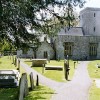
Fleet

This little place is assured a continuing stream of visitors, thanks to a story published in 1898: the thrilling adventure story Moonfleet written by J Meade Faulkner, is set here. The author makes no attempt to disguise the setting under a cloak of fictional anonymity and even goes so far as to weave the real life lords of the manor – the Mohun family – into his tale of smuggling during the mid – 18th century. In 1955 the story was made into a film starring Stewart Grainger.

Nowadays, Fleet is a quiet hamlet but it was once a thriving village community that made their living from agriculture and fishing subsidised by smuggling and the salvaging of cargoes of ships dashed to pieces on the Chesil, a business the villagers were well positioned to exploit.

That was all in the good old days before the dreadful storm of 1824 that wreaked havoc throughout the area, notably washing away Weymouth’s promenade. The people hereabouts relied on the Chesil beach to provide a natural defence from the treacherous seas that run off this part of the coast. The storm that blew in on the night of the 24th of November 1824 cut the Chesil down to size as it carried a tempestuous sea crashing over it, flooding nearby  Abbotsbury to a depth of twenty feet.  The inhabitants of Butter Street in Fleet watched as their homes were completely destroyed and the church all but washed away; only the chancel was left standing. The Countess of Ilchester came to the aid of villagers sending food and clothing.

Butter Street was rebuilt, but a century later disaster was to call again.  In the 1930’s fire took all but one of the homes and again they were rebuilt. In 1826 work got underway on the building of a new church located further inland. The first stone was laid on the 25th of April 1827 and two years later on the 25th of August 1829, the Revd. Robert Gray, the Bishop of Bristol, consecrated the church which is dedicated to the Holy Trinity. The new church comprises a chancel, nave and west tower and is in the style of the 18th century Gothic Revival. A wall plaque in the tower records the destruction of the earlier church.

The name Fleet comes from the lagoon-like stretch of water beside which the hamlet stands. It has been suggested that the name may be a reference to West Bay, as the Saxon name for a bay or gulf was flot, fleot or fleet.

In medieval times the village was the property of Edward the Confessor, who gave it to Earl Harold. The Crown held Fleet at the time of Domesday but it was later granted to The Priory of Christchurch at Twynham, probably when the Priory was established in 1150. After the dissolution of the monasteries it was given for a period of twenty one years to William Cocke, Valet of the Pantry. During the reign of Elizabeth 1st the manor passed to Robert Freke and John Walker and then to Robert Mohun.

Coker’s Survey of Dorset, written early in the 17th century, mentions a large mansion here known as Fleet House, the property of Maximilian Mohun. It was the seat of the Mohun family whose arms can be seen to this day on the two columns at the entrance to the village. The Mohun’s came to England with William the Conqueror. The house has survived a succession of alterations eventually being converted into a hotel. It is located a short distance from the hamlet in a spot facing the calm waters of the Fleet lagoon, sheltered from the north by the rising downs. It is a holiday sun-trap and, not surprisingly, it is named the Moonfleet Manor Hotel.

The chancel of the old church is still standing. Inside on the north wall is a brass plaque commemorating the lives of Robert and Margaret Mohun. They are depicted kneeling at a desk; behind Robert are nine sons and behind Margaret eight daughters. Another plaque has  been placed in the old church in memory and recognition of J Meade Faulkner.

Near to the old church a tunnel was discovered, which, it is believed, was used to move contraband secretly and away from the prying eyes of the Revenue men.

John Hutchin gives this pedigree of the Mohun family. The Mohuns of Fleet were descended from Robert Mohun, his brothers being the ancestors of branches of the family in Somerset, Devon and Cornwall. They were: Robert’s son Maximilian (1564-1612) who married Anne daughter of John Churchill of Corton, in 1593; their son Maximilian (1596-1673) married to Elizabeth the daughter of Francis Chaldecot of Whiteway; their son Francis Mohun (1625-1711) married to Eleanor Sheldon; their son Gilbert Maximilian Mohun (1675-1721) who married firstly Elizabeth Squibb who died in 1701, and secondly Sarah daughter of Thomas Cooper of Sherborne. They had several sons, the last surviving, Robert, died without issue in 1758.
 
In the mid 18th century the estate consisted of manor of East and West Fleet with farms, the glebe of the parsonage, the advowson of the church, and the water known as The Beach – presumably the lagoon.

The manor passed to Robert’s sister, Sarah, and her second marriage was to John  Gould of Upwey. Sarah died in 1774 and her husband left the estate to his eldest son by his first marriage to Mary the daughter of the Revd. William Glisson, rector of Marnhull, George Gould of Upwey and Fleet.

George married twice. His second wife was Abigail the daughter of Robert Gooden of Over Compton and the couple had two sons, John and George and the manor passed to them in succession. It was the latter George Gould who became rector of the parish of Fleet. He provided the money and was responsible for building the new church after the storm of 1824; he died in 1841 without marrying.
The estate passed to Miss Catherine Jackson who died in 1847 when it was passed to George Gooden, he later became vicar of Fleet.  George was the son of Robert Gooden, the brother of Revd. George Gould’s mother.

This place can feel very sinister. Could it be the ghosts of smugglers past, both real and imagined are just a step away still playing hide and seek with the Revenue Men?

January 1748 – Ten Days of Mayhem on the Chesil

On the 17th of April 1747 the ship Hope set sail from Amsterdam for Curacao, then belonging to the Dutch. She would sail on to the Spanish Main to sell her cargo to the Spaniards, who, because of the war with England, were in some distress in the American provinces. In command of the ship was Captain Boon Corneliz, who had at his disposal a crew of 73 men and 30 guns, although on the outward voyage only 21 guns were mounted ready for action against pirates or the English Navy, should they seek to engage. The ship was owned by the Dutch merchant firm Hendrick Hogenberg and Co, who had loaded the ship with cloth and bale goods.

Business done and nearing the end of her voyage home the Hope of Amsterdam was off Portland on the 16th of January 1748, having sailed through storms and tempestuous seas the previous fourteen days. All 30 of the ships guns were mounted, perhaps because the cargo of gold, jewels and other valuable commodities it was bringing home was, by the most conservative estimate, worth at least £50,000. Its guns would have been sufficient to fight off any attacks from pirates but against the elements they were no help and off Portland that night Captain Corneliz and his crew needed all the help they could get.
 
No light was visible from the Portland lighthouse, perhaps because of the mist or possibly due to the neglect of duty by those responsible. It was about one or two o’clock in the morning and very dark when the Hope ran ashore on the Chesil beach. When she struck land the mast fell with the force of impact, the ship shattered into three parts. The upper deck was thrown upon a ridge of pebbles and the cabin was buried in the sands; the hull was never found and was thought to have rolled back into the sea. Amazingly, all of the men aboard got safely to the shore.

Word of what had happened quickly spread. A mob soon flocked on to the Chesil from the adjacent villages and from all parts of Dorset and the neighbouring counties. The men of Portland, Wyke and Weymouth were first on the scene and seem to have had a well rehearsed drill for dealing with these events. They formed themselves into a body with colours to secure the goods that floated along the coast. They split into groups of 20, which united as necessary under a leader. A report written latter suggests there were between three and four thousand local men employed in this endeavour and as others arrived from farther afield the numbers on the beach swelled to several thousand.

For ten days the mob held the beach. One report described “a scene of unheard of riot, violence and barbarity.” Another report described the scene thus: “a crowd swarmed about the water’s edge grubbing for gold, tearing up the shingle with their bare nails, fighting over gleaming coins like starved wolves.”

On January 18th the crew set-off for Holland, except for the Captain, his First-mate and another officer. The Captain was forced to leave the beach; the officers of Customs and the Justice of the Peace officers were overawed by the mob that carried on digging and turning-up the beach. On January 20th several bags of money were found six feet under the pebbles.

After ten days three neighbouring Justices of the Peace with a body of armed men dispersed the mob. An inquiry was held and the authorities set about tracing the possessors of the plundered goods, who were compelled to hand over to the agent of the ship’s owners gold, jewellery and other goods with a value of between 25 and 30,000 pounds. They were allowed something for salvage rights.

Some men were committed to prison and two men appeared before Judge Baron Heneage Legge at the assizes in Dorchester on July 15th 1749, to answer for their actions but they were acquitted. The jury accepted their rather far fetched claim that the Dutch were pirates who had argued amongst themselves over the division of their bounty and then deliberately ran the ship on shore and deserted her for fear of being taken and punished. The two argued that the Dutch had taken the goods from the Spaniards, who had bought and paid for them; thus they maintained it was lawful to plunder pirates. The jury also took into account that only two men were before them when all manner of disorders were committed by many of the reported several thousand men who were on the beach for those ten lawless days and nights.

At the time there were stories of men with “bulging pockets” being robbed and strangled on the beach but there is nothing to confirm this. Men did die on the beach but from the affects of the extreme cold aggravated by high winds.

There are modern day examples of similar occurrences. In 2007 the Napoli, on a voyage from Belgium to Portugal, ran aground off the Devon coast. Several containers loaded with consumer goods floated ashore. Hundreds of people flocked to the scene to see what they could get, some leaving with BMW motorcycles worth thousands. The authorities had to point out that people removing goods and not properly declaring them risked fines of up to £2,500 but this did not deter many people intent on seeing what they could get their hands on.

The Ralph Wightman Story

“A sound like heather, honey and goose-grease” was how one admirer once described the voice of Ralph Wightman, who could be said to have been Dorset’s first voice of radio. Wightman’s Dorset accent seemed ideally suited for one presenting a string of programmes catering for agrarian and country matters, and for which he will best be remembered.

But Wightman was much more than a consummate broadcaster. He was the first of his family, even among his siblings, to undertake higher education, although for four generations the Wightmans had eked a lowly living from the land, and one branch of his ancestry emigrated to continue the farming tradition in Canada.

Wightman was born on the family farm in Piddletrenthide in July 1901, the youngest of three sons of a farmer who was also the village butcher. As a boy he visited distant markets with his father while his elder brothers tended the farm. Like them, it was expected young Ralph would continue the business of his forebears. But although he found farm work satisfying he early resolved that becoming a serious farmer was not for him.

Early in the 20th century county councils routinely awarded bright pupils scholarships to elementary schools as a first step towards a secondary or grammar school place. Ralph took and passed the entrance exam for a scholarship to Beaminster Grammar, which then had agriculture on the curriculum. But by this time World War I was running its bloody course, and Wightman’s first year was not a happy one. By the end of his second year however, his interest in farming had been re-kindled after seeing how farmers were responding to the need for feeding the nation in wartime by improving their efficiency. With banks prepared to make money available, investment was possible in fertilisers and new equipment such as tractors, to replace horses.

Wightman passed his Oxford Senior in 1917, and following further exam successes won a place at Armstrong College, Newcastle-upon-Tyne, to study agricultural chemistry. At this time also he would cultivate an ability as a speaker and debater in discussion groups – skills which would be of the utmost value to him in his later professional life. In 1922 Wightman graduated with a BsC, and experience gained as an assistant lecturer helped secure his first job, for £10 less than he was then earning.

For the next four years Wightman lived the life of a travelling teacher on courses at various centres in Devon followed by another three years working in Wiltshire while maintaining a close contact with local farmers. Much of the work was done in winter evenings when Ralph often had to motorcycle along unsurfaced roads by the light of an acetylene lamp. But he relished the life, glad to be in familiar territory with countymen and women who spoke his dialect.

Wightman’s Wiltshire appointment in 1927 was on a higher salary and brought him into contact with Arthur G. Street, a writer and broadcaster who became a mentor and lifelong friend. In the years to come the two men would share many broadcast hours together.

Ralph returned to Dorset in 1930, to become the county’s senior farming lecturer and advisor. He rented a Tudor house in Puddletown, which became his permanent home. After a period with the County Council Wightman was able to rent an office in the headquarters of the National Farmers’ Union Dorset branch, driving there each day from his Puddletown home. From this base he embarked upon a productive career as a correspondent for the local papers, the NFU, and writing material for a weekly farming talk broadcast from Bournemouth.

Very soon after, Wightman himself was broadcasting from the Bournemouth station – a ten-minute piece about worms in sheep. Never a qualified vet, he nevertheless had made himself an authority on the animal. He could therefore speak from experience about recommending new medication or methods of treatment. Through this and later talks the fledgling broadcaster earned the confidence and admiration of many farmers with a radio.

In June 1939, after several broadcasts in the pre-war years, Street asked Wightman to stand in to deliver a four-minute commentary on the Royal County Show from Bristol. This paved the way to greater things, and in his autobiographical Take Life Easy, he pays tribute to Street, Francis Dillon and Brian Vesey-Fitzgerald for their great help and advice.

On the outbreak of the Second World War, Wightman was once again involved in agriculture in Dorset and called upon to broadcast to the nation from time to time. Then the BBC launched County Magazine in May 1942. This programme became an immediate success and would continue throughout the war with presenter Ralph Wightman taking it to all regions except Scotland. Besides being anchorman of County Magazine, Wightman also participated in a number of other farming and country programmes as well as three appearances in Christmas Day programmes.

One Saturday night in 1943 a postscript Wightman broadcast brought a blizzard of letters from all over the country. There then followed an idea that he should broadcast to the USA on English country matters, leading him to notch up a staggering total of 290 weekly Trans-Atlantic talks – a record possibly only exceeded by Alistair Cooke.

Wightman left the Ministry of Agriculture in June 1948 to go freelance, giving all his time to interpreting Dorset and the West Country. To stay in touch with farming developments he took a part time job as a consultant with a seed firm. But the flood of broadcasting appointments for the BBC seemed relentless. There were unscripted appearances on Country Questions and Any Questions? the latter of course being live.
Wightman was by now a seasoned radio presenter, an affable character universally known for his russet voice and common sense, though TV appearances were few. Many of his friends themselves became household names, such as Stuart Hibberd, himself a Dorset-born broadcaster and fellow-member of the Society of Dorset Men.

Wightman’s last broadcast was in March 1971. His several books include Rural Rides and other works on farming and Dorset. In ‘I live in Dorset’ (Homes & Gardens, July 1960) he wrote: ” I had to leave home at the age of 18 because a strained heart was alleged to have made me incapable of physical toil.”

It was not a strained heart, however, that robbed the country of this popular presenter but something different entirely. In May 1971 Wightman fractured his skull in a fall at his home. He was admitted to Dorchester Hospital, but the broadcaster died soon after, aged 69. Though he had no children of his own, he left behind a farmer nephew, the son of one of his elder brothers.

Stourpaine

When Harold fell at Hastings in 1066 it was bad news for the Saxons throughout England. Over the following few years they saw their possessions sold, they were turned out of their manors and turfed off their land, which was then granted to the conquering Normans. The Saxon, Alward, owned the manor of Stures and he faired no better than the rest. The manor was situated at the foot of Hod Hill, where the Ewerne stream meets the river Stour. Twenty years on from the famous battle at Hastings it was granted to Humphrey the Chamberlain when, according to the Domesday Book, the combined population of Stures with the hamlets of Ashe and Lazerton was 28.

By 1135 the records show that Hilias de Oresculz held the manor and it was his son, Richard, who gave land and advowson in Stures to the Priory church of Christchurch in Twyneham. Richard’s daughter Matilda married William Fitzjohn and they had two sons and a daughter. One of their sons was named Payne and this son had a son named William Fitzpayne, who had three sons: Richard de Stures Payn, who became the first rector of the parish in 1291, and Nicholas who also became a priest, leaving the third son, Bartholomew, to inherit. By 1316 Bartholomew had been knighted and confirmed by the sheriff as Lord of Sture Payne and Edmondsham.

Records reveal that in 1311 John Payne sued Roger Spurnhare and William Nots 100s for trespass and damage. The particulars of the case were recorded in some detail but on the day appointed for the hearing the clerk entered the words “They did not come.” It appears this happened three times and when the case came up for the forth time a despairing clerk wrote “Similar entry as above.”
 
The following year there was a dispute between the Abbess of Tarrant Crawford and Bartholomew Payne over the possession of some meadow land and grazing rights after the hay had been harvested.  The court decided in favour of Bartholomew Payne and said the Abbess takes nothing, but is “In mercy for a false claim.” The Knight was back at court again that year when he sued several people for trespass and damages, but the record reveals a disregard for the court was becoming usual as the words “they did not come” again appears in the record. During the reign of Richard II (1377-1399), Stour Payne was granted to Edward Payne.

The last Payne died without an heir and in Edward IV’s reign (1461-1483) the lands were transferred to the Hussey family of Shapwick. In1645, during the Civil War, a farm belonging to Joseph Hussey, ensign to Col. Phillips, a Royalist, was sequestrated by Parliament; Joseph was buried at Stour Payne in 1685. Another Hussey, Robert, also chose a military career and he was an officer at the battle of Quebec in 1759 and fell alongside his commanding officer, General Wolfe. Some of the troops who took part in the battle of Quebec had been trained near to Stourpaine. (See our story about Iwerne Courtney.)  Robert had two sons, both named Hubert. The youngest son was buried here in 1742; a second son was baptised here in 1744 or 1745 and when still a young man went off to London.

In the 19th century the inhabitants were in the main agricultural workers earning low wages and living in ill-kept cottages housing large families who would typically occupy one small room.  Children were deprived of their education, kept away from school to work on allotments and knit clothes for sale. A lot of girls as young as ten and eleven were employed making gloves, all to bring in a little more money.  It was a miserable existence, as the Vicar of Stourpaine reported to the Poor Law Commissioners in 1867. It was noted that the behaviour of some women was a problem: “There are more bastard children (in Stourpaine) than in any other (Dorset) village,” a report concluded. 

In the Domesday Book a gift of land to the church is mentioned but there is nothing else to suggest there was a church here in Saxon times. In 1190, on the site of the present church, building work started and was completed in 1300. In the 15th century the tower was demolished and the present tower was built.
 
In 1858 the church had deteriorated and T.H. Wyatt undertook the construction of a new chancel and nave. He saved a few features from the original church including the 15th century west tower and a kneeling effigy of John Straight in black gown with gathered sleeves and tall collar; he was vicar here from 1650-1659. The original font was lost. The pulpit was carved by the vicar, Charles Sweet and four parishioners, between 1911 and 1914.

Lazerton was a separate parish, its church dedicated to St. Andrew. In the late 12th century a charter states it was so poor that it was released “from all payments except synodals.” The parish of Lazerton was not taxed in 1428 when it had fewer than ten inhabitants. In 1431 Lazerton was joined with Stourpaine because “the church at Lazerton had so small profits that it had been and was then destitute of a chaplain.” Lazerton was uninhabited when the 1662 Hearth Tax returns were made.  Today there is nothing to show of Lazerton; what did remain was destroyed in 1962.

Today the village is divided by the main Blandford to Shaftesbury road, on the one side of which is an estate of modern housing and on the other side cob and thatched cottages and the church. With the views to the vale of Blackmore and its proximity to Hod Hill with its ancient British fort it is not surprising that many ramblers and tourists come this way.

The Hamlet of Steeple and Creech Grange

Steeple is a small hamlet surrounded by heathland in the sparsely populated parish of the same name. Comprising a church, fine manor house and a few cottages, it is about four miles south west of Wareham between Lulworth and Corfe Castle at the foot of the Purbeck Hills. This rolling Dorset Down separates the hamlet from Creech Grange, the mansion and estate of special interest to American visitors because of the association with Sir Oliver Lawrence, an ancestor of George Washington. The Lawrence coat-of-arms featuring the stars and stripes is in the porch of the church and is repeated in the barrel roof and is the same as the coat-of-arms on a signet ring belonging to George Washington. Could this little place and nearby Affpuddle, which has similar features, be the birthplace of the stars and stripes?

The Lawrence and Washington families were from Lancaster and united through the marriage in 1390 of Edmund Lawrence to Agnes Wessington. Sir Oliver Lawrence came to Steeple and John Washington a descendent of Agnes, travelled to Virginia; his great grandson was George Washington, who became the first President of the United States of America.

In Domesday this place is referred to as Stiple a reference to the steepness of the hills. It was a part of the manor of Glole, Stiple and Criz or, as we would say today, Church Knowle, Steeple and Creech. We can see from the terrain surrounding the church that in medieval times Steeple was a large village. Now the church is quite isolated from the few cottages of limestone construction that make up Steeple today.

Before the Reformation the land hereabouts was owned by Bindon Abbey, but all that changed when Henry VIII ordered the dissolution of the monasteries in 1539. Sir Oliver Lawrence, the brother-in-law of King Henry’s Lord Chancellor, acquired the land and built Creech Grange here, completing it before his death in 1559. The house was bought by Nathaniel Bond in 1691, when the Lawrence line died out. Thomas Bond was made a baronet by Charles II and later turned an area of London known as Conduit Mead – at the time nothing more than a rubbish tip – into a habitable place. Today we know it as Bond Street the famous London Street synonymous with fashion and luxury shopping; many ladies will know that for many years Conduit Street was home in the UK to the Christian Dior label.

In 1682 the then Rector Samuel Bolde, dared to declare in a sermon that “everybody had a right to their own beliefs.”  When word of this reached King James II he was not well pleased and Rector Bolde found himself in prison.

The parish church is dedicated to St. Michael. Built from rubble and ashlar and roofed with stone slates it comprises nave, chancel, south chapel, north pew, south porch and west tower. Much of the nave survives from the 12th century; it has a 17th century plaster barrel vault, which was renewed in 1954. Edward Lawrence sponsored several alterations and additions during the 17th century including the building of the west tower. The chancel and south porch were rebuilt between 1852 and 1861.

The Manor House was built at the start of the 17th century and later enlarged probably in 1698. On the front of the building there is the Clavell family crest probably commemorating the additions to the building by Roger and Ruth Clavell and they made further additions at the beginning of the 18th century. The extensive additions made to the north east of the house are modern.

To see the other important buildings in the parish we have to climb some 700 feet to the top of the downs and Grange Arch. Built in the 18th century by Denis Bond “to form an architectural focus to the view southward from the Grange” says the RCHM. From this vantage point we can look down on the mansion known as Creech Grange.

The impressive house we see today owes little to the original building, which was badly damaged by the Parliamentarians during the Civil War. The front of the building was completely rebuilt in 1846 by the Bond family.

Near to the grand house is the Chapel of St. John the Evangelist built in 1746 by Denis Bond, who died before it was completed; for a century the unfinished building was used as a workshop. Originally it consisted of a west tower and nave with a small sanctuary entered through a 12th century archway, brought from the priory church at East Holme and according to the RCHM is a “notable Romanesque feature.”  It was 1840 when work was recommenced by John Bond who died in 1844. His brother the Revd Nathaniel Bond rebuilt the nave and tower and added the north transept in 1849. 1868 saw the addition of the chancel, the vestry and organ chamber.

Every parish, village and hamlet has a history deserving to be told and Steeple, with its associations with America’s founding fathers, its outspoken clergy, and the transfer of its grand mansion from a distinguished Royalist family to another prominent family is no exception.

The Late Parish of Stoke Wake

The parish of Stoke Wake is no more. Its church is redundant, pensioned off to a life as a farm store, its cottages and farms thinly spread over little more than a thousand acres incorporated, not so many years ago, into the neighbouring parish of Hazelbury Bryan.
 
On the brighter side the effort of a climb up Bulbarrow Hill to Rawlsbury Camp will be rewarded with magnificent views. “Surpassing imagination” is how John Hutchins described the vista from the summit of this Celtic encampment, one of the highest points in the County. From here on a day when the skies are clear you will see Shaftesbury some 15 miles to the north; peer south and you will pick out the monument to Thomas Masterman Hardy at Portesham and, beyond that, the English Channel shimmering in the sunlight.

We must go back beyond 1086 and the Conqueror’s ledgers to find the origin of the name of this ancient place. In The Domesday Book it appears as Stocke, possibly a derivation of the Old English word stoc, which is a reference to an outlying settlement or farm.  Looking around this wooded landscape we might agree with John Hutchins’ suggestion that ‘Stoke’ is a derivation of the Saxon word stocce, which means wood or stock.
 
The first reference to ‘Stocke’ is relayed to us in Thomas Gerard’s work written early in the 17th century and known as Coker’s Survey of Dorsetshire (See our article about Thomas Gerard.) “In A.D. 941 King Edmund, King of Wessex, gave to Eddric, his vassal and friend, two manors in Stoke to him and his heirs forever.” At some later time these manors seem to have been given or sold to the Abbess of Shaftesbury as, according to the Domesday Book, “The Church of St. Mary of Sceptesberie held Stocke.”

The Abbess of Shaftesbury’s first tenant lords were the Cusins or Cosyns and the manor was known as Stoke Cosyn until the 13th century. We know that in 1227 John Wake held the manor. In his book, written around 1625, Thomas Gerard records: “The river passing Hollwell, leaveth on the hill over it Wakes Court, now a ruinate place, but antientlie the seat of the noble family of Wakes branched from Lord Wake of Lydell and from who a fair inheritance descended to John Caybes, Hugh Titell and John Mitchell, who married the daughters and heirs of John Wake.” No trace remains of the two dwellings but the Wakes were very rich and we might expect them to have lived in some grandeur, their homes enclosed by some 200 acres of parkland.

Indeed in 1485 Henry VII referred to the Wake manors as Stoke Park but by then they had passed to a Somerset family, the Keynes of Compton Pauncefort, although the place continued to be known as Stoke Wake.  The Keynes arrived in 1416 and departed two centuries later in 1614, when the Seymour and Pitt families bought them. The Seymour family bought out the Pitt family and continued to hold the manor into the 19th century.

John Hutchins tells of an ancient church here and there is a record from 1305 that shows a John Wake as patron of that church. Hutchins in 1770 describes a church here built in 1540: “Small late Perpendicular fabric, dedicated to All Saints. It consists of a nave and chancel, a south porch and embattled tower containing four bells, one dated 1626…Over the west door with two scrolls – nearly illegible – are the initials of Robert Childe, Rector 1545. Against the north pillar was painted a beggar and under him the words “He that loveth pleasure shall be a poor man,” The font and shaft are octagonal, of good Perpendicular type, with carved panels. In the north aisle are some curious fragments of stained glass, design, chalice wafer and cross. In 1542 Richard More by his will ordered his body to be buried in the new aisle here.”
 
Two churches gone and another, All Saints, arose on the same site in 1872. It was designed by G. R. Crickmay with, we are told, a little help from Thomas Hardy. Built at a cost of £900, the four bells from the earlier church were sold to help meet the cost. Being in private hands it is no longer freely accessible so we turn to Pevsner for a brief description: “nave, chancel with apse and a north aisle with a three-bay arcade.” It is built of squared rubble with a red tiled roof with a western bell turret housing just one bell to summon the dwindling congregation, which in the end led to its demise and redundancy.

Near the church, too the north is the Old Rectory described by John Hutchins’ editors as “a commodious and substantial house.” Built by Revd. Thomas Wickham Birch, Rector of Stoke Wake from 1817 to 1872. To the south of the church is The Manor House built in the 18th century.  In 1817 the patron was H Seymour Esq. and the living was a rectory in the archdeaconry of Dorset and diocese of Bristol rated in the king’s books at £8. 8. 9d.

To recap, Stoke Wake is a redundant church and parish, its remaining cottages and farms too scattered to be recognised as a village or even a hamlet. A traveller could pass through it and never know its name.