Dorset Ancestors Rotating Header Image

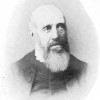
Dr. Andrew Bell

In 1801 a young Episcopalian minister from Scotland was appointed Rector of Swanage on a stipend of £240 a year. He was the Reverend Andrew Bell, and his incumbency at this popular resort of the future was one of unprecedented philanthropy and innovation. As Rector of Swanage Bell energetically set up benefit societies, social clubs and even a small cottage industry for plaiting straw. He arranged for every child in his parish to be inoculated against smallpox, a great contagious scourge of the 19th century. And this minister had a considerable influence on the young John Mowlem, the master mason of Swanage and founder of the international construction company of that name.

But Andrew Bell will probably be remembered for one thing above all others: as the inventor of the method of elementary education known as the Madras System, after the state in India where it was conceived. The Madras System was a legacy of a past period of colonial servitude in Bell’s life, but by the time of his death it would be adopted across much of Britain. Several educationalists even sought Bell’s advice about how they could implement the system themselves, including Joseph Lancaster, an opportunist businessman and rival. Lancaster, however, infuriated Bell when the latter discovered that he was passing off the Madras System as his own conception. At one point Bell took two years leave of absence from the church to concentrate on disseminating his educational method more widely. Eventually he had 13 day schools and three Sunday schools using the system in Dorset, but would by no means neglect to further the provision of education in his Scottish home town.

Dr Bell would devote only about a decade of his life to the spiritual and material wants and needs of the Swanage people, yet he had no leanings towards an ecclesiastical career until he was 32. Before then he was something of a maverick, a speculator in New World cash-cropping, and while his life in holy orders was a resounding success the same would not be said for his business interests or his marriage, which ended acrimoniously in divorce after only six years.

But the single-mindedness so indicative of his character throughout his life doubtless showed itself early. Born in St. Andrews, Fife, on 27th of March 1753, Andrew Bell was the son of a barber/wigmaker-cum-horologist who in the latter capacity was responsible for regulating the clock of St. Andrews University and making scientific instruments for the physics (then National Philosophy) faculty. Andrew was first educated at the grammar school where mathematics was his greatest strength and languages his greatest weakness. However, during these early schooldays he was the subject of bullying from older boys, an experience that would instil in this future educationalist a lifelong abhorrence of corporal punishment. Bell’s proficiency in maths led him, at 16, to matriculation at the United College of St Salvatore & St Leonard’s in St. Andrews University. Here he studied for four years, but there is no evidence that he graduated at the end of this time. However, it was common in those days for graduates not to undertake a formal graduation ceremony.

So with his sound academic background Bell sailed from Glasgow in 1774 to take up a post as a tutor to tobacco plantation owners in Virginia, though not without “moonlighting” as a tobacco trader with a good sense of business. In 1779 Bell was engaged as tutor to the sons of a Virginia planter Carter Braxton, but with the colony in a politically unsettled state in the aftermath of the War of Independence Bell returned to Britain two years later with the Braxton Boys, so that their education could be finished. During the voyage however, their ship was grounded on an island near Nova Scotia by a storm for a time before they could be rescued, whereupon they eventually reached London in June. But Bell’s charges were not inclined to stay on the right side of the law, and after two years he returned to St Andrews to eke out a meagre living by running a small private school.

It was at this point that Bell considered studying for the priesthood, but with the Church of England, since he was an Episcopalian. His first living following ordination was at Leith Episcopalian Chapel under a one-year contract. The St Andrews MP, George Dempster, approached Bell with the proposition of a lecture tour to Calcutta teaching science. The newly-appointed minister duly accepted the offer and sailed for Calcutta in 1787, but stopped off on route at Madras. Here Bell decided to stay and give a brief course of lectures, but when appointed as Chaplain to four regiments, he decided to abandon going on to Calcutta.

In 1789 Bell was asked to take over running the Madras Male Orphan Asylum, an orphanage-school for the bastard sons of soldiers and native women. Struck by the great inadequacy of the teaching methods at the asylum, Bell was instead impressed by an open-air school where the pupils were being taught their letters by inscribing them in sand. But his employees, embittered by his forthright manner, were obstructive in Bell’s plans to improve the methods of education. Bell then introduced sand-trays into his school instead of books, but the move was not approved by the master and ushers either. In desperation Bell then instructed a boy called Jonnie Frisken in his lessons, teaching the eight year-old to teach even younger children. This led to the school being segregated into classes where boys could be masters, pupils and sometimes both, and Bell found that this way the children had no learning difficulties. But the school master and two ushers were so disgusted with the method that they left Bell to continue running a school going from strength to strength.

The Madras climate however, proved so indifferent to Bell’s health that in 1796, though much praised for his work, he returned to England. Here he immediately prepared a report on the asylum, then another report in the summer of the following year setting out the operation of the Madras System, i.e. in which all but the youngest children could hold pupil-teacher status. All lessons were taught and learnt by rote. A boy “master” teaching young children a lesson after learning it himself. The 1797 report was circulated to all important figures in the Church and Government. Child education would now be Bell’s consuming passion for the rest of his days.

Funded from his own pocket and with some outside support, Bell opened a few charity schools putting his system into use. It was then in 1801 he came to Swanage and as Rector involved himself in the parish and Sunday school (soon converted to the MS.) Soon Mrs Sarah Trimmer, a religious pamphlet writer, was writing to Bell desiring his opinion of Joseph Lancaster and at the same time extolling Bell’s system above that of his rival. She was convinced Lancaster had merely improved Bell’s system, while basically plagiarising it. Bell, after persistent entreaties from Sarah to come to London to organise a campaign against Lancaster and his method, eventually did so in 1807, staying there a month.

Once in the capital, Bell set up a charity school in Whitechapel with the assistance of two or those who had been involved in running the Swanage Sunday school. Realising it had become impossible to undertake his parochial duties at Swanage, Bell obtained a special licence from his Bishop in May1807 for two years leave of absence. As new schools were opened Lewis Warren, a teenage boy who had been assisting at the Swanage Sunday school, undertook their organisation in the West Midlands. On the expiry of the first two years Bell realised he would have to relinquish the Swanage living entirely.

In 1811 Bell was appointed advisor and sponsor for the newly formed Society for the Education of the Children of the Poor, and the Church versus non-denominational education schism came to public attention. Raised to a pitch of ire, Lancaster came out into the open and even declared in an article that he alone invented the Madras System, that all other claimants (presumably including Bell) were counterfeiters and impostors! The feud wasn’t to be defused until 1818, when Quaker friends sent Lancaster to America to disseminate the blunders of his system there. The organisers of his society then gave Bell the authority to travel the country as an inspector of his schools. He also travelled and lectured on the continent for some years, before ill-health forced his return to England.

On his return Bell retired to Cheltenham, where he revived his aim of furthering education in St Andrews. He acquired two properties in South Street for a school, and in 1831 established a fund of £120,000 to finance the building of a Grammar and English School. Under the terms of Bell’s will his estate at Egmore was left in the hands of Trustees who were supposed to set up another Madras School at Cupor, in Fife.

But the trustees, in defiance of his wishes, instead spent the money on projects to build an observatory, provide a dispensary and improve public water supply. Nor would the educationalist-cleric live to see his school finished. Dr Andrew Bell died on 27th of January 1832, just ten weeks before the foundation stone was laid, and was buried in Westminster Abbey.
Benjamin Jesty

In 1805 Benjamin Jesty travelled from Dorset to London where he was the guest of Dr. Pearson of the Vaccine Pock Institute, who recognised Benjamin as the first person to vaccinate against smallpox – some 20 years before Edward Jenner.

The society had arranged for the artist Mr. Sharp to paint a portrait of Benjamin while he was in London, something he found very irksome; being a farmer he was not at all used to sitting still for hours on end. Before leaving for London he had turned a deaf ear to his wife Elizabeth when she suggested he invest in a new suit of modern clothes. He was viewed by some in London with a mild curiosity a situation not helped by his rich Dorset accent. He was glad to return to Dorset bringing with him a pair of gold mounted lancets and a testimonial to recognise his services to the cause of vaccination. He is reported to have said the best thing about the trip was being able to get a shave each day instead of having to wait until market day.

The portrait, the original of which is believed to be with descendants now living and farming in South Africa, tells us, as it should, quite a lot about the man. He had a friendly open face displaying a hint of amusement at all the attention he was receiving. He was probably a straightforward person who would speak his mind. We know he was an honest man because he was an assessor and collector of land taxes. His portly build confirmed his comfortable life style and the portrait belied his 69 years.

This medical pioneer was in fact a yeoman farmer born in Dorset. He was baptised on the 19th of August 1736 at St.Andrew’s church, Yetminster and was given his father’s name. His grandfather John Jesty of Leigh, which is close to Yetminster, appears, from the inventory of goods made when he died, to have been a farmer of some substance. We may assume Benjamin had a good start in life and was probably educated at Boyles School, Yetminster.

In 1770 he married at St. Andrew’s church a girl from the village, Elizabeth. Three children arrived in quick succession: Robert in 1771, Benjamin in 1772 and Elizabeth in 1773. They lived at the farmhouse named Upbury. This was the family of Benjamin Jesty when smallpox hit the village of Yetminster in 1774.

Benjamin was confident he was safe from the disease, having had smallpox when he was a young child, but he was concerned about the wellbeing of Elizabeth and their children. Two dairymaids were employed on his farm and he knew both of these girls had earlier had cowpox and both had nursed members of their family suffering from smallpox without catching the disease. It was well known that dairymaids rarely caught smallpox. He reasoned that if dairymaids who caught cowpox accidentally were immune then it followed that someone who caught the disease deliberately would be similarly immune from the more serious smallpox.

It came to his ear that a Mr Elford who farmed at Chetnole had an outbreak of cowpox amongst his herd. It was this timely news that almost certainly decided Benjamin on the course of action he was to take and he hurried to Chetnole, only about four miles away, with Elizabeth and the boys.

How much Benjamin had told his wife in advance about his intentions we will never know but she would certainly have been frightened when she realised the full implication of what he had in mind. This was a hugely risky undertaking, a matter of life over death for the people he loved most. If he were wrong the consequences for his wife and children would almost certainly be fatal.

He proceeded to move amongst farmer Elford’s cows looking for a mature pox that would be certain to ‘take.’ When he had found what he was looking for he took out a needle and with it he scratched his wife’s arm just below the elbow and inserted the matter from the pox. It was the boys’ turn next: first Robert and then Benjamin. The first authenticated vaccinations had taken place in a field in the Dorset countryside amongst a herd of cows. The next few days were to be crucial.

When word of what he had done reached his neighbours he was ridiculed but when it was learnt that Elizabeth was very ill sentiment turned to anger and indignation. Benjamin found that his friends and neighbours had taken against him for being so foolhardy and reckless with the lives of his family. However he remained undaunted and continued about his business stoically putting up with being “hooted at, reviled and pelted whenever he attended markets in his neighbourhood.”

In the boys the cowpox ran its normal course and they were soon out of danger. Elizabeth became very ill, her arm became inflamed and she had a high fever. This was a testing time for Benjamin and he called in a doctor who when told of the cause of the illness is recorded to have said “You have done a bold thing, Mr. Jesty, but I will get you through if I can.” And he did. After a while Elizabeth improved and before long the Jesty family was able to return to their usual routine. The family increased and in all the couple had four sons and three daughters.

Benjamin Jesty died on the 16th of April 1816, aged 79, and is buried in the churchyard at Worth Matravers. Elizabeth survived a further eight years and passed away on the 8th of January 1824 aged 84 years and is buried beside her husband.

Benjamin and his family had moved from Yetminster to Downshay manor, in the parish of Worth Matravers in the Isle of Purbeck. It was here that Benjamin Jesty met Dr. Bell who became vicar of Swanage in 1801 and is well known as the founder of Free Schools. He was an enthusiastic supporter of vaccination. Dr. Bell came to hear of Benjamin and how he had vaccinated his family 22 years before Jenner. He wrote to his friends in London and as a result of this correspondence Benjamin received his invitation to London and acknowledgement of his work but it was Jenner who received all the acclaim for the procedure and some £30,000 from the government to develop and encourage vaccination.

Bridport Family – Education Pioneers in Australia

The Greene family from Bridport is well known on the other side of the globe – as educators in Australia as it was emerging to nationhood. To have five sisters involved in the foundation and running of a school far from their native land must be a unique situation.

So it is that a girls’ college in Australia which dates from 1901 had its origin in Bridport. In that year Alice Greene and her sister Anne founded Moreton Bay Girls’ High School in Brisbane. At the age of 38, Alice was at the helm. But the family connection had not started there, for the school had actually been designed and built by their father.

On the school’s first roll there were 20-day scholars and six boarders: today, over 1,000 families are associated with the college, which is considered among the best independent girls’ schools in Australia.

But it has been a struggle. In 1944 the school was handed over by the Greene family to the Methodist church. In 1959 there were 167 pupils and the number increased to 180 in the early 1960’s. However, the roll later dropped to 125 and it was decided to close the college, although this decision was soon rescinded. The Uniting Church assumed responsibility and set up a new board with the local population strongly represented.

In 1980 the boarding section was closed down and the following year the enterprise moved to a new site. Things were changing for the better, and the year 2000 was a remarkable one, seeing notable successes in competitive athletics and in public speaking and debating. The college choir sang at the prestigious Choralfest in Melbourne.

Then in 2001 came the centenary of the college. The enrolment that year for pre-school to Year 12 was 1170 girls. In 2002 the college won a prestigious 70-year-old swimming championship. Early in 2003 the Moreton Bay Boys’ College opened its doors. The number of staff is now approximately 200.

In 2003 one of the college’s ‘Old Girls’, Quentin Bryce, was inducted as Governor of Queensland a post she held until 2008 when she was appointed Governor General of Australia.

Alice Jane Greene, the central figure of the story, was a native of Bridport, Dorset, born on July 26 1863. She was the daughter of John and Ellen (Webber-Greenham) Greene. Her father was a cabinetmaker and Grandfather Greene was a mariner. She went into teaching specialising in science and after the family moved to Cardiff in Wales she was senior mistress at Cardiff Higher School for five years. In the early 1890’s she and her sister Anne went out to Australia to join their father.

Anne and her sister Helah established a school and studio in Tenterfield in northern New South Wales where she taught general subjects, art and music. The school opened in February 1895. Their sister Alice who had been teaching at Rockhampton Girls’ Grammar School joined Anne and Helah there.

In 1900 John Greene built a school in Wynnum, Queensland which was officially opened in 1901 as Moreton Bay Girls’ High School, Alice was the Principal, and remained in this post for an amazing 42 years. Her other sisters, Hilda and Elsie also taught there.

At some point, the name changed to Moreton Bay College, the name by which it is known today.

It seems that John Greene and Mary Ellen Greenham had 11 children. Ada, (who married James Diamond, of Cardiff, Wales and who remained in that country); Alice; Emily (who married Harold Wearn, a dentist and lived in Sydney, Australia), Mary (who married Herbert Kay, had two children and lived in Brisbane), Anne (also known as Ella, who did not marry, taught cello and violin and was the school housekeeper);Samuel, who was Mayor of Wynnum before it became part of Brisbane and married Ruth Hargreaves; John William (known as Will) who became Lord Mayor of Brisbane; Elsie (who did not marry and went to London University, became a bachelor of arts and then returned to teach general subjects at the school); Hilda (who did not marry but studied and taught music, returning to England to continue her studies and went back to teach at Moreton Bay in 1910); and Harold who worked in shipping, went to India and has descendants still living there.

Every great project has its pioneer, and it was Alice (known as Alice J. Alison Greene) who is actually credited with founding Moreton Bay College. She did not marry.

A special ‘In Memoriam’ edition of the school newsletter was published in 1967 but, frustratingly, there is no mention of Alice’s date of death so we must assume it was in that year. In Queensland public records of deaths go only back to 1954.

Alice’s first teaching position in Australia was at Rockhampton Girls’ Grammar School in 1893-4; she resigned to go to Tenterfield in northern New South Wales to join her sisters Anne and Helah at a school there which was set up by Anne in 1895.

Anne Greene was an interesting person. Born in 1878 she was the fifth child of John Iley Greene and Mary Ellen Greenham. Anne had studied Art before leaving Britain for Australia. After she arrived in Australia she and her sister Helah established a school and studio in Tenterfield in northern New South Wales where she taught general subjects, art and music. The school opened in February 1895.

In 1911 Anne returned to Britain to further her studies and to work as an artist. She studied at the South Kensington Art School in London and had success as a still-life artist. She also spent time in Paris and later established a studio in Southampton.

While Anne was in Paris she became interested in eurhythmics, or the harmony of proportions, and later introduced it at Moreton Bay College on return to Australia.

With the outbreak of World War Two she was unable to return to France or go to Australia so she did not actually return to Queensland until after the war. After an accident her health became poor and she lived in a nursing home. She died in 1954.

This is the story of Dorset people who saw a land of need and opportunity 12,000 miles away. The Green sisters introduced a vastly improved and enlightened system of education to the girls of Queensland, with a curriculum including music, art, English, science and physical education. Throughout, the enterprise has been Christian-based. The family must have been very much faith-oriented.

Here we have a story of courage – of people leaving their home surroundings in the late 19th century to work on the other side of the world for the good of mankind and to become “First Australians”. They did not go there initially to improve themselves and their situations, but to improve those of others.

The Prisoner a Padre Befriended

In the autumn of 1862 a 21-year-old man went to the rope in Dorchester jail, a final enactment of 19th century justice for the crime of murder. The condemned man was Edwin Preedy, but perhaps it cannot be said that he was entirely in control of the depressive and violent nature that had driven him to vow he would stab a warder at the prison where he was being held for an earlier offence. For it was the fate of Preedy to suffer an unloved and cruelly deprived childhood.

Born in Leamington, Warwickshire around 1841 Edwin Alfred Preedy was the illegitimate son of a man who never knew how to bring up a child with due care and affection. His mother too, seems to have been a rather detached person who had no influence over her son. As a result of the cruelties and abuse inflicted upon him by his stepfather, seeds of anti-social rebellion and resentment were sown in Edwin’s maturing mind. Until he was eleven he attended a national school where, although he was quite clever he was also a proud, passionate and idle boy. When he was thirteen however, his mother and an aunt conspired to have the boy institutionalised in a reformatory but Edwin decamped from the school after just ten months.

There then followed a string of incarcerations for petty offences. Upon release from the last of these sentences Preedy ran away to join the Army’s 85th Regiment, even rising to the rank of corporal, but then in the company of three others deserted after stealing some clothes. When caught, Preedy was sentenced to penal servitude for three years. From his first prison he was moved, first to Millbank then to Portland. It was while serving his sentence here that Preedy, in a fit of murderous ire, vowed to a fellow inmate that he would take a knife to a warder who removed his soiled dinner plate.

So in September 1862 Preedy was transferred to Dorchester jail to await trial for murder. Personally he saw no hope of a pardon, and in his despair he frequently became violent, such that on two occasions he had to be restrained in irons respectively for 14 and 28 days.

Yet fate it seemed had not entirely given up granting Edwin Preedy an opportunity to repent and receive absolution. He told the prison chaplain that he could only foresee his “dread end.” But at this point a remarkable Anglican minister entered his life, as if sent by a redeeming angel of mercy from on high. The cleric was the then vicar of nearby Fordington, The Reverend Henry Moule BA, and his visits to the cell-bound Preedy throughout the last weeks of his life made history as perhaps the most protracted, challenging and tragic case of a priest’s attempt to save a condemned man’s soul ever recorded.

Henry Moule was a luminary among 19th century Anglicans. Early in his priestly career he boldly tackled moral laxity, ecclesiastical rectitude and the injustices of squalor and the powers that be. He was chaplain to Dorset Barracks and Vicar of Fordington and is best known for his invention of the earth-closet. But his dealings with Preedy introduced him to an altogether new dimension in human nature and pastoral experience.

Moule’s strategy was to entice Preedy into making a confession or admission of guilt, expressing remorse for what he had done. He implored the prisoner to repent of the murder and all his earlier sins. At times the vicar found the prisoner in a conciliatory and receptive mood, but at other times Moule had to endure a barrage of insolence and even physical assault. When his temper was aroused Preedy no longer wanted to be visited. One day, in Moule’s presence, he broke down: “here I am with one foot in the grave; I cannot break down this temper” he sobbed. On another occasion he alluded to other inmates in his position who said they had found peace. It is recorded that, when free in the prison yard he caught and tamed sparrows, but would then vindictively kill them.

Two weeks before his trial Preedy received a letter from his mother, in which she offered to raise money for his counsel. He told Moule he had decided to plead guilty. Surprisingly, at his trial his mother and aunt appeared as witnesses for the defence, but Preedy became abusive to all except the judge, jury and Sydney Osborne. Moule however, could not induce Preedy to see his mother and aunt after being found guilty and sentenced to death; Fordington’s vicar was even warned that the prisoner was too dangerous and unpredictable to approach! It seemed at first that Moule’s consolation of religion had fallen short of extracting from his client full and lasting contrition for his wrongdoing.

Yet Edwin Purdy went to his death with the most admirable courage and calm resignation. On his last afternoon he even took communion in the presence of three or four other warders who were glad to join him. Out of gratitude he presented five men with five bibles given to him by Sydney Osborne. And then…he felt the noose and blindfold about his head, the drop beneath his feet…

What appears to be the only source for this story is Henry Moule’s own account, written some time after the prison assignment it describes and entitled Hope Against Hope. A rare copy of this book is in the County Museum collection, available for study only by special arrangement and a handling fee of £10.

Footnote added 7th Sept,2012. In the school log book for Bradford Peverell dated 27th March 1863 there is the following entry. “Some of the children went to Dorchester to see Mr Fooks and Mr Preedy hung.” Underneath that entry is a note apparently dated 28th July 1873, which reads: ” They should not have gone had I known it and been able to prevent them. H.B.W.”

Of Gloves and Silk

There is a record of glove-making in Dorset as early as the 14th century and the industry was certainly an established trade in Bridport in the 15th and 16th centuries. Glovers were also working in Beaminster, Cerne Abbas, Bere Regis and Sturminster. The industry seems to have had its heartland in the north-west sector of the county near the Somerset border, especially in and around Sherborne. This is probably related to the proximity of Yeovil, where the leather from which the gloves were made was tanned and prepared, ready for distribution to the Dorset cutters and stitchers.Before the time of surfaced roads, minimising transport distances and costs would have been especially important.

Until the industrial revolution however, glove making was wholly a cottage or home-based occupation carried on by ‘outworkers’. This made economic sense, since the demand for their product was seasonal. By the early 19th century the leatherworks in Yeovil were dispatching leather to women glovers in Sherborne for sewing. It is likely that this town also may have acted as a distribution and co-ordination centre, apportioning leather to an outworker class living in the hinterland villages. At Cerne during the same period skins were being prepared for parchment and leather goods including gloves. In Sherborne and elsewhere in Dorset and Somerset the Sugg family and its branches had a particularly strong representation in the gloving trade.

In 1820 the glove-making business of Jefferies was established. A descendant, Chester Jefferies, in partnership with Gilbert Pearce, founded a factory at Slough in 1937, but then devolved business to outworkers in Dorset and elsewhere in Wessex. CJ made gloves from South American hogskin over the next 25 years, establishing their main works at Gillingham, Dorset in 1962. The business has supplied dealers such as Dents; Fownes; Morley and Brettles, and today has markets worldwide.

By the time of the 1851 census, 1,686 people in Dorset were describing their occupation as glovers. The 1881 census returns from Bridport Union Workhouse lists one Mary Reed as being a pauper glove-maker, while the 1891 census notes that an unmarried woman named Emily Elliot was making gloves at Marnhull near Sturminster. Interestingly, by that year the number of glovers recorded in the county had fallen to 422, of which only 31 were men, with 144 married women.

There was still a thriving glove-making industry in Sherborne in the 1930’s, where H Blake & Sons; Seager Bros and Stewart Adams & Sons were the foremost manufacturers. Besides Chester Jefferies, Fownes Bros were at Gillingham in the 1930’s and George Baker was gloving in Beaminster in 1922. Dent, Allcroft and the Goldcroft Glove Company were operating in Sturminster. On the Hants border, cottagers were making “Ringwood Gloves” knitted from soft string.

Sherborne also became a centre for the silk industry, and it has been noted that the making of silk fabrics had become an established trade in Dorset by 1585 using raw silk from Italy, China, Spain and Bengal. The next reference to the industry appears to come from John Hutchins who noted that “…about 1740 a silk throwster settled here” (i.e. at Sherborne). By 1756, silk stockings were being made at Poole.

But it was principally John Sharer of Whitechapel who introduced silk-throwing when he took over a grist mill at Westbury. As the trade progressed the mill was re-built and enlarged on three occasions and Sharer went before a Parliamentary committee in 1765 to testify that he was employing 400 people. Most of his workers however, were women and young girls, child labour being common in those days. Subsidiary works were established at Cerne and Stalbridge, and silk houses, each connected by feeders, were in operation at Dorchester and Bradford Abbas.

In 1799 Thomas Bartlett, in a letter to Thomas Wilmott, expressed his desire to establish a silk works in Evershot. This led to outworker women and children silk-winders becoming established in the village (silk-winding was probably the devolved home-based part of the process, whereby raw silk was wound from the cocoons produced by the silkworms, in preparation for the spinning or weaving into fabrics at the mills). The Kings Head Inn at Wimborne once advertised for girls aged about ten to do silk winding.

By 1800 two-thirds of those employed in silk were home-based outworkers, while the other third were in the mills. Most of these workers were young women paid five shillings per week and children paid one shilling per week. It is recorded that in 1802 women were knitting silk stockings at Corfe. In 1809 Sharer’s successors acquired the Castle (or East) Mill and, five years later, the Oke Mill, both at Sherborne.

Kellys Directory for 1920 notes that A R Wright & Sons Ltd were manufacturing silk in Sherborne by this time.

‘Buried in Woollen’

Introduced during the second half of the 17th century for “the encouragement of the woollen manufacturer” the ‘Act for Burying in Woollen’ was clearly designed to increase demand for home produced woollen cloth.

The 17th century was a time of crisis for the English woollen industry and particularly so in the West Country. Here many rural workers and their families supplemented their meagre income from the land by processing and weaving wool: they relied on a local market for their production, which was mainly low quality cloth produced in the home. In Dorset this cottage industry was controlled from Dorchester where many rich clothiers had their businesses: these people prospered from the woollen industry while the labouring classes supplying them scratched a living.

During the 14th and 15th and early 16th century woollen cloth produced in Dorset was exported to Northern Europe from Bridport, Wareham, and Poole. The 16th century saw a change in fashion as linen, satin, and silk became more readily available, while the demand for woollen cloth dropped away. The Dorchester merchants protected themselves by changing the way they dealt with their rural suppliers: the end result was a better finished woollen cloth but the new terms of business badly affected the producers who, in modern day parlance, became outworkers.

As a result of these changes there was distress in the hamlets and villages during the late 16th and 17th century. But this was a national problem, and measures were needed to increase demand, improve the quality of the woollen cloth and encourage the development and production of new textiles. To this latter end specialist workers were welcomed into the country for their expertise. The monarchy was restored in May 1660 and during the reign of King Charles II an Act was passed designed to increase the use of woollen cloth.

The ‘Act for Burying in Woollen’ was enacted by Parliament in 1666 for “the encouragement of the woollen manufacturer.” This Act required that no corpse “shall be buried in any shirt, shift, sheet or shroud or anything whatever made or mingled with flax, hemp, silk, hair, gold or silver or in any stuff other than what is made of sheep’s wool only.” The Act was amended in 1678 to make it easier to enforce and imposing a fine of £5 for non-compliance. It was a requirement of the Act that an affidavit be sworn before a Justice of the Peace or a priest of the church (but not the priest officiating at the burial) and delivered within 8 days to the priest who conducted the burial. The term ‘buried in woollen, affidavit brought’ is to be seen in the burial registers of the churches after 1666.

The affidavit frequently took the following form: “Mary White made oath this 15th day of January 1698 before …one of his majesties Justices of the Peace that Jane White of the parish of Morden lately deceased was buried in woollen only according to the terms of the Act of Parliament of burying the dead and not otherwise.”

Gradually the legislation came to be ignored and the Act was repealed in 1814 during the reign of King George III. The rich usually chose to pay the fine rather than be seen dead in wool.

The Death of Lawrence of Arabia

“Lawrence of Arabia fights for his life” ran the headline in the “Dorset County Chronicle” of May 16th, 1935. A charismatic figure who had played a key part in the events surrounding the First World War had come off his motorcycle on the way to his Dorset home from Bovington Camp. The headline was replaced the next week with: “Dorset village grave for Lawrence.” The saga was over. Countless books have been written about him, amid speculation that a mysterious car was involved.

According to the “Chronicle”, for a week the whole world had its eyes on the camp near Moreton, where Lawrence, a brilliant military strategist known more recently as Mr T.E. Shaw, lay at death’s door. Distinguished statesmen inquiring about him included Mr. (later Sir) Winston Churchill. Calls came in from all over the country and abroad.

The funeral was attended by peers, politicians, diplomats, distinguished soldiers, writers, artists and foreign emissaries, together with local villagers and private soldiers and gunners who had served with Lawrence in his famous campaigns in the Arabian desert. The Royal Air Force, in which he also served, was represented. The King and Queen were among hundreds who sent messages of sympathy.… A verdict of accidental death had been returned.

Lawrence loved motorcycling, travelled to and from London and explored parts of England on his machine. As King George V wrote: “His name will live in history. ”The King recognised in a telegram “his distinguished services to his country.”

Helen Taylor of Tyneham

She was not born there and she did not die there but she spent the happiest days of her life there and her ashes rest there. A simple genuinely heartfelt gesture during the dark days of World War II has made the name of Helen Taylor synonymous with the Dorset village of Tyneham.

The villagers, evacuated from Tyneham on the orders of the War Department have not been allowed to return to their homes. For the full story of the events that took place there in December 1943 see our feature “Tyneham – the Village that Peacetime Betrayed.” And there are photographs in the photo section.

Helen Beatrice Taylor was born at Tincleton on the 14th of September 1901 and her sister Harriet Elizabeth on the 16th of March 1892 to William and Emily Taylor. The sisters, known as Beattie and Bess, ran the laundry for Tyneham House, home to the Bond family. Helen always considered Tyneham her home but after the forced evacuation from the village she lived at Corfe Castle until 1994 when she went to live in a nursing home at Swanage.

Neither Helen nor her sister Harriet Elizabeth (Bessie) or their half brother Charlie ever married. Helen had suitors but it is thought she did not marry because she wished to look after her older sister and half brother. Charlie Meech is credited with saying one day on his return home after a hard days hedging “saw old Thomas Hardy sitting in his garden…wasting his time…writing.”

At Corfe Castle they lived a happy self-sufficient lifestyle – with large garden sheds immaculately kept including one that stored extensive well water worn wooden laundry equipment and others with garden produce.

The sisters had an elder brother, Arthur Henry Taylor, born on the 8th of March 1890. Arthur started his schooling at Tincleton, where he was one of twenty pupils. The Headmistress lived on the premises. Arthur showed early promise and was taken under the wing of a clergyman who furthered his education. Accepted by Cambridge University, from there he entered the army and rose to the rank of Captain, receiving the MC and MBE. His death in Jerusalem on the 30th of November 1929 was the result of a tragic accident. It seems he had worked with Lawrence of Arabia and introduced Helen to him at Tyneham.

The girls had already lost another brother Bertie and a half brother Bill Meech in the First World War. The CWGC Debt of Honour Register records that “Bertie Taylor, Private; Dorset Yeomanry (Queen’s Own) died on Saturday 21August 1915 Age 21. He was the son of William Taylor, of Tyneham, Corfe Castle, Dorset; Buried at Helles, Turkey. The Helles Memorial stands at the tip of the Gallipoli Peninsular. It takes the form of an oblelisk over 30 metres high that can be seen by ships passing through the Dardanelles.” William Meech was in the same regiment as Bertie and died on Saturday 26th February 1916 aged 28. He was buried at Alexandria, in Egypt.

Helen died at the age of 97 in May 1999 and was given a half page obituary in the Daily Telegraph of 13th of May 1999, with the headline “Village That Died for D-Day welcomes last exile” and “Woman returns to Tyneham after 56 years for burial in church she loved.”

Helen was the last person to leave the village in 1943 and she pinned a note to the door of St. Mary’s church that read: “Please treat the church and houses with care. We have given up our homes where many of us have lived for generations to help win the war to keep men free. We shall return one day and thank you for treating the village kindly.”

A Disastrous Fire at Shapwick – October 1881

On the 14th of October 1881 a fire broke out at Shapwick making nearly 80 homeless before it was brought under control. This small village is on the River Stour, overlooked by Badbury Rings. Just five miles south of Blandford Forum, itself no stranger to fires, it was virtually wiped out 150 years earlier and before that in 1564, 1677 and 1731 suffered the devastating consequences of fire. The residents of Shapwick didn’t have the Bastard brothers to rebuild their village.

The fire broke out between twelve and one o’clock and Mrs Andrews, who saw the thatched roof of a pigsty was on fire, raised the alarm. Her son immediately set off to get water to put out the fire. Reports say the wind was blowing a gale from the north-west at the time and the flames quickly spread to an adjacent barn and blazed on to the cowhouses and in an incredibly short time the whole area was burning out of control. A large rick of about 40 tons of meadow hay also caught fire.

Burning thatch was carried on the wind to buildings opposite which were quickly alight and from there jumped to a double cottage occupied by Mary Ann Hammett and her three children and Henry Kerley, his wife and two children. The wind continued to display its destructive power carrying the flames across the street and setting alight a cottage occupied by Mr. Cutler and Robert Cuff, his wife and five children. One pig was burnt alive and another was so badly burned it had to be killed, they were the property of Mr. Cutler and as far as is known were the only livestock lost to the fire. Other animals were let loose and escaped.

Even though the mostly semi-detached cottages were distanced from each other the menace of the gale negated any protection that might have afforded them and the fire travelled rapidly from home to home leaving little time for villagers to salvage their possessions.

A cottage occupied by Mr. Henry Masterman, foreman to Mr Martin Small, with two grandchildren and Charles Cuff and his wife were next in line to be attacked by the flames, which raced towards the home of Phares Kerley and his wife and child and then travelled on to set alight the homes of Henry Foster and Mary Oats.

The gale, still not satisfied with its destructive work, roared on carrying the flames to the homes of Peter Kerley and his mother. Then it was the turn of William Boyt and his wife and Robert Boyt and his sister.

James James had to get out quickly along with his two daughters, son and two grandchildren. The next house, occupied by Israel Andrews, his wife and four children adjoined the house of Mr. Feltham the shopkeeper and was partly used as a post-office: he lived there with his daughter. This property was of brick with a tiled roof and was better able to rebut the advancing flames. Most of the post office papers and stamps were saved and this building at least was left standing but it didn’t stop the fire, which continued its advance to the next cottage, the home of Martin Kerley, his wife and ten children. One of Mr Kerley’s daughters was recovering from rheumatic fever and was immediately carried to a place of safety. Thomas Kerley’s house, which he occupied with his wife and daughter and grand daughter, was the last house of the row to fall to the elements. Due to the heroic efforts of the villagers the fire stopped here and was prevented from advancing further up the street.

The elements persisted in attacking the next cottage but strenuous effort was made pouring water onto the roof and although the fire caught several times the cottage was saved. Not to be defeated the wind carried burning thatch over the garden to the smithy of Mr. W. Guy and his shop and house were soon consumed by the flames; the nearby home of Charles Weeks, his wife and six children was burnt out.

Soon after the alarm had been raised messengers were sent to Wimborne and Blandford and fire engines attended from both towns. It was mostly due to the efforts of the Wimborne fire brigade that the fire was stopped from spreading past Charles Week’s house. The Wimborne brigade saved Henry Frampton’s home, which was some comfort as he looked-on while a large barn he used to make hurdle, crib and spar in was set ablaze, the fire taking most of his materials and stock.

The Blandford engine and brigade arrived in the village shortly after and immediately set about putting out the hay rick at the other end of the village and saving the Anchor Inn and Mr Andrews house. The cottages being mainly built with mud walls and thatched roofs were easy prey for the fire and were quickly laid down.

Adding to the distress of the villagers was the loss of their winter stocks of potatoes and apples as well as their winter fuel, which most had stored in or nearby their cottages; very little was saved.

It was reported that with the exception of Mr Guy’s smithy and part of a property belonging to dairyman Mr Bartlett, the household effects of the tenants were uninsured. The cottages were owned by Lord of the Manor Mr Bankes of Kingston Lacey and were insured with the Atlas insurance office, of which Mr Bankes’ land steward, was the agent.

The Lord of the Manor with his daughter and land steward visited the village late on Friday and again on Saturday to see the extent of the damage. Mr Bankes sent £100 to the vicar the Hon. and Rev. A.G. Douglas to be distributed among the unfortunate cottagers to meet their immediate needs. Villagers whose cottages had escaped gave shelter to less fortunate neighbours and Mr Bartlett of New Barn, Mr Martin Small and other local farmers provided shelter for others. Mrs Douglas and her daughters looked after the younger children at the vicarage.

On Sunday special collections were made during church services at Blandford and Wimborne and collections were made at Sturminster, and Spetisbury and other towns and villages. The scene of the fire was visited by hundreds of people on Sunday when it was said the main street was almost impassable due to the throng of people.

The gale that propelled the fire caused widespread damage in the wider locality, bringing down trees and damaging farm buildings. On Lord Portman’s estate, shortly after six o’clock on Friday morning, an elm tree was brought crashing down through the roof of a hurdle-house.

The local newspapers described the fire as one of most terrible and disastrous fires that had ever occurred in the locality. 17 houses and cottages, three large barns, cowsheds and outhouses together with almost all their contents were lost. Someone visiting the area on the following Sunday said “ the village presented a sad, desolate appearance, only portions of walls and chimney stacks marking the spot where but a short time before many industrious labourers and their families resided.”

The Dorset Button Industry

If there is one industry that could be singled out as almost a Dorset speciality, it would be the manufacture of buttons for clothing. In the days before the industrial revolution buttony was a thriving means of earning a crust for many rural dwellers, but once there was machinery available for making buttons, the industry moved from a cottage to factory and from south to north. Yet at the peak of the industry in Dorset over 100 different types of buttons were being made, marketed and shipped abroad.

Buttons were not made in England before the 15th century; until then all clothing had been fastened using just a tie-string. It took a man who began his career as a soldier from the Cotswolds to make his adopted county a renowned centre for button-making, though he was not the first buttoner in Wessex. But it was more than knowledge of continental culture that Abraham Case picked up during his years in the Army when stationed in France and Belgium. Case was deeply impressed by the skill and high standard of the buttoner’s art in those countries and after leaving the army he settled in Shaftesbury in 1622 where he soon went about setting up his own buttony business.

From this small beginning buttony had virtually become the foremost Dorset industry by the beginning of the 18th century. It came to employ thousands of women and children and was worth £12,000 a year. Buttons were exported from Liverpool to Europe and America, where they were in great demand.

But Case lived in the days before corporate automation. Within and from Shaftesbury the industry was devolved to many outworkers, mainly women but also some men and children living in cottages. Some villages as well as larger towns became centres with depots provided for the buttoner’s finished goods. Following Shaftesbury’s lead, Blandford, Bere Regis, Lytchett Minster, Iwerne Minster, Langton Matravers and Poole all became significant centres for the industry in its initial phase.

The earliest buttons produced by Case at Shaftesbury were mainly of two types called “High Tops” and “Knobs” made from the horn of Dorset rams. A disc of horn was covered with a piece of linen then worked all over with fine linen thread, creating a conical knob shape depending on the button style required. High tops were used as the buttons for gent’s waistcoats. It is appropriate to indicate at this point that that icon of Dorset, the sheep, not only provided the wool for woollen garments but also the backing material for the “roundels” invented to fasten them with!

A broad variety of button styles, including high tops and knobs were made in east Dorset, as well as those produced in a sire-ring: Blandford Cartwheels, Ten-Spoke Yarrels; Basket Weave; Honeycomb; Cross Wheel of Spiders Web; Jaml or Gem; Spangles; Birds Eye and Mites. Mites and Spangles were very small and bore some beadwork. The Singleton was a black button made from the fine linen-covered padded ring produced exclusively by Case’s widow only between 1658 and 1682.

The finished buttons were then mounted onto cards for sale. “A-1” quality buttons were mounted onto pink cards and reserved exclusively for export. “Seconds” were put onto dark blue cards while those of the poorest quality of all were fastened to yellow cards. All buttons other than those of the finest quality were reserved for the domestic market. Any dirty buttons were boiled in a linen bag before mounting.

Outworkers would take finished buttons to be exported to their local depot on designated “button days” where they could sometimes be paid by barter rather than in cash. It was said that skilled master buttoners could make up to 144 buttons in a batch for which they could be paid 3s 9d (it was 3s 6d for poorer quality buttons.)

When Abraham Cash died the business was taken over by his sons Abraham Jr and Elias. The younger son Elias relocated to Bere Regis where he established the branch industry there and in 1731 engaged john Clayton to re-organise the production. On Clayton’s recommendation an office was established in London in 1743 to manage sales and marketing. The following year the depot at Lytchett Minster was opened. Third generation Peter Case set up depots at Milbourne Stines, Sixpenny Handley, Piddletrenthide, Langton and Wool. By the beginning of the 19th century there were depots for the cottage outworkers in all centres of the industry. Children were employed in the main depots at Shaftesbury and Bere Regis to prepare material for the outworkers.

During the reign of George II, Case’s grandson took the process a stage further with the development of the wire-ring button. The wire was brought in one-and-a-half ton bales by horse-drawn wagon from a factory in Birmingham. This wire would then be made into button rings by being twisted in a spindle before dipping the cut ends in solder. Children were employed to thread the rings onto gross bundles or to polish the finished buttons. The latter procedure had to be stopped when it was realised that the polishing was damaging the thread. At Blandford linen shirt buttons were made as well as the native style called the Blandford Cartwheel. The town’s earlier Huguenot lace industry was by then in decline, but the button makers soon found a new use for the fine lace thread.

In 1851 Prince Albert’s Great Exhibition of art & industry was held at the purpose built Crystal Palace. Among the exhibits was the Ashton Button Machine a contraption that within years would virtually wipe out the Dorset button industry, bringing unemployment and starvation to Case’s cottage outworkers and their families. Naturally, escape in the form of emigration was a much sought after alternative. Indeed, it was said that the government paid for the expatriation of some 350 families from Shaftesbury alone, to begin a new life in Australia and Canada. For those who remained Ashton’s invention became responsible for the appearance of the button factory proper at Birmingham and elsewhere.

For about the next fifty years buttony was off the commercial radar in Dorset until early in the 20th century, when Dowager Florence (Lady) Lees of the Lytchett Mission, and a beneficiary of the Case family estate, sought to revive the industry at Lytchett Minster after the death of Henry Case in 1904. Lady Lees set up a small business specialising in the production of “Parliamentary” buttons for Dorset MP’s in their respective constituency colours: pale blue for South Dorset Conservatives; purple for East Dorset Conservatives. In 1908 these buttons were in full production, but Lady Florence’s brief revival of the industry was brought to an untimely end by the outbreak of the First World War. More recently the clearance of an old cottage on the Lees estate turned up several boxes full of buttons that were then sold to Americans to raise funds for religious film productions. Lady Lees died a few months before the last of these films was completed.

It should be noted here that members of the Women’s Institute at Verwood have been working at a second revival of the industry for some time, through the method behind making high tops and knobs appears to have been mainly lost. The revival is based on the wire-ring button types, where a ring is held in the left hand and “casting” done by button-holing closely all around the ring, then sewing over the loose end at the beginning. The button-holed ridge is then turned inside by pushing with the thumb using a bored “slicker” – though it has been found that this weakens the threads. When laying the spokes of a wheel the thread must be kept taut to hold the spokes in place. These are then secured by a cross-stitch at the hub centre. The button can then be rounded off in many designs.

Specimens of Dorset-made buttons can be seen in the County Museum, Dorchester and the museums at Shaftesbury, Poole and Christchurch. Some are also displayed in the Victoria & Albert Museum, London.