Dorset Ancestors Rotating Header Image

Bridport to the First Charter and Beyond

In 2003 the West Dorset town of Bridport celebrated the 750th anniversary of the granting of its first charter. This account is a short history of the major developments in the town up to that time and thereafter.

Little is known of the settlement of the area where Bridport grew up, prior to the 9th century. The nearest Iron Age fort is Old Warren at Little Bredy. The name also appeared in a document when land at Little Bredy was granted to Cerne Abbey in 987, but few artefacts of the period from about 4000 BC to 43 AD have been found. The Romans appear to have introduced the tradition of cultivating hemp and flax in the rich alluvial soils of the Brit and Asker River valleys, but did not establish any camp or town on the gentle intervening spur between the valleys.

With the incoming Saxon settlers however, the town’s history can be said to begin. Bridport began as an artificial creation in 878 AD first known as Brydian, just one link in a system of fortified burhs built by King Alfred as a defence against the Danes. The land chosen was part of the royal manor of Bradpole, and therefore a crown possession from the start. Brydian was allotted 760 hides of land, and became a centre of local administration and commerce. The burh was surrounded by a rampart of earth, turf and timber, and was probably surmounted by a timber palisade. Within this enclosure the settlement was laid out on a gridiron pattern with a wide main street. This survives in the present town as the southern end of South Street. Within the burh there would have been ample accommodation for tradesmen, and there would have been several churches.

During the reign of King Athelstan (925 to 939 AD) a mint was established in the burh, though the Brydian mint was relatively unimportant. Coin-production here continued until after the Norman Conquest, though this appears to have ceased soon after. As the town was crown property, it is likely that William I ordered the building of a castle at Bridport, and it has been suggested that a slight elevation in the ground to the east of South Street is probably the denuded remnant of the castle motte.

During the Norman period land in the Bridport area not owned by the Crown was mainly vested in the Church in the form of abbeys. A Church belonging to St.Wandrille’s Abbey existed in Bridport in 1086, and is believed to have been the antecedent of the present St.Mary’s. Many other religious houses were already in existence by the mid 13th century.

The main period of urban development appears to have occurred in the early 13th century. The influx of population from the rural manors into the town necessitated an extension of the town boundaries by 1250. By this time a new town had been laid out to the north of the earlier Saxon burh, with two main streets meeting at a T-junction. These streets replaced South Street as the main streets of the town. Trade was then drawn away from the Saxon settlement and towards the new market area with its wide streets and regular burgages. It was the growth in the town’s economy and status, due largely to the stimulation of industry to meet the demand for rope to supply King John’s military ventures, that led to Bridport qualifying for the receipt of its first Royal Charter from Henry III on June 22nd 1253.

This Charter, which had been obtained principally by the Dean of Wells, Giles de Bridport, effectively founded the borough. In the Town Hall can be seen a roll of the Bailiffs from 1290 together with the original precept from the Sheriff of Dorset to the Bailiff calling for the election of two MP’s. Edward I granted the right to return two members, and twelve burgesses were empowered, from which two Bailiff members were elected. It is recorded that Thomas Newburgh and Robert Hill were the first members representing Bridport at Westminster. From early on, a proportion of Bridport’s population comprised immigrants from Normandy.

St. Andrews was the church of the planned town to the north of, but continuous with the Saxon burh and it is noted that this church was in use as a priory by Carmelite friars around 1265. It formerly stood on the site of the present Market House-cum-Town Hall. Buildings originally occupied the space behind the Town Hall, but these were later demolished. St.Mary’s Church in South Street however is almost certainly older than St.Andrews, though much of the present building dates from the 13th century.

However, early in the 14th century there is evidence of an economic downturn, largely attributed to the wet summers of 1315 and 1316 which severely affected crops and food. Bridport was one of the first coastal towns to suffer the effect of the bubonic plague epidemic, during which peasant and labourer mortality was very high. Despite difficulties, Bridport by the end of the 14th century was the fourth largest borough in Dorset.

It is informative to see how the wills of the victims give an insight into the lives of the town’s citizens at the time. Buildings were in multiple occupation and use. Some of the wills mention land suitable for growing hemp. Land seems to have been in small parcels of 1 rood (about 9.75 acres,) and usually left to surviving family members. The forerunner of the Greyhound Hotel, formerly a tavern, came into the possession of the town authorities by means of a reversion included on a will of 1386.

The market function of the town was originally catered for by The Shambles or Butchers Row, which formerly occupied the road intersection area. Documents record that in 1556 Thomas Balston Bocher was granted two shambles in the market of Bridport for his butchery business. However, the ground floor space of the Town Hall to this day is used as a market. Elizabeth I granted Bridport the right to hold three annual fairs and a Saturday market. The broad span of the main streets today reflects the allocation of space for the market, the fairs, bull baiting, the stocks, pillory and even hangings.

Not least among the trades and industries, which had attracted Bridport’s royal patronage, were the net, rope and sail makers. These industries were fully established by 1250, and were based upon hemp and flax grown locally. The ropewalks needed to bind the rope strands together have left their mark in the long alleyways still to be seen off the main streets. Such was the industry’s importance that in 1322 six Bridport ropers were sent to Newcastle to train workers for the fledgling rope industry there. But by the 15th century rope and sail making were already experiencing the threat of competition from low-cost producers in Genoa, Normandy and elsewhere in England.

At first the workers petitioned Henry VII, warning the King that competition from abroad could devastate the economy of Bridport. When a ropewalk was set up in Burton Bradstock, the ropers of Bridport petitioned Henry VIII to pass in 1530 what might be called “the 5-Mile Act.” This act banned the sale of hemp within 5-mile radius of the town other than at its market and for the maker’s own use. This appears to have worked in the short term, for Bridport was able to maintain its lead.

Although critical to the town’s economy and status, the development of the harbour and port is a matter of considerable ambiguity among historians. The earliest reference to a harbour at Bridport appears in Hundred Rolls of 1280. It is noted that ships were coming up the river as far as the borough by1280, indicating that some quay or harbour must have been in existence from 1256. Then in 1388 Richard II made a grant to Richard Huderesfield for the purpose of re-making the harbour, which by this time had evidently fallen into disrepair. Little had been done, though, towards this end by 1392 when the King issued a second grant, this time to the Bailiff of the Vill of Bridport.

The quay facilities did however receive some help in the 1440’s, when ecclesiastical authorities raised funds for its reconstruction and maintenance. In 1619 James I granted Bridport a Charter “confirming the rights and privileges of the borough” and granted letters to the bailiffs allowing them to raise revenue towards the upkeep of the harbour. Then in 1670 Charles II granted powers to repair the old harbour or construct a new one in return for a levy payable to the exchequer. But the serious effort to build a proper harbour was persistently dogged by silting up of the outlet due to drifting Chesil sand, and would not be realised until the early years of the 18th century, even though sea-borne trade continued throughout this time.

Then in 1588 came the Armada. Two sea battles on the 23rd of July could be heard and seen by the people of Bridport. Bridport men in the Dorset Militia followed the battles eastwards overland until the fight died away in the afternoon. For a time afterwards the town experienced economic difficulties due to the familiar problem of harbour blockage. Also about this time Beaminster and Lyme Regis contributed funds for the building of a market and a school, the latter of which is thought to have stood near the present market house.

Bridport was much involved in the emigration to the New World in the early 17th century, and it has been estimated that about 200 local people sailed to Massachusetts between 1620 and1650. At least some of these would have come from the town or its west Dorset hinterland, including Symondsbury and Askerswell. The town was also assisting the policing of the coast, in operations against pirates operating out of Lulworth Cove and Studland Bay. For example in 1613 the Bailiffs of Bridport paid the princely sum of 11s.3d for expenses incurred in the imprisonment of captive pirates. This fact suggests that some kind of harbour was in operation, despite a reference in Queen Elizabeth’s Charter to a blockage by sea and wind sometime after 1619.

During the Civil War, it appears that Bridport did not suffer the degree of damage or casualty as did Weymouth, Lyme, or Corfe, probably because it was not a defended or walled borough. After the Restoration in 1660 the town’s authorities, woefully short of revenue, resolved that repairs to the Church and the roads would have to come out of parish rates. On the 11th of June 1685, the Duke of Monmouth and his rebel army landed at Lyme and immediately moved to attack the militia at Bridport, though this was based at the east end of the town at the time.

Then, 1721 an act of Parliament legislated for a harbour and piers to be built, these being completed twenty years later. To the west of the harbour a shipyard was established which would be a success from the beginning. It is not known exactly when Nicholas Bools (or Bowles) founded the shipyard, but a 52-ton sloop called ‘North Star’ was, in 1789, the first to leave one of the six slipways at the harbour. Between 1772 and 1879, when the yard closed, altogether 353 timber ships were built and launched, often at the rate of four or five a year for several consecutive years. Many of these vessels were involved in the growing overseas trade, exporting cargoes of rope, sail, nets, butter and cheese, while importing mainly coal timber, hemp and flax.

As in many other English towns there grew up a thriving coterie of clock and watch maker-repairers in Bridport from around 1700. Daniel Freake, John Bishop, J Dashwood, W Brown and Adam Cleak were the craftsmen in the forefront of the local horology business. Cleak, for instance, came from a family of Exeter clockmakers and set up shop in West Street. It is interesting that through his sister’s marriage Adam Cleak had a nephew, John Summerhayes Jr, who emigrated to New York and himself established a clock-making business there in about 1820. It should therefore be pointed out that anyone with this or a similar name living in New York State today may be able to claim Dorset ancestry through this single migrant to the New World.

In 1906, discussions on the planning for secondary schools in Bridport took place. The town experienced a drought from July to October in 1911, during which time a Regatta was held at West Bay. Then in the spring of 1913 a Town Council proposition to provide a Municipal Market for livestock caused much opposition. Bridport had at this time about eleven hundred burgesses, who were to be replaced by the Representation of the People Act of 1918.

In its own way Bridport, like every town and village in the land, had to endure the devastating years of the two World Wars. The invasion of Belgium in August 1914 led that November to the arrival of about 40 warmly welcomed refugees in Bridport. During this conflict the town’s industry went into hyper-drive to produce huge volumes of supplies. Between the wars however, there were as elsewhere, definite signs of a recession. A report headed ‘Ropes, Nets and Halters’ made it clear that this industry was showing every sign of decline and contraction.

Bridport marked the 700th anniversary of the first charter in 1953. By this time the harbour was declared to be no longer a profitable operation. Until the early ‘60’s the population of the town was in decline in response to economic circumstances. By 1963 it had declined to 6,530. The old custom of beating the boundaries was re-instated in September 1968.
Peter Beckford – Squire of Steepleton

Regular users of the A350 between Blandford and Shaftesbury are routinely confounded and irritated by a series of hazardous left and right hand bends just north of Stourpaine and someway south of Iwerne Minster. Such bends often arise when the course of a road has been determined by the furlongs and headlands of medieval open-field systems. But the Stourpaine – Iwerne bends are considerably more recent being part of a landscaping re-organisation around an estate owned by one of Dorset’s more flamboyant Hanoverian country squires – Peter Beckford.

Beckford was born in 1740 into an aristocratic family who had made their fortune from the ownership of sugar plantations in Jamaica. His father was Julines Beckford and his mother Elizabeth Ashley, was the daughter of the MP for Bridport. Julines elder brother, known as ‘Alderman’ Beckford was a highly influential figure in Parliament and in the City, reputed to be at the time the wealthiest commoner in England.

Peter spent his later childhood at Steepleton, a house and estate now lying in the loop formed by the road-bends near Stourpaine. Julines Beckford had bought the mansion in 1745 when he became attracted to the brick stables and kennels already on the estate. Steepleton was then still a modest residence but later Julines bought the adjoining estates of Durweston and Shillingstone. This suited Peter’s father, as he was a keen huntsman, but he also indulged a passion for sports, languages, art and music, interests his son inherited. He further added another wing to each end of the house in about 1758.

As a young man Peter Beckford went on a grand tour of Europe and spent a number of years in Italy when he was portrayed with one of his dogs by the painter Batoni and met Muzio Clementi, a musical prodigy who Beckford brought back to live with him at Steepleton. Clementi remained in Dorset for the next seven years before moving to live and work in London.

Beckford was also interested in political economy and Government, being elected MP for Morpeth in 1767 but as he was not of the temperament to apply himself to political duties he later stood down from the seat. In 1773 he married Louisa, the nineteen-year-old daughter of George Pitt of Strathfield Saye (later the 1st Baron Rivers,) but the union was beset with some unhappiness. For a while the couple lived in London, but Beckford’s dislike of the high society of the capital compelled him to return to Stepleton. At heart it was in the role of country squire that he was most content. The Beckford’s first three children died in infancy, but eventually the couple had two surviving children: a son William Horace and a daughter, Harriet.

The incidence of the road re-organisation came about when the landowners of the estates adjoining Steepleton wanted to build a straight and wider road but on a course that would take it across part of the Stepleton estate. They therefore sent their surveyors to Beckford to explain the plan and hoped that he would approve the work, but the Squire of Stepleton was secretly adamant that he would not do so. In a display of insincere hospitality he caused the surveyors to forget the purpose of their visit by entertaining and mildly intoxicating them with glass after glass of spirits. Eventually the surveyors were left with no option but to re-route or improve the road around Steepleton’s tortuous boundary.

Like most of his family Beckford never visited the plantations he inherited in Jamaica, and so had no idea how the life of the slave-labourers contrasted with the cosy, privileged existence of an English country squire. His cousin William had taken the artist George Robertson out to Jamaica in 1774 where he painted a number of landscapes intended to portray the lush vegetation of the island, but which did not give any hint of the poverty and hardships of the slave underclass who worked themselves into early graves to create wealth for their master in England.

However, Beckford’s time abroad as an absentee landlord of extravagant spending beyond his means had led to his estates in England and Jamaica becoming run down and unprofitable. The income from the Jamaica plantations had been falling since the 1770’s as the land became exhausted and the price of slaves and stores increased. For example a Negro slave who cost £25 in 1755 cost £60 by 1770, and the government had increased the import duty on sugar. A series of five devastating hurricanes between 1780 and 1786 compounded the slump. The value of the estates plummeted, and absentee proprietors like Beckford were at the mercy of unscrupulous managers.

To ameliorate growing insolvency Beckford sold the Durweston part of his estates to Henry Portman of Bryanston in 1774, and was forced to mortgage two of the plantations to Baron Rivers for £4,000 in 1778. Hope for the Beckford fortune lay in William Horace’s being able to inherit the Pitt estates one day when Louisa’s brother George – a bachelor unlikely to marry died. But Horace had inherited much of Louisa’s immature and unstable mentality. Beckford’s heir became a profligate gambler who ran up great debts unknown to his father, and eventually had to appeal to his uncle George for £12,000 secured on Peter’s Dorset properties in order to bail him out.

Meantime, out of boredom Louisa was diverted into an affair with William Beckford, the future builder of Fonthill Abbey, though Peter chose to ignore the adulterous relationship. After becoming totally estranged from her husband Louisa went to live in Bath. His wife away, Peter spent his time hunting and building up a pack of hounds (of which he knew each by name.) He commissioned the painter Francis Sartorious, who specialised in animal studies, to portray himself on horseback, with his dogs around him. Beckford also, between 1779 and 1781, wrote a book in the form of a series of letters to a friend called ‘Thoughts on Hunting,’ a treatise that became a best seller.

In 1783 Beckford learnt that Louisa had contracted tuberculosis, and in the hope that a warmer climate might restore her health, he took her to Italy. Louisa however, succumbed and died of the disease in Florence in 1791. She was buried in the English cemetery at Leghorn. But Beckford remained abroad in Italy until forced to return to Stepleton for good when the French under Napoleon invaded northern Italy in 1799, although he returned to Stepleton for short visits a number of times in the proceeding years. His son Horace by then 22, and daughter Harriet returned with him.

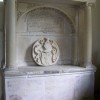
Peter Beckford died a sad old man, burdened with worry and debts, at the age of 69 in 1809 and was buried in the church at Steepleton. Though he was a man of many talents, they did not bring him happiness. He lies beneath a tomb with a square entablature bearing the Latin inscription ‘PB Sibi et Suis MDCCCIX’ (Peter Beckford; To Him and To His; 1809.)

William Horace inherited the Pitt estates in 1828, and in accordance with his father’s will assumed the name Pitt-Rivers, becoming the 3rd Baron Rivers. The inheritance however, proved to be debt-ridden, and he drowned himself in the Serpentine, Hyde Park, in 1831. Stepleton remained part of the Pitt estate until 1919, when it was bought by Sir Ranulf Baker of Ranston; he later sold off the house and park.

Robert Coward (1819-1905)

Born at Stourpaine into the Dorset rural community in the early part of the 19th century it is unlikely that as he grew up Robert Coward expected a great deal out of life. He was illegitimate, his mother died when he was just 11 years of age, by which time he was probably already labouring on the land and he had little or no formal education.

Robert’s mother, Repentance Coward, herself illegitimate and the daughter of Hannah Coward, was baptised at Holy Trinity church at Stourpaine on the 24th July 1785 and was buried there on the 17th January 1830, when it was recorded that she was 47 years of age. She never married but had two sons; Job, baptised 12th February 1815, he died in infancy and was buried on the 27th May 1817; also Robert, who was baptised on the 16th May 1819.

After his mother’s death in 1830 Robert was probably taken in by another branch of the Coward family living in Stourpaine or by his father and it is likely throughout this period he offered himself for work as an agricultural labourer.

On November 9th 1842 Robert, then 23 years of age, married Ann Allen. She was also from a poor Stourpaine family: the 1851 census has Ann’s parents and three of her siblings listed as paupers’ inmates of the Blandford workhouse.

When pulling together a family history a marriage certificate (after 1837) will often provide the missing links: it will confirm the ages of a couple, who their fathers were and the witness details can reinforce or dismiss ideas you might have about your ancestors’ relationships.

That is the case here. The fact that the couple and all three witnesses signed the marriage certificate with their mark tells us they were illiterate and had not benefited from a formal education. We learn that Robert Coward knew his father was Henry Horlock. One of the witnesses was Charlotte Horlock so it is reasonable to conclude that Robert was on good terms with his father and family. Interestingly, perhaps out of respect for his mother’s memory, he never changed to his father’s name. His great and great great grandfathers were also named Robert.

Children were late coming to this relationship but after five years of marriage in 1847 Robert and Ann had a daughter who they named Rhoda. She was baptised on the 2nd of May in that year. Everything we know about Robert to this point and subsequently learn about his later life leads to the conclusion that he was at heart a decent family man.

Early in 1848 disaster struck this poor family when Robert was caught poaching. We know of nothing to suggest this enterprise was for any purpose other than to put food on the table for his family. He, however, on being apprehended by the keeper would have straight away known he was in serious trouble and likely to be facing six months in jail with hard labour at the very least. Perhaps, it was the thought of being separated from his wife and baby daughter that prompted him to make a fight of it and to try to escape the clutches of the keeper. Failing, he found himself arrested and held in jail until his trial at the Dorchester Assizes on 11th of March 1848. He was charged with poaching and beating a keeper.

Dorchester Crown Court had a long reputation for handing down rough justice. In the 17th century the notorious Judge Jefferies let it be known at the start of the hearings against men involved in the Monmouth Rebellion that he was minded to be lenient: 74 men went to the gallows. Robert would have known about the seven men from Tolpuddle, like him all agricultural labourers, who had been transported to Australia on trumped up charges that they had formed a Trade Union. Later in 1856 Martha Brown was sentenced to death for defending herself against an ogre of a husband. She was publicly hanged in front of a crowd numbering thousands.

Robert would have faced his court appearance with much trepidation and without a doubt he was greatly worried for his wife, who he knew even if he was treated leniently faced a long period of having to provide for herself and their child on her own.

“The sentence of the court upon you is, that you be transported beyond the seas for a term of 7 years.” For Robert this dreadful punishment the worst he may have expected meant that once transported he would never return to England and it was unlikely he would ever see his wife and daughter again. He was just 27 years of age and he must have felt that his life was over. He left London aboard the ‘Adelaide’ on 17th August 1849 arriving in Sydney on Christmas Eve 1849.

It was surprising, but reinforces what we say earlier about his good character, that he secured his Ticket of Leave on 30th December 1849. This was incredibly quick and confirms that he must have been a model prisoner in England while waiting to sail and continued to be so on the voyage and on arrival in Australia. This did not mean he had his freedom but he was probably allowed to work for wages and live virtually free: he would not have been allowed to leave Australia until his sentence had been completed and he would have from time to time to appear before a local Justice. He may have been restricted in other ways such as the area he could work and live in and he may have been subject to a curfew.

He must have been more than a little relieved to have survived the voyage and found that his life was not after all going to be quite as bad as he had every reason to have expected it to be. But imagine his joy on learning that his wife and daughter had secured passage as assisted immigrants. Ann and Rhoda arrived in Australia on the 14th August 1851. They were not long separated their first child born in Australia in 1853 was another daughter Sara Martha.

The government needed colonists to settle in Australia but few went out and the government turned to convicts who had completed their sentences; they were offered the essentials of free land, tools, seed and livestock. These incentives meant that many accepted the offer and became landowners and farmers.

Sentence served, against all the odds family united, Robert and Ann would have seized this opportunity with both hands. They stayed in Australia and produced a further 10 children, five sons and five daughters.  When he died Robert Coward’s estate was one thousand six hundred and twenty seven pounds. This couple had managed to turn adversity to opportunity and they both enjoyed a long life. Ann died on the 24th November 1900 aged 78 years and Robert died 22nd January 1905 aged 88 years. They were living and farming in Maitland, NSW where they are buried.

Rhoda thrived and on the 25th January 1868 married William Gulliver a son of Dorset who arrived in Australia around 1849 aged 5 years. Rhoda and William went on to have eleven children and some of their descendants now live in New Zealand.

Footnote: Robert Coward’s mother, Repentance, worked as a button maker.  Her mother, Hannah Coward, was the daughter of Robert and Mary Coward and was baptised at Stourpaine 11th of February 1759 and was buried in the parish on 16th of March 1794 – a short life of just 35 years. As far as we can tell Repentance was her only child.

We have found that Robert Coward had been in trouble previously. At the time of the 1841 census he was in jail at Dorchester. There were two other members of the Coward family there as well: William (25) and James (70.)

Footnote (2) It appears that Robert Coward had an older brother, Charles. His mother Repentance Coward had him baptised at Stourpaine on the 24th of February 1811. According to information supplied by Andrew Cooper who is a direct descendant of Charles Coward, it seems both brothers were involved in the 1848 affray.

Earthquake Shocks Portland

During the morning of Monday the 16th of December 1735 there was an earth tremor on the Island of Portland described at the time as an earthquake. It did considerable damage but we haven’t found any reports of lives lost. A petition signed by one hundred and eighteen local men was got up and sent to London. Of interest to the family historian is the list of signatories which we have saved in an Excel file: email us if you would like a copy – it’s free.

Here is the wording of the petition headed, The Humble Petition of the Inhabitants of the Island of Portland in the County of Dorset. It was addressed to The Right Hon’ble the Lords Commissioners of his Majesties Treasury and reads:

Humbly Sheweth,

That on Monday the sixteenth of December last in the morning a great and Sudden Shock of the Earth was felt near the Quarrys at the North End of the said Island by which the Earth for more than a mile in length sunk away from the Clift and carried with it the Way leading to the Piere, Overturned the said Piere, and broke and destroyed the Crane thereon, so that at present it is Impossible to carry down from the Quarry’s or to Ship Stone as formerly, by which means his Majesty will loose entirely the Revenue of fourpence per pr.Tunn paid by all persons who Shipped Stone off the said Piere; and also the Duty for all Stone raised in the Island and payable to his Maj’tie and the Inhabitants, will be in a great measure lost, and the latter consequently deprived of his Majesty’s most gracious Bounty extended to them by his Grant of the 28th of July 1730 Until the said Way and Piere is Repaired.

Therefore Your Petitioners most humbly pray that your Honour’s will take this Unhappy Circumstance into your Consideration and Order that the same may be Repaired fit for Shipping Stone as formerly And they as in duty bound shall ever pray.

There follows a list of the 118 signatories.

Fontmell Magna

A large, pretty village of greensand, brick and timber-framed dwellings between high chalk downland, could fairly describe Fontmell Magna in a nutshell. To this we could add that it is quite above the average among those Dorset parishes less fortunate in that they straddle a relatively busy arterial road, in Fontmell’s case the Blandford-Shaftesbury stretch of the A350.

The name Fontmell translates as “the stream by the bare hill”, referring to the streams which flow through the surrounding meadows at the foot of the downs. But like most villages Fontmell has a long history of settlement, beginning at least as early as the Bronze Age, a time represented by two round barrows marking the resting-places of Wessex Culture chieftains. Its history in writing however begins in the 8th century, where it appears for the first time in an early Saxon charter recording that Coinred, father of King Ina, granted a deed of land in the area of the parish. Coinred does not however refer too the serfs, presumably of Romano-British stock, who must have worked this land.

Domesday Book then takes up the chronicle when in 1086, it records that among the holdings there were four mills. Such a number of mills would have needed quite a few millers to work them, and infers that as early as the late 11th century this village must have a (relatively) populous and well-developed community.

With the exception of the lower courses of its tower, the original medieval church of St. Andrew was entirely rebuilt in 1862. The parapet is copied from an original 16th century section of parapet, now on display in the north aisle. Standing in the churchyard is a memorial to Lt. Philip Salkeld, son of a former rector, acknowledging an act of outstanding military valour. During the Siege of Delhi in the Indian Mutiny of 1857, Salkeld, in the company of five other comrades, led the detail appointed to lay the explosive to blow up the Cashmere Gate on September 14th. This operation made the capture of Delhi possible, but it cost Salkeld his life after his arm was shattered by gunfire. A Sapper called Burgess then tried to light the fuse, but he too was killed, and it fell to a man called South to complete the task. Apart from the bugler, South was the only member of the party to survive. The Salkeld memorial commemorates his award of the VC – one of fewer than five Dorsetmen to earn it.

A former mill on the east side of the high street is now a residence with an attractive new façade. The mill pond, which once worked the wheel, is fed by a clear stream issuing from springs at the base of the chalk. Just a few hundred yards from its source this stream supplied the necessary clean water for the brewery on the west side of the street, for generations an industrial mainstay of the village’s economy.

It was in the adjoining house that the author, publisher and former head of Cassells, Sir Newman Flower, was born in July 1879, the eldest son of Fontmell’s brewer. In his autobiographical ‘Just as it Happened,’ Sir Newman relates some timely anecdotes presenting an interesting insight into the harsh, often uncouth day-to-day life in Fontmell during his formative years. There is the day he is reported to his father by a water bailiff for shooting a trout in the stream, and the gamekeepers in the wood who were shot at; the friends he went to school with, who perished in the trenches.

The village to the west of the main road is characteristically something of a warren of sinuous back lanes beyond the range of traffic noise. Fontmell has a post office, shop, and a neat row of cottages along the A350 facing the Crown Inn and a large brick mill behind. The cottages are thatched, probably of the 17th and 18th century, but some Victorian houses are also present nearby. A little beyond the village is the 17th century Manor Farm, typical architectural features of the period: mullioned windows with four lights (panes) and hood moulds, with stone and black-tarred barns attached. Woodbridge Mill, one-and-a-quarter miles north west, is early 19th century. One-and-a half miles to the east stands Fontmell Hill House, a grand residence built for the composer Balfour Gardiner. In 1843 Sir Richard Glyn provided Fontmell with a school, where one obligation of the girls was to sew shirts for their benefactor.

One interesting historical record of Fontmell is the village Clothing Book, a vellum-bound archive begun in 1861 by the tailoring Stainer family. The book records four generations of villagers formed a kind of savings cooperative to pay for clothing. The scheme was rather like an early form of Christmas Club and an informative insight into Fontmell’s social history.

Another is an archive kept between 1934 and 1949 by Rolf Gardiner at Springhead Farm. Long before green politics began to assert itself, Gardiner was a committed practitioner of sustainability, one of the earliest ecologists to promote organic farming. In 2003 his son, Sir Eliot Gardiner commissioned a survey of Gore Farm Forest’s ecology and archaeology, a copy of which has been donated to the archive.

This survey was effectively the springboard for what is now known as the Fontmell Magna Project. This project is in partway (though not exclusively) a response to the decline in local farming, which is why the archive team are in the process of collecting items from local farmers, so as to reconstruct something of the history of their holdings. But the Fontmell Magna Project envisages a number of phases disseminated over the coming decade. As far as funding permits each phase concerns a particular aspect of heritage, or the assets of Fontmell parish. The project is already promoting a better understanding of these heritage assets. Furthermore it is being very much youth-led. Many young people are enthusiastically involved in building up a database and running a mobile exhibition.

Volunteers are meeting monthly to sort and catalogue the treasures, while children from St. Andrew’s School are participating in a survey of local trees, which culminated in an exhibition in June 2003.

We may wonder how these children of today, had they been that age 30 years ago, would have documented one particular tree, an elm, which once occupied a pivotal position in the life and folklore of the village. The Gossip Tree doubtless furnished much-welcome shade in tortuous high summers of old. But the summer of 1976 and the added complication of Dutch Elm disease attack, proved too much for its centenarian constitution. A lime sapling, complete with commemorative plaque was planted to replace the Gossip Elm sometime after.

Perhaps it is as well the embattled old elm died more or less from natural causes rather than from a woodman’s chain saw, for a curious legend soon attached to it, saying that misfortune would befall anyone involved in cutting it down. But Fontmell retains another indigenous, possibly older legend. Any native of the village, it is said, who leaves it is destined never to return to retire there if he or she is successful in life – only failures ever come back. This myth is only likely to exercise the interest of folklorists, though curiously, when Newman Flower retired he did not return to Fontmell, but made a new home for himself in Tarrant Keyneston.

Tom Roberts – The Painter Who Captured a Continent

He was born into the hurly-burly of early Victorian Dorchester but laid to rest in the colonial soil of Tasmania. He showed small promise of any artistic talent as a child, yet at the end of his days his works were better known throughout the largest island outpost of the British Empire than in the land of his birth. And no-one, least of all his parents, could have imagined that his future would lie in committing the raw primeval beauty of the antipodean outback to canvas.

Thomas William Roberts was born in Dorchester on March 9th, 1856, the son of a printer and reporter, Richard Roberts, then a sub-editor of the Dorset County Chronicle. Richard had married Tom’s mother, a Londoner named Matilda Agnes Cela Evans, in Shrewsbury early in 1851, and the census of that year showed that at that time he was still living with his parents, Thomas Roberts (50), described as a Brass Founder and his wife Hannah (48) both born in Shrewsbury. By 1861 however, Richard and Matilda had moved to Dorchester, having taken up residence in house in Fordington High Street. Their household consisted of Thomas, then 5, a one-year-old daughter, Alice Matilda, and an 11-year-old housemaid named Mary Wills.

Tom attended Dorchester Grammar School where he received a thorough grounding in the classics, learning quotations in Latin he was able to recall years later. During these schooldays his greatest accolade was winning a prize for scripture he later explained, “not by answering the question directly but by imaginatively writing on a related subject.”

On 30th December 1868, when Thomas was about 13 his father who was then editor of the Dorchester newspaper died aged only 41 at Wollaston Villas, All Saints Dorchester, leaving the family impoverished. His widow  then courageously resolved that she and her children should leave to seek a new life in the then developing colony of Australia. A married sister  had herself emigrated to there some years before, so that the sisters could be re-united. Tom Roberts’ first home in his adopted country was a modest one in Dight Street, Collingwood, a suburb of Melbourne.

But the position Roberts was now in determined that he could not resume any schooling, but had to find some employment at once. He soon found a position as an assistant to a local commercial photographer, but the job entailed long hours for small pay. To supplement a meagre income his mother took on the job of making school satchels as an outworker under her brother-in-law, who ran a leather goods business. During this time Tom would help his mother in the evenings by cutting out the straps for the bags. He would later write that his mother “was the bravest woman I ever met.”

After a time, Thomas’ “bulldog” qualities helped him find better employment with Stewarts, the leading commercial photographers in Melbourne. Here he progressed rapidly and showed an early artistic bent when, for a commercial portrait, he hit on the idea of using a background of tea-tree boughs instead of the conventional classical one of mock pillars and curtains fashionable at the time.

The government had embarked on a programme of establishing design schools in the state capitals and Melbourne (Victoria) was no exception. By the time he was just 19 Tom had become Stewarts deputy manager yet he took a course to study design at a new state design school founded at Collingwood, where he won the annual prize in 1875.

From this school Roberts progressed to the National Gallery Art School, usually known by its pet-name of “The Tank.” Here his talent caught the attention of the drawing class overseer, Thomas Clarke, who advised him to go to study in Europe. The gallery had only an un-coordinated training and no life-class, the training consisting mainly of copying the gallery’s own mediocre pictures. Taking the school’s dissolute students under his own wing, Roberts broke away to set up on his own.

Stewart allowed Tom to attend a half-day-a-week painting class, where he exhibited his first major picture in the photographic studio. The sale of this picture, together with earnings from local newspaper reproductions and other monochrome drawings, paid Roberts his passage back to England in 1881.

The following year found the now fully professional, dedicated 25-year-old artist studying hard at the Royal Academy. His drawings were in demand from ‘The Graphic’ and other periodicals. But then another person entered his life who was to have a marked influence upon him: painter Bastien Lepage, a protégé of the French impressionists under who’s spell Roberts himself was to fall. Studying their work, Roberts then eschewed the conventional academic school for a broader horizon.

The flourishing painter’s next move was to undertake a tour of Spain in the company of Dr. William Maloney, the artist John Russell and Sydney Russell, an architect. At one time the four nearly became embroiled in Spain’s political upheavals as partisans, but an encounter with Barrau and Casas, two first-rate pupils of Gerome was to have an outstanding impact on Roberts and his Australian contemporaries in turn. They taught him that in painting he should first seek ‘the general impression of colour.’ On his return from Spain Robert’s sketches of the country made a deep impression on Arthur Streeton and Charles Condor, two fellow artists with whom he was soon to share a close professional relationship.

However for a time Roberts fell in with an artist called McCubbin, with whom he set up a painting camp at Box Hill, Melbourne. Here they were joined by Louis Abrahams though Roberts, not content with mere landscapes, sought to record the active life of the bush. After a time Roberts and McCubbin rented a coastal shack at Mentone near Melbourne, where the former first encountered Streeton, a talented lithographer, and invited him to make a trio at Mentone. Visiting Sydney, Roberts then fell in with Charles Condor, who extended the specialist school to a quartet.

In 1887 Streeton realised that a derelict 8-roomed timber house he had come across on a hill above Heidelburg would be the ideal homebase for a painting school. The building commanded a spectacular view over the Yarra basin to the Blue Hills, and Streeton was soon joined by Roberts and Conder. It was here, between 1889 and 1891 that Roberts painted two of what are considered his finest canvases: “The Breakaway” and “Shearing the Rams.” In 1895 he began another great impressionistic bush ranging picture “Bailed Up,” but then put it aside for another 30 years before finishing it.

Conder later left the school to work in Paris, but not before the group staged an exhibition of 9×5 inch “cigar-box lid” impressionistic paintings in Melbourne. By then Australia was in the grip of a recession, though Roberts was largely unaffected and in 1896 became engaged to and married a local woman, Elizabeth Williamson. Their only child, a son Caleb, was born in 1898.

In 1901 Tom Roberts was again preparing to return to England when he held, at the Society of Artists rooms in Pitt Street, Sydney, an exhibition of paintings for sale at between two and seventy guineas. But then the landing of a prestigious commission forced the artist to abandon his travel plans. It was federation year, the event marking the historic unification of the seven colonial states into the Commonwealth of Australia. To mark the occasion the Australian Art Society commissioned a Melbourne artist for an 18×12 foot canvas for the opening of the Parliament building by the Duke of York. When this painter had to withdraw due to illness Roberts was offered the commission instead.

The artist then embarked on a tour of the country, sketching all the political figures and scenes to be featured. Although the fee was 1000 guineas, Roberts would come to regret his decision to accept the mammoth project, which would take him two years to complete. The picture is now mounted in St. James’ Palace, London.

By now Roberts was back in England with his family in hopeful expectation of further portrait commissions. Troubled by the notion that his technical skill was falling below his earlier high standard, he seriously considered painting ‘pot-boilers’ for the London market. The dark clouds passed however, after friends prevailed upon him to exhibit at the Walkers Gallery in New Bond Street.

On the outbreak of the First World War, Tom Roberts and his friends rushed to enlist in the volunteers. Tom was posted to carry out menial tasks at Wandsworth Military Hospital, giving up painting entirely for he was never offered an official artist position. Demobbed as a Sergeant in the RAMC, he returned alone to Australia in 1919 for a one-year extended vacation, retreating to the Dandenong Ranges to seek solitude and inspiration for more landscapes. The following March he held a one-man exhibition, returning yet again to England at the end of 1920 to rejoin Elizabeth and Caleb.

This last furlough in his mother country lasted three years until 1923, whereupon Roberts returned with his family to his beloved Dandenongs, this time for good. He built a cottage home “Talisman” in the village of Kallista, and resumed his painting, seemingly amid a whirl or renewed creative energy and discernment. In 1927, when Roberts was 72, Elizabeth died, yet the aging painter could not remain inactive, and the following year he visited Apollo Bay, the Goulburn Valley and Tasmania.

Jean Boyes, for sometime a friend of Tom, became the widower’s second wife in August 1928, the couple making a new home for themselves in Tasmania. In 1930 they returned to Kallista, and it was here, on September 14th, 1931 that Thomas Roberts died, aged 75. In accordance with his will his body was taken back to Tasmania and buried in the quiet churchyard of the village of Illawarra.

Truly, Thomas Roberts was ahead of his time as a pioneer global commuter in an age when many country people would never travel more than a few miles from their place of birth. His is a legacy Dorset can be proud of in having given birth to him.

This Bounteous Breed

One amazing fact about sheep is that there are more breeds of this domesticated animal in Britain than anywhere else in the world. But one breed above almost any other, through the human intervention of cross-breeding, has acquired the distinction of being especially adaptable to variable climates: the Dorset Horn.

The history of this handsome and hardy breed reaches back many centuries. South West Horn sheep already widespread on the downland of Wessex during the Roman occupation and by 1086 and beyond these sheep continued to have an important role in the local agrarian economy. The Dorset Horn, together with the Wiltshire Horn sheep, is believed to be progeny of the South-West Horn type. It is thought that the Dorset Horn had its origin many years before, some experts believing that the modern Dorsets carry genes of prehistoric flocks.

Then during the reign of Elizabeth I certain ships bearing cargoes of live sheep were shipwrecked off Portland during storms. Live sheep were then taken ashore, where they were cross-bred with native Dorset horns producing an offspring with a strain of Merino. The cross-breeding explains one of the Dorset’s most endearing and commercially valuable traits: its thick, short-wool coat, but also the characteristic pinkish face and the ewe’s ability to come into season throughout the year, enabling a farmer to benefit from the most profitable time of the year.

Ewes impregnated by rams in April would be walked to the sheep fairs in September where buyers from as far away as Edinburgh would buy the in-lamb ewes to satisfy the demands of the Christmas dinner table. In the early 1800’s a farmer at Plush called Michael Miller held the last pure Dorset Horn flock. The Dorset Horn was created by crossing the Somerset Horn with the Dorset Horned sheep, and Richard Seymour, a breeder at Bradpole in the 1830’s is widely acknowledged as the earliest improver of the breed. The number of Dorset Horns in the county appears to have reached its limit in the mid 19th century, but declined thereafter, so that by 1900 the number was down by fifty per cent. Another noted breeder/improver of Dorset Horns was Alfred Johnson, a former resident of Symondsbury House, who was also the first to export some of the rams to Australia and the first to make a hundred guineas from the sale of a ram.

In 1956 Mr J. Martin Lenthall of manor Farm, Burton Bradstock, worked a passage to Australia with a consignment of sheep, but also with the intention of carrying out a bit of sleuthing. For two years he went around investigating cattle and sheep stations to see whether hornless sheep were being developed. On arriving in Tasmania he was intrigued to discover a flock very similar to Dorset Horns but without horns. Lenthall returned with a stud ram and a ram lamb – the ancestors of the first Poll (hornless) Dorset Sheep. In 1966 Lenthall left the farm that had been in is family for several generations to begin a new life on a farm called Bradstock Downs near Albany in Western Australia. One of his married daughters (Mrs Beverley Hole) carried on the Lenthall tradition in Dorset.

Like the Dorset Horn, the Poll is unique in being able to breed at any time of the year and produces one of the highest quality wools completely free from grey fibres. The fleece is also very white, even before scouring. Since the 1900’s the breed has spread throughout Britain and more recently into Europe, since like its Dorset Horn ancestor it is able to cope with the varied climates of the continental region.

Physically the Dorset Horn breed has many stirling qualities. Overall, individuals are long in the body and have a very square chunky appearance. The horns are borne by ewes as well as rams and are especially massive, growing upward and then coiling forward close to the muzzle. The head is broad, full and open, the nostrils well covered and the nose pink. The neck is of short to medium length, strong, muscular and well-sprung from the shoulders; the chest is well forward, full and deep. A Dorset Horn’s hind quarters are full, with deeply muscled thighs and the legs are of medium length. There is a find, downy type of fleece free of kemp (course hair in wool) and colour, having firm handling.

Dorset Horn rams have a bold, muscular appearance, with a good length and a strong robust character. The head is one of great beauty with long, strong horns curving downwards and then forwards in graceful curves. Ewes are bright sheep with a feminine appearance and smaller, more delicate horns.

Temperamentally the breed is a docile one. In Britain Dorset Horns and Dorset Polls are naturally found mainly in the south-west region, though cross-breeds are more widely distributed. Because of their ability to cope with various climatic conditions and their other outstanding qualities the Dorset Horn (and particularly the Dorset Polls) are now widely distributed throughout the world, being especially popular in Australia, New Zealand and the USA. Poll meat is tasty and succulent with a high meat-to-fat and bone ratio suiting the needs of the post-millennium market.

Hiring Fairday

Imagine a bright rather cold morning in February with the promise of a fine day ahead. We are in Dorchester during the 1870’s on Candlemas or Hiring Fairday; shops are open early and full of goods and novelties including all the latest fashions displayed to best advantage.

Farmers, craftsmen, and men seeking employment, are in town along with the recruiting Sergeants for Her Majesty’s Army. Women and girls are here from villages for many miles round and with them are the prospects of shop sales reaching levels not seen since Christmas. Shopkeepers will be looking to serve the ladies with full purses and good credit, while the young girls with little to spend will stretch out the day enjoyably window shopping.

As dawn breaks, booths are set up outside of The Corn Exchange and St. Peter’s Church; from these souvenirs are sold including cakes made to represent Kings, Queens and Horses, all lavishly decorated with gold or silver tinsel.

The town is alive to the sound of men and horses as farmers’ dog-carts and farm wagons laden with produce roll into Dorchester from towns and villages all over the County. Barking sheep dogs, bleating sheep, and squealing pigs are accompanied in the lower registers by the lowing of cattle and percussion, provided by the rattling and ringing of the brasses and bells on the horses, which completes the cacophony ensuring the residents wake early.

Horses with manes and tails plaited are lined up on the north side of High East Street and sold in the street, occasionally they are raced up and down the street to show off their paces accompanied by much whip cracking and shouting. Some of the pigs are in pens outside The Phoenix Tavern and sold from the pavement. Cattle and sheep are on the fairground (nowadays the town gardens.) Farmers inspect the latest agricultural implements on display by the Town Pump.

North Square hosts a huge display of dairy produce including mountains of cheese including Blue Vinny and lots of real Dorset butter, which is slightly salted and sold in large earthen-ware pots. A quack doctor or two are about the town offering miracle cures and there are itinerant Ballard singers selling songs. In the Corn Exchange farmers and corn merchants haggle over deals for wheat, barley and oats.

Men seeking employment wear a wisp of straw in their hats; a signal to farmers that they are for hire but the Army Enlisting Sergeants will seek out the fittest and will be quick to tell them “nothing could be better than to serve Queen and Country, and at the same time see the world.”

As for the young men seeking employment it goes well enough and they are quickly offered contracts to start with their new masters on Lady Day – April 6th; they can enjoy the rest of the day. Not all of the older men will find employment even though they will tell you there is plenty of work left in them.  They trudge back to their villages in despair and for some the workhouse beckons.

As the day wears on farmers and visitors from the outlying towns and villages hurry to complete their business in time to call at The King’s Arms Hotel or The Antelope for refreshments before setting-off home.

By early evening all the shops are closed up and the traders are busy making up their books and counting the takings before putting on a warm overcoat and retiring to their favourite inn to discuss the day’s business with friends. As for those several young men who took the Queen’s shilling and exchanged a wisp of straw for a red, white and blue ribbon, they will be wondering what adventures lay in store for them.

Lillington – The Parish Church of St. Martin

Hidden away off the beaten track about three miles south of Sherborne is the small and entirely rural parish of Lillington. It lacks all but the basic amenities but still has a place of worship – the Parish Church of St. Martin. I was visiting the village in search of a baptism record dating back nearly two hundred years and found the entry I was looking for in the church register, which is still in use today.

Lillington is home to about 80 people, approximately half that of the population recorded in the 1851cenus; figures that explain why it will be a few years yet before the church register moves to Dorchester to enjoy retirement on the shelves of the Archive Service. In 1851 the Loader family accounted for a third of the residents with the Banger; Bartlett; Bow; Dunford; Jeanes; King; Mash; Mitchell and White families all present here as well.

At the north end of the parish the church is a close neighbour of the old barn, once a part of Manor Farm and in recent times tastefully converted for residential use. The medieval fishpond is nowadays inhabited by ducks and can be viewed from St. Martins. A decade into the reign of Queen Victoria saw the parishioners planning restoration works for their 13th century church and a year later in 1848 work started under the supervision of Withers of Sherborne.

St. Martins is built with local rubble and faced with the same material; roofs are covered with stone slates and the interior is plastered and finished with a traditional lime wash. It comprises: chancel, nave, west tower, south chapel with entry by way of the north porch. The south door was blocked off during the Victorian restoration because of the access it allowed to a penetrating draft from the prevailing weather. The parishioners at that time installed a furnace outside of the church that provided an early form of under floor heating; the air ducts can still be seen under the door mats in the north porch. The upper part of what was the south door is now a window with a piscina in the recess.

The tower, added in the 15th century, is of three stages, topped off with an embattled parapet with gargoyles and pinnacles. There is a square stair turret on the north wall leading up to the belfry which houses five bells; the oldest is c.1400, the belfry windows are of two lights. The west window above the tower door is of three lights and in the south wall of the centre stage there is a window of two lights.

The narrow late 13th century nave allows for a four seat pew on either side of the central aisle and has a 15th century pointed wagon ceiling with plastered panels, moulded ribs and carved bosses. The present surveyor responsible for the church has been heard to wonder aloud why Mr. Withers overlooked to provide an access point to the void above the ceiling. In the north wall of the nave, east of the porch, is a 15th century three light window with hood mould and perpendicular tracery and there is a small rectangular window west of the porch. In the south wall of the nave is a 13th century two-light window.

At the west end of the nave is the font: octagonal bowl with quatrefoiled panel in each face enclosing shields and roses alternately, on an octagonal stem, of the 15th century.

You enter into the nave from the north porch which has a 17th century round arched doorway. The inner doorway has a pointed arch and a 15th century oak door. Directly opposite is the south chapel added in the 18th century with south and east windows that look quite modern. From the south window you can look out across the churchyard to the pond. George Hamilton Fletcher of Leweston Manor lost his son Gareth a 2nd Lieut. in the Grenadier Guards and his son-in-law Laurence R. Fisher-Rome a Lt. Col from the same regiment; both men were killed in France during the early months of 1915. They are remembered by a memorial on the west wall of the chapel.

During the 15th century the chancel was rebuilt and the east window of two lights with perpendicular tracery has been restored possibly in recent times; certainly the story depicted in the window is modern, possibly a war memorial. The chancel benefits from windows in the north and south walls both of the 15th century and both of two lights. The chancel has a plastered pointed barrel ceiling; the arch is later, probably 18th century.

Monuments within the church and outside in the churchyard include mention of Thomas Gollop and his wife Jane 1824; Thomas Gollop 1793; Samuel Whetcombe 1739 and his son Robert 1737; Edward Jeffrey 1712; Dorothy, wife of Edward Jeffrey Sen., 1705; Nekles Riol and his wife Allse 1693; George Hankins 1671 and Frances, his wife, 1696; Ralph and Thomas Gollop with defaced shield-of-arms, date uncertain but definitely 18th century; Lawrence Cole 1669; and Mary Parry 1708.

St. Martins is a small, attractive rural church part of the Benefice of Sherborne and services continue to be held every Sunday throughout the year but the church is locked at other times. We thank Mrs. Messenger, the churchwarden, for allowing us to inspect the registers, showing us around, and allowing us to take some photographs inside the building.

James Hamilton – Architect of Regency Weymouth

Along the esplanade at Weymouth, where stands an ornamental clock tower, is a multi-storey Regency terrace now considered as one of the finest developments of the period anywhere in England. This Georgian terrace is the Royal Crescent; but what could this development possibly have in common with the White Horse chalk down monument at Osmington? The answer is that these two disparate landmarks were both the conception of James Hamilton, a somewhat obscure figure among 18th century architects, but one who evidently enriched the Weymouth townscape as perhaps no other draughtsman has.

The Osmington White Horse had its origin on Hamilton’s drawing board in 1808 as a commission from the citizens of Weymouth for an equestrian memorial to King George III once he was no longer able to “take the waters” at the resort after 1805 due to his worsening mental illness. But these two undertakings are not the only marks this architect has left upon the soil of Dorset.

Hamilton was born in 1748, but to this day little is known about his origins, family background or education, so it is not certain whether he was born in Dorset or elsewhere. It has been suggested he may have been a descendant of the “Johannes Hamiltonius Britannicus” who sculpted a fine monument to the memory of Robert Napier that can be seen at Puncknowle.

Although nothing is known as to his education or whether he studied architecture Hamilton almost certainly would have been trained in building crafts before setting himself up as an architect. But the profession under that name did not become recognised until the 1750’s and it was commonplace for practitioners to come from a wide variety of backgrounds. For Hamilton, that background seems to have been working as a mason or stonecutter, since there is a record of a James Hamilton of Melcombe Regis being employed as a mason in the Portland Quarry under William Tyler RA, the architect who designed Bridport Town Hall. Since this building dates from 1786, Hamilton may not have established his architectural practise before this time.

There is evidence however, that Hamilton was practising architecture more fully by 1790 at the latest. This comes from a certain Joshua Carter of Bridport, who sometime after 1787 “…began to rebuild his father’s house, employing a James Hamilton, architect, of Weymouth, a contractor in Portland stone.” And Hamilton did work on the rebuilding of the south east wall of the Cobb at Lyme Regis in 1795.

In 1797 Hamilton is mentioned in Weymouth Corporation records for the first time. That year Messrs Sumersvall & Hamilton undertook to repair the inner and outer piers of the harbour. This shows that the architect was evidently still working as a contractor when not in his drawing office, and in association with a Mr Welsford he applied to Weymouth Corporation on behalf of the Protestant Dissenters for a lease of land to enable their Chapel to be enlarged in 1802. Hamilton also designed the Dissenter’s Chapel in West Street in 1804 and, in 1805, the Methodist Chapel in Lower Bond Street, though both of these buildings have since been demolished.

Then three years later came Hamilton’s great design for the imposing Royal Crescent. The Osmington White Horse, on the other hand, was designed and executed on a grand scale, being 320 feet high, yet, as the Dorchester & Sherborne Journal of October 7th 1808 noted: “the likeness of the King is well preserved and the symmetry of the horse is so complete as to be a credit to Mr Hamilton of this town, for its execution.” The equestrian figure of George III is portrayed mounted on his favourite grey charger.

In 1802 John Herbert Browne, a town councillor of Weymouth, recorded that the Council had resolved to put up a statue of the King in the town itself, to honour George’s contribution to popularising Weymouth as a fashionable resort. The figure was to be made from stoneware produced by Coade & Sealy of Lambeth. Having sought approval from the king, John Sealy went to the palace in 1803 and spent about three-quarters of an hour with the King to obtain a measure of the likeness upon which the statue is based. On the basis of this material, James Hamilton then drew up a blueprint, which was then sculpted at the Coade & Sealy works before shipment aboard the ‘Lovell’ to its permanent site in Weymouth.

The cost to Sealy of Hamilton’s design turned out to be greater than that for the statue itself. The finished work is mounted on a square pedestal standing on a plinth flanked by a lion and a unicorn. A full-length robed effigy of the King wearing the Order of the Garter and holding a sceptre stands before a smaller pedestal surmounted by an imperial crown. The statue was unveiled by the Prince of Wales in the presence of the Duke of Kent, Princess Mary & Princess Amelia in a ceremony of great splendour in October 1810.

It was likely also that Hamilton was responsible for designing the houses numbered 7 to 14 in Gloucester Row in 1790; and, between 1811 and 1815, those in Johnstone Row. At 3.00 am on Monday, March 27th 1815 a ship called the Alexander was wrecked on the Chesil opposite Wyke, with the loss of 130 passengers and crew. On hearing of the tragedy, James Hamilton designed a plaque to commemorate the dead, which was put up in Wyke Church in 1816.

Hamilton’s work however, was not confined to Weymouth’s town centre or, in one instance, even within the actual borders of the county. The architect turned his attention to buildings that could adorn the outlying villages, such as Hamilton House in Chamberlaine Road, Wyke Regis. Research based on the 1819-25 Grove Diaries carried out by Stan Pickett of Weymouth has revealed that Thomas Grove commissioned Hamilton to design and oversee the building of a “charming mansion” at Berwick St. John in Wiltshire. This work occupied Hamilton for two-and-a-half years from 1809 to 1811, a commission that evidently required the architect, by then in his sixties, to lodge frequently at Berwick so he could be on site to supervise the construction.

During this period the architect was certainly responsible for drafting the plans of the Parish Church of St. Mary at Melcombe, built between 1815 and 1817, replacing an earlier church on the site built in 1605. Hamilton’s church of Portland stone, with triple-arched portico, pilasters, square podium and black-faced clock surmounted by a cupola with ball-finial supported by eight slender Roman Doric columns, clearly manifests either conscious or subconscious modelling upon the façade of Bridport Town Hall. Possibly Hamilton poached Tyler’s basic design for the latter, but adding modifications of his own originality. Rather critically, this design has been described as having: “a monumental west front of some distinction, but the building is of particular interest as an expression of the empiricism of a provincial architect, acquainted with, but possessing little knowledge of the neo-classical style of the period…” However, the pediment projecting from a plain obtusely-gabled parapet wall is typical of a Hamilton design.

Regarding the particulars of Hamilton’s marital status, rather than his family background, we are rather better provided for. Hamilton was twice married, his first wife having apparently died early in the marriage at an unrecorded date, as the register of St. Anne’s Church at Radipole records that in 1814 a James Hamilton, widower, of Melcombe Regis married Ann Croad, a spinster of Melcombe. By his first wife Hamilton had a son, John, who family tradition relates was the sculptor of the monument to Princess Sophia of Gloucester in St. Georges Chapel, Windsor. Ann was the daughter of Caleb and Mary Croad of Preston, having been baptised on February 23rd, 1785, making her just 29 at the time of her marriage to a man 39 years her senior. Despite his age, Hamilton fathered five children by Anne, baptised as follows: Henrietta (1818); Ann Augusta (1819); Edwin John (March 1824); William John (September 1824) and Edwin Charles (1828).

It is generally considered that Hamilton’s career as an architect effectively ended in 1816, his last project possibly being St. Mary’s in Melcombe. Yet as late as 1824 he is still described as such on his children’s baptism certificates.

James Hamilton died in 1829, aged 81. The Dorset County Chronicle announced his death on January 15th with the words: “on the 13th inst. Jas Hamilton, architect, far advanced in years, leaving a wife and family to deplore his loss.” As he had been a member of a Masonic lodge “Brother” Hamilton was granted a Masonic funeral with 39 other brethren in attendance. This took place on the 19th of January with a procession from the Hamilton’s home in Frederick Place to the Masonic Hall, thence to Wyke Parish Church where the service was conducted by the Revd. George Chamberlaine.

This innovative architect’s passing however, left behind him a bitter legacy for his grieving family to endure. Three months later his widow, Ann, was compelled out of some desperation to seek help from the London-based Masonic Board of Benevolence. She was, she declared, “left destitute with five young children to care for.” As Hamilton’s will has never been found, it is not clear why this was so, but the MBB’s records show that the institution awarded Ann £10, a considerable sum in those days. More ignominiously, it would have been possible for John Hamilton, James’ son from his first marriage, to claim his father’s entire estate if he had died intestate.

On December 3rd, 1831, the Hamilton’s youngest child, Edwin Charles, died and was buried in Wyke Churchyard, possibly in the grave of his father as no separate headstone bearing his name was ever set up. Ann lived on at Frederick Place until sometime between 1851 and 1861. The 1841 census is the last to record Ann’s daughter Augusta, then 20, as still living with her mother at home.