Dorset Ancestors Rotating Header Image

Dorchester

Frederick William Boyton Smith – Part Two

Smith had an unusually stylised signature which, while distinctive was yet legible. His forename was scored through with a backstroke from the “B” that also served to cross the “T” in Boyton, before passing through the loop of the “H” in Smith, to extend some way beyond; the hook of the “H” was then doubled back in a broad sweeping arc to entablature the whole name of Smith. (See photo in photo section.)

How well Frederick W.B. Smith and Thomas Hardy knew each other has long been a matter of uncertainty and speculation. What is known for a fact is that the two men were born within three years – and within three miles – of each other, and were virtually fellow townsmen of Dorchester who most likely often saw each other in passing without being aware of each other’s identity. And while Boyton Smith was no writer, Hardy was an amateur musician, having learnt the violin and how to sight-read music from his father who had been a player in the family’s gallery band at Stinsford Church.

The two men however, were evidently in almost daily passing contact from as early as the late 1850’s, for the office of the architect John Hicks, where Hardy was working as an articled apprentice and to which he would have walked each day, was situated in South Street, where Smith was then living. This office was also next door to the home of the great schoolmaster poet and scholar William Barnes. But it is likely that the intermediary who brought Smith and Hardy together was Walter Fletcher, a long-time walking companion of the latter, who also happened to be a friend of both Boyton and Sydney Smith. Fletcher was present during Sydney’s last visit to his elder brother in 1877, and it is probable that, quite independently, Smith was acquainted with many of the same people in Dorchester as Hardy was. He would therefore be familiar with many of the same aspects of life in the neighbourhood, and would have been involved in many of the same organisations.

An example of this close involvement came in 1904, when Boyton Smith was commissioned by the Society of Dorset Men in London to set ‘Praise o’Dorset,’ a poem by Barnes, to music for the occasion of their inaugural meeting. For the 1922 Dorset Year Book the Society’s founder and vice president, William Watkins, wrote a piece in which he imagined himself fifty years on at the annual dinner in 1971 and commented: “..it is glad beyond measure to hear the well-known strain of Boyton Smith’s setting to Barnes’ ‘Praise o’Dorset.”

In 1907 Thomas Hardy OM, JP was appointed President of the SDML, and in a journal letter of November 23rd of that year described Smith’s musical efforts on the organisation’s behalf, giving the composer’s address as Wollaston Road, Dorchester, having moved from High West Street, showing that by that year the composer and the writer were evidently known to each other and in rudimentary contact with each other. This interaction is likely to have increased exactly a year later, when the Dorchester Debating and Dramatic Society (later The Hardy Players) staged a production of Hardy’s ‘The Trumpet Major’ under the direction of a local chemist and JP, A.H. Evans. This production is of interest since it included four settings by Boyton Smith of Hardy’s poetry: ‘Budmouth Dears;’ ‘My Love’s Gone a-Fighting;’ ‘The Night of Trafalgar’ (from The Dynasts,) and ‘Valenciennes’ (from Wessex Poems.) Smith also provided a harmonisation of Harry Pouncy’s setting of Hardy’s ‘The Sergeant’s Song,’ also from Wessex Poems.

The tune of Budmouth Dears seems to have struck a popular chord with London Society, for in a letter to Pouncy in February 1908 Hardy mentions that: “it is true that the song Budmouth Dears has hit the London taste – all reviews quote it nearly.” But it had been one particular scene from The Trumpet Major, enacted in isolation, that had inspired the Rector of Holy Trinity, Rowland Hill, to include it as a piece of whimsy at that year’s May Fair. At this point it is thought that Boyton may again have become involved, since by this time he was Holy Trinity’s organist. In a December 1912 production of The Trumpet Major at the Cripplegate Institution in London, music of the Boyton Smith songs was reproduced in the programme of this performance.

A more intensive collaboration between Hardy and Smith certainly occurred about September 1910 when Smith harmonised some books of traditional carols once owned by Hardy’s father and grandfather. The carols were used in a production of Under the Greenwood Tree under the title of ‘The Mellstock Squire’ in November 1910, on which occasion Hardy received the freedom of Dorchester. Significantly, there exists in the Hardy Memorial Collection in Dorchester a photograph showing Hardy at a rehearsal of this play. The harmonisations of the carols appears to have been completed in early October and were much appreciated by the Dorset County Chronicle as well as Hardy himself, for Smith’s manuscripts were found among the author’s papers in his study after his death.

It appears that Boyton Smith and his father had leanings towards arranging Dorset’s traditional folk music, though many of these pieces never made it to publication. A list produced by the SDML, includes ‘Merry Bleake o’Blackmwore,’ a setting of Barnes by Smith, and ‘That Do Vollow the Plough,’ a traditional air that Smith harmonised. It is likely that this interest in folk music was responsible for involving Smith with the Society, since among the Society’s objectives to promote or encourage were a fuller knowledge of folk-lore, literature, natural history, art and music. Hardy himself, in a letter of 26th December 1907 to A.M. Broadley confirmed he was “…looking for some old Dorset psalm tunes, either composed by Dorset men, much sung in Dorset, or bearing names of Dorset places for the Society of Dorset Men in London.”

Fellow Durnovarians of Boyton Smith became enthusiastic officionados of his music and obviously relished the local associations it invoked. For instance, in the November 2nd, 1905 edition of the Dorset County Chronicle it is noted that at the previous evening’s Old Grammarians Annual Dinner, those present sang their favourite anthem Praise o’Dorset to Smith’s music. Hardy was a member of the Old Grammarians, for he held the position of Governor of Dorchester Grammar School. The Smith setting of Praise o’Dorset was also played during a forthcoming Hardy Players production of The Woodlanders.

Naturally, William Barnes had been a life-long mentor, fellow townsman and friend of Hardy, and it seems likely that Boyton Smith also set further works of Barnes to music as well. After all, Sydney and Boyton Smith attended Barnes’ school, and their parents also had close association with him. Following an enquiry about Dorset songwriters from Major William Arnold, Hardy replied in a letter of November 23rd 1907: “Mr Boyton Smith of Wollaston Road, Dorchester, has lately at the request of the Society of Dorset Men in London, melodised some of Barnes poems which are sung with great success at the Society’s meetings and he might be willing to do the same with any you might choose…Barnes’ poems in Dorset dialect, some of them set to music by Mr Boyton Smith.” That Hardy clearly approved of Smith’s settings of his poetry and incidental music for his productions is shown in the writer’s recommendation of the composer to Major Arnold and Granville Barker as one who could portray Dorset as equally well in music as Hardy had in the written word.

But in return, what was Boyton Smith’s opinion of Hardy’s work?  Clearly Smith’s settings were undertaken as commissions from local societies, and not merely because he was inspired to write them as unsolicited labours of love. It is possible that the settings would not otherwise have been a commercial proposition, for he was a typical Victorian composer of light pieces for the sheet-music market. Since even Kipling – who of course was an author and poet – once confessed to Hardy that he did not understand the people and places in his Wessex novels, would it have been likely that an upper-middle class composer like Smith could have appreciated the plots and characterisations of rustic novels? Smith, as far as is known, had no interest in, or little time for reading, but he was not alone in pursuing a career of composing for the Victorian parlour.

On February 23rd, 1911 the county Gazette bore the following sorrowful statement in an obituary column: “It is with sincere and deep regret that we have to record the death of Mr Boyton Smith which, after a short illness, happened at his residence in Wollaston Road on Friday night within a week of his 74th birthday.”

Smith had passed over on the 17th, and throughout the three columns that followed this paragraph, many facets of his character and work were cited. It is recorded that his “masterly knowledge” of organ playing gave the congregation at Holy Trinity the opportunity to hear a proper interpretation of liturgical music. So much was music a life-long love of Smith that he devoted every hour to it. No labour was begrudged, and his genial disposition and inspired enthusiasm met with a ready response from choir men and choir boys of Holy Trinity across the twenty-two years of his association with the church. Indeed, such was his devotion to music that he persisted in it to the limit of his endurance in his declining years, and it was a sad day when, through advance of age and frailty, Boyton Smith was compelled to resign his position as organist. Not least among those who mourned his passing would have been Cannon Hill, who brought to Smith a friendship as close as the friendship towards the minister’s predecessor, Henry Everett, had been.

Smith dearly loved his home town, where he was furthermore a generous and charitable citizen ever ready to help any good cause, his great talent contributing to the object in hand. His acts of kindness were many and this aspect of his personality won him the hearts of many. For Boyton, loftier ambitions would always subordinate to unselfish consideration for his fellow citizens. Yet out of a patriotic duty, he managed to find time for service in the Dorchester Corps of the Volunteers that in those early days saw the enrolment of many Dorchester townsmen. The obituary further noted that Smith had served as the first ever Weymouth representative of Trinity College, London, for a number of years. As a tribute, the music for the first Sunday service at Holy Trinity following Smith’s passing was of a special character. The Dead March (from Saul) and his arrangement in G of the Te Deum was impressively played by his organist successor, Edgar A Lane. On this occasion the special preacher was Arthur Hippersley Smith of Langton, East Yorks, son of the Curate in Charge, Revd. P.A. Hippersley Smith. At evensong canticles were sung to the composer’s favourite tunes, as well as a rendition of his beautiful anthem “I Will Lay Me Down in Peace.” Following the Blessing the choir sang the sublime quartet and chorus “Blest are the Departed” (from Spohr’s “Last Judgement.”) Special services of remembrance were also held at St. Peters and All Saints.

Frederick W Boyton Smith left his wife Penelope and five children behind, the most prominent of whom was his surviving son Sydney, who was by the time of his father’s death the Revd S. Boyton Smith, vicar of St. Clements Church, Bristol. The others were Florence (Mrs Edward Salisbury of Streatham;) Margaret Ada (Mrs G.H. Lock of Shrewsbury;) Helen (Mrs Philip Harding) then living in Canada, and Frances (Miss Boyton Smith.) From these, Boyton Smith had eight grandchildren.


Click on this link to hear Phillip Smith play Boyton Smith’s ‘ Isle of Beauty.’ http://www.youtube.com/results?search_query=Phillip+Sear+Boyton+Smith&aq=f
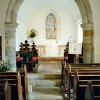
Frederick William Boyton Smith

Today he is virtually forgotten, yet he fathered no fewer than one hundred and ninety three short salon pieces and organ works. Information about his remarkable life is distinctly hard to obtain, yet he was a contemporary and associate of Thomas Hardy, and set many of the writer’s poems to music. Now, after more than a century, the obscure and remarkable persona of Frederick Boyton Smith has been partly rediscovered through exhaustive researches at the Dorset History Centre and lengthy behind-the-scenes correspondence with Ms Susan Bell, to whom the author of this biographical portrait would like to acknowledge thanks for all her helpful information about Frederick Boyton Smith and his brother Edward Sydney Smith.

Frederick W Boyton Smith was born in Dorchester in September or October 1837, and is recorded as having been baptised on October 13th in Dorchester’s St Peters Church. Frederick was clearly born into a musical family, for his father, also named Frederick William Smith, was a musician; his mother, Helen Boyton and her sister Clara (who was a teacher of music) were the daughters of Richard Boyton, a professor and teacher of piano. Helen was originally from Clifton, Bristol, where she married Boyton’s father in September 1835. To avoid confusion with his father, Frederick jr. is usually known as Boyton Smith. The 1861 census shows that Boyton Smith’s father was originally a Kentish man from Deal, had moved with Helen to Dorchester. He is recorded as being ‘a professor of music and dance.’

At the age of four, Boyton is recorded as living with his parents and brothers Sydney and Walter at Cornhill, Dorchester, but by 1851 the family had evidently moved to 16 South Street. However, the census that year does not include Boyton, as by this time he was studying the organ under George Townshend Smith at Hereford Cathedral, and instead is noted in that town’s census as visiting the home of one Mary Ann Watt on census day. It is thought that Boyton was probably a boarder at the Cathedral school rather than living in with Townshend Smith, but it is uncertain whether he received further training in the subsequent years. By the time of Dorchester’s 1861 census the Smiths had moved to 53 High West Street and Sydney Smith had left for Leipzig in 1855 to study piano, violin, cello, harmony, counterpoint and composition.

Boyton Smith, too, by 1861 had left Dorchester to live in with a spirit merchant’s widow called Ann Gare and her two daughters in Chard, Somerset. The connection seems to have been through Boyton, who by now was recognised as a professor of music, possibly working for the British National School where Mrs Gare was Mistress. One of her daughters, Janette, is recorded as being an assistant at the school, which was situated close to the Gare home in the High Street.

While Boyton and Sydney would have learnt music from their parents at an early age the former’s earliest known published piece was a transcription for piano of a two-part song by Mendelssohn called “Greetings” in 1861. The rest of the decade continued to be a productive and fruitful time for Boyton, during which time forty compositions were published. These were variable pieces suitable for the drawing room, many being for the piano, but also including arrangements based on operatic songs and melodies. There are also songs based on the poetry of Longfellow, Kingsley and Goethe and one piece of sacred music. Most of these works were published by Chappell & Co, Edwin Ashdown, Weeks & Co, or Novello. Of especially high value to Gilbert and Sullivan officionado’s is an arrangement of a lost song from a comic opera by Sullivan called “The Chieftain,” first performed at the Savoy Theatre in 1894.

Boyton appears to have had a penchant for giving his pieces titles in French such as “Sur le Lac Morceau de Salon pour Piano.” This reflects a trend for all things French at the time among upper class Victorian ladies and a good deal of published sheet music in the 1860’s either came from Paris or else purported to come from there.

Yet despite his prolific output in catering for the 19th century demand for drawing room pieces, Boyton Smith and his music are largely forgotten, and even in his home town his name is largely unrecognised and his achievements undocumented.

In 1864 Boyton Smith married a Clifton woman. Penelope Mary Ann Rawle, Penelope had been born in Clifton in 1842, but the 1861 census clearly shows that by then Boyton’s future wife was working as a governess at Burton, Winfrith Newburgh. The birth of a son, Sydney, was registered in Dorchester in 1865 showing that the family was living there by then. The Dorchester Holy Trinity Baptism Register notes that Sydney was followed by Florence (1867), Helen (1868) and Margaret Ada (1869.) The 1869 record gives Boyton’s occupation as organist (he was appointed Organist at Holy Trinity) and his address as Alexandra Terrace, Dorchester.

In February 1866 Boyton’s younger brother Walter, a bookseller by trade, died from nephritis aged only 25. By 1871 the family was living at 39 South Street, close to the home of Helen, Boyton’s mother, who had been widowed the previous year. The census shows that another son, Frederick, was added to the family only one month before and the presence of three servants show that by then Boyton Smith was well-to-do in his capacity as a professor of music. Indeed, the 70’s again saw the publication of another forty or so small compositions and works for the organ. These included sacred music such as “Lo! I will Give you Rest;” “Andante con Moto” (an organ piece) and arranged piano duets such as “The Flying Dutchman.”

However, most of the forty compositions of the 70’s hang on lightweight pieces for the parlour in the manner of “L’Echo du Tyrol” fantasy for piano, or “Jeanne de Arc,” a gallop de salon. “The Love Who’s All to ME” was a popular ballad, while “The Ash Grove” was a well known aire. Yet Boyton was also moved to write music designed to help beginners and students, seen in, for example, “The Pianists Daily Practice” and “The Russian National Hymn.”

But the 1870’s also spelt tragedy for Boyton Smith. The family had evidently moved to Melcombe Regis soon after the 1871 census day, for the Cemetery Chapel there records the burial, on January 2nd, 1872, of the infant Frederick at only 9 months and in January 1876 the burial of a later infant son, baptised Frederick Walter aged only ten weeks. The family’s address was then 2 Frederick Place, Melcombe, but by 1881 it was Lawn House in Lennox Street, where Boyton’s other daughters Helen and Ada also resided. Here another baby, Frances, was born in 1881.

During the years in Melcombe Boyton’s occupation is given as Music Teacher, where his pupils would have attended at Frederick Place. During the 1880’s Boyton was still composing and arranging, his tally for the decade being about another 45 pieces. The Boyton Smith’s with their daughter Helen were still living at Lawn House on census day 1891, their youngest daughter Frances by that time being a boarder at the same school in Wyke Regis that Helen had attended ten years earlier. It is possible that by this time too, Sydney, was studying for a BA in Durham, for the same ‘S Boyton Smith’ appears as President of the St. Cuthbert’s Society, on that city’s St. Cuthbert College’s register in 1895.

Though only 50 when he died in 1889 Edward Sydney had by the end of his life established himself as a prolific composer in his own right, searches having brought up details of four hundred and sixty-seven published compositions. We will publish a brief biographical piece about Sydney Smith shortly.

The end of the 19th century saw the publication of a great volume of sheet music for the middle class amateur to play at home. During this period Boyton Smith published his “Fantasia” based on four more Sullivan operas as well as other opera-based arrangements and waltzes. Yet a discernible shift in genre from parlour to sacred music is evident in Smith’s repertoire during the 1890’s. In all, seven pieces of church music for Novello’s Parish Choir Books and organ pieces such as his Grand March in D were published. The latter is still played occasionally as the recessional at church weddings, though its composer’s name has long since become disassociated with it.

Sometime before 1901 Boyton Smith had evidently moved back to Dorchester; for he is listed in that year’s census as living at 56 High West Street. Very near his parent’s former home at No. 53. He was then 64 years old, still a professor of music, though one ‘employed on his own account.’ Living with him was his wife Helen, her 84 year-old spinster aunt Mary Jane Rawle and one servant. The couple’s elder daughter Florence had become Mrs Edward Salisbury living in London with her husband, their four-year-old daughter, and sister Frances, then twenty years old. Florence and Edward had married in 1887 in a ceremony witnessed by both Sydney and Frederick Boyton Smith. Ada had married George Herbert Lock and was living with her husband, two daughters and sister Helen, then 32, in Shrewsbury. In 1893 Ada had published a composition of her own called “Romance for Violin and Piano” under the name of Ada Boyton Smith. Boyton Smith’s son Sydney went into the Church, becoming an Anglican clergyman who married an Irish woman from Enniskillen called Mary Cooney. By peculiar coincidence the 1901 census shows that Mary’s father William was living in Clifton with her and Sydney, so maintaining a Bristol connection within the family.

At the time when Boyton Smith embarked on his career as a composer, other European composers, whether of piano music or more ambitious works for orchestra, were much in vogue, while England was regarded as something of a musical backwater or desert, which not even the great Godsends and legacies of Elgar, Parry or Vaughn Williams could entirely dispel. The only way a young English composer could hope to gain recognition or financial reward was through the composition of pieces for gifted amateurs. Over the decades Boyton Smith recognised the opportunities that the growing popularity of British musical comedy presented. By the beginning of the 20th century this medium had established itself as the most successful school of operetta in Europe. But as the century progressed the nature and character of Smith’s repertoire changed. Music with commercial potential diminished in importance, a luxury of omission Smith perhaps felt he could afford now that his children were financially independent.

Between 1900 and 1919 Boyton published another twenty-eight pieces of music, half of these being sacred music for the Church. But during this period too, another highly important and ultimately world-renown figure was about to enter his life. He was not a composer or primarily anyone with a career in music; nor was he some distant nonentity from afar off, but a world-renown contemporary who had lived and worked in Boyton Smith’s own town and neighbourhood throughout both their lives. Two men who had made names for themselves in their own ways and had perhaps rubbed shoulders without getting to know the measure of each other.

So did Frederick William Boyton Smith join the throng of the many notables who were friends or associates of the great Thomas Hardy…

To be continued…

[Cut and paste or click on this link to hear Phillip Sear play Boyton Smith’s ‘Isle of Beauty.’ http://www.youtube.com/results?search_query=Phillip+Sear+Boyton+Smith&aq=f
Harry Pouncy – A great publicist for the Dorset scene

Just two months before he died Harry Pouncy visited Pokesdown Technical School in Bournemouth to do what he had become accomplished at doing as an erudite hobby throughout his life: to present a lecture with slides on the beloved county of his birth. Of that lecture on February 3rd 1925 the Bournemouth Echo reported: “There is no one who can talk and bring visions of the leafy lanes of Dorset, charging the air with the scent of its fields and with the atmosphere of its stately ruins and its humble cottage homes like Mr Harry Pouncy of Dorchester.”

Pouncy’s love affair with all things Dorset and Dorset’s people showed itself early. And it cannot wholly be a coincidence that he shared his name and preoccupation with pictorialising Dorset with his contemporaries John and Walter Pouncy, who ran a notable photographic business in Dorchester. Yet their existed no direct blood-tie between himself and the father and son.

However, Pouncy is an unusual name, so it is likely that Harry was descended from a different branch of the family to that of John and Walter, though quite possibly from common ancestors. He was born near St. Peter’s Church in Dorchester and baptised there on December 8th 1870, the son of Thomas Crook Pouncy and his wife Ellen. He had two brothers; Thomas and George Ernest; and two sisters, Mabel Ellen and Michelle Ellen. His paternal grandfather was Thomas Smith Pouncy who married Sarah Crook. Their children, apart from Harry’s father, were Ann, George, Elizabeth and Marianne. Harry was the third (middle) child of Thomas and Ellen.

Growing up within easy reach of the sparsely populated Dorset countryside, Harry grew to love its very soil and acquired an enormous knowledge of the country people’s customs and folklore. He earned a reputation for being a likeable man in every respect. Not surprisingly, his later course as a public speaker and publicist for the delights of his county came to the attention of Thomas Hardy, who became one of Pouncy’s closest friends. The two would meet frequently at Maxgate, Hardy’s home, to exchange information and opinions on the countryside and its customs.

Harry Pouncy began his working life earning his living as a journalist, first as a reporter and then as proprietor of the Dorset County Chronicle and Southern Times, apart from a period serving in the First Volunteer Battalion, the Dorset Regiment during the First World War. In his senior position over more junior reporters he knew the value of a compliment towards them whilst being careful not to flatter insincerely. If a piece of writing from a junior reporter pleased him he would lavish praise unstintingly, and his words of encouragement would have a stimulating effect on his colleagues. On the other hand, slovenliness, bad spelling, wrong initialling and slipshod paragraph writing was anathema to him.

On the 7th of July 1898, when he was 28, Pouncy married Daisy Francis Anwell, a 19-year-old Dorchester spinster, at St. Peter’s Church, near to where he was living. The ceremony was witnessed by the bride’s father, John Alfred Anwell, and Harry’s brother and sister Ernest and Mabel. The Pouncy’s had a son, Harry Anwell Pouncy, born in 1899 and baptised in Dorchester that December. In the 1901 census Harry senior is recorded as a newspaper reporter, aged 31, living with Daisy, young Harry and Lionel Anwell, a relation of Daisy’s, at 41 Culliford Road, Dorchester. As a husband and father Pouncy was a good, kind, patient and conscientious man, and said to be the wisest of counsellors.

Later Pouncy resigned his career in journalism upon being appointed Secretary of the Dorset Farmers Union, his labours for which earned him the respect and friendship of every farmer in the county. Said one leading farmer to a reporter from the Echo: “They thought the world of him. He did excellent work for the organisation and more than that he helped the farmers individually with advice upon questions that perplexed them. He won all our hearts by his zeal and his loyalty and his charming modesty.”

While continuing in the service of the Farmers Union Pouncy acquired a lantern projector and began collecting slides with the intention of sharing his prodigious knowledge of Dorset with the local societies and general public through the medium of public lecturing. Given a lantern picture of a yokel Pouncy had a gift for seeming to make the bumpkin portrayed come alive. He knew the dweller of the open country as no others did.

His lectures included a series called “Old Dorset Rustic Wit & Humour” and it was said that no man was more competent or entertaining in the matter of presenting talks on and about Dorset. Nor was his subject matter limited to customs and folklore, for he could discourse equally knowledgeably on such topics as dialects, archaeology and literature, even singing traditional folk songs. A man of varied interests, Harry was for many years an active member of the Dorset Field Club and Dorchester Debating and Dramatic Society as well as a frequent and much welcomed guest speaker at meetings of the Society of Dorset Men in London.

Sadly, in his last year Pouncy’s health broke down, though even then he would not relinquish his duties with the Farmers Union until that organisation compelled him to. He had been a glutton for work all his life, frequently burning oil far into the night, a regimen that may well have prematurely ruined his health and foreshortened his life. The Farmers Union even raised the money to enable Pouncy to a take a convalescent holiday abroad. But the medical restrictions he was under prevented him from enjoying his holiday to the full as he would have liked.

The summer before he died Pouncy talked with a journalist friend in the Bournemouth pleasure gardens, remarking with some irony that it was “the first time in his life that he had the full freedom to enjoy a sort of unlimited holiday.” Like many cerebral men he wrestled with doubts and difficulties over religious faith, though he was ever open to conviction. Once he saw something to be true he cordially embraced it and acted up to his convictions.

Harry Pouncy died in Weymouth on April 28th 1925 after several weeks of illness and was buried in Dorchester cemetery close to that other great writer and surgeon Sir Frederick Treves, who had himself been baptised at the same font in St. Peters and had been born almost next door to the Cornhill house in which Pouncy was born. His funeral was attended by a huge section of the agricultural community, as well as many literary figures. As that same interviewee farmer in the Echo said: “His death was the biggest blow that could have been dealt us.”

Footnote:

From the Kingston Parish Magazine for January 1914

 Entertainment

On Friday, January 23rd, in the Schoolroom, Mr. Harry Pouncy, the Dorset lecturer and entertainer, will give a popular entertainment in the Dorset dialect, comprising a recital from the poems of William Barnes, sketches from the works of Mr. Thomas Hardy (by the author’s special permission), and old Dorset songs and stories. The time will be as usual, namely, doors open at 7, commence at 7.30. Admission: First three rows 1s. ; rest of room, 6d. ; and children of school age in the Class room, 3d.The general Choir Practice in that week would be held on Thursday evening.


John Pouncy

Although beginning his working life as a house decorator, John Pouncy became a pioneer in the development of photography, a creative but somewhat immodest genius who had to contend with rivalry over the inventor-ship of the process he was convinced he could rightly lay claim to. He also had a sympathetic and philanthropic side to his character that was once put to good use when he lent nursing assistance at the local hospital during an epidemic of cholera. John Pouncy’s was a fascinating and innovative nature, at first somewhat restrained in the full potential of its expression by his first mundane occupation, but the course of his life was first to take a drastic turn.

Pouncy was born in Dorchester on July 16th 1818, the son of William Pouncy, a Piddletrenthide labourer and his wife Mary. In 1843 he married Mary Ann Sprackley, the mother of his first child Walter, though she died in 1846. Just four years later Pouncy met and married Mary Catherine Wills, who presented him with another son and four daughters who all apparently died young or before reaching adulthood.

Until 1854 Pouncy was painting and decorating houses, glazing windows, gilding and carving, but then the new science of photography so gripped his imagination that he resolved to dedicate the rest of his life to it. From then on, and for the next four years, he had to support his new occupation with the earnings from his first one. As late as 1859 the Dorset County Chronicle carried a report “…Mr Pouncy’s proper profession is that of a house painter.”  Three years earlier Pouncy announced through the Chronicle that he intended to publish a photo-illustrated gazetteer of Dorset featuring pictures captioned with historic commentaries.

But John Pouncy had another aim: to resolve through experimentation a major drawback of early photography: that of fading. At the time photographic prints were produced by the salts of silver process, an emulsion notoriously susceptible to fading, and which would hinder Pouncy’s intention to produce permanent visual records of Dorset. To circumvent the shortcoming, Pouncy resorted to photo-lithography, itself a still very imperfect process. Yet Pouncy’s attempt to unite lithography with photography met with some success with the publication in 1857 of his book “Dorsetshire Photographically Illustrated” – the first English publication ever to feature photo litho-graphic illustrations.

Dorset Photographically Illustrated is a remarkable achievement for the time. It is original in technique and so not at all what would be expected from one who semi-abandoned the painting and decorating trade for a discipline in which he had no prior training. The book features 80 illustrations, each with two or more pages of historical narrative and 200 double-panel 8” x 11” pages. The text is peppered with erudite classical quotations from nature poets such as Cowper, Thomson and Wordsworth, and the writing is that of one trying to impress the reader with his learning. What comes across is the mind of an intelligent, practical autodidact who clearly shows an overriding preoccupation with landscapes. Indeed, Pouncy was only concerned with photography for professional reasons; he nurtured no desire to undertake commissioned work for illustrating the publications of others.

Despite the success of the book Pouncy was sufficiently dissatisfied with the quality of the prints to attempt further improvement through experimentation. Spurned on by the offer of an award from the Photographic Society of London to anyone who could solve the problem of fading. Pouncy worked on a process, the basic principle of which had been discovered by Mungo Ponton in 1839. Ponton had noticed that paper coated with potassium bichromate became photo-reactive. Pouncy then coated paper with bichromate, but added gum Arabic and vegetable carbon to it. Having reported his results to the Photographic society in 1858, Pouncy then patented his process. He then continued to perfect the process over the next four or five years, and in 1863 he took out another patent, though acrimony was following not far behind as the question of who had truly been the inventor of carbon printing arose.

Pouncy did however receive some recognition for his pains from Thomas Sutton, editor of the journal “Photographic Notes,” and in 1859 he was finally awarded the French silver Duc de Luynes Medal. It is probable that John Pouncy did have a legitimate claim as the inventor of carbon printing, and he himself certainly thought so, even believing that he could rightly lay claim to the gold Duc de Luynes medal, awarded to a French rival, Alphonse Poitevin eight years later.

Besides the Duc de Luynes prize Pouncy was awarded medals from Scotland (1863), Prussia (1865) and Edinburgh (1867); furthermore his studio received patronage from the Prince Consort, Albert, and the Prince of Wales. It is widely suspected that a photograph of Thomas Hardy as a boy of 16 in the author’s archive was taken by Pouncy – not by any means the sole connection between the two men, as will presently be noted.

But the dispute over rival claims of inventor-ship and bickering within the profession that Pouncy experienced, diminished his ardour for the new art soon after the 1863 patent was granted. Throughout the 1860’s he was still ‘moonlighting’ as a decorator, but the premature deaths of his sons by his second wife left Pouncy with only Walter to inherit his photography business. And in September 1872 the transition from father to son was done and dusted.

What Hardy did in writing to exteriorise Dorset, Pouncy did likewise in his photographs. And it is through this common life-mission that the two men’s paths inevitably converged. Consequently there exist several firm pieces of evidence that Hardy knew of Pouncy’s work and book, even if the latter had never taken that teenage portrait of the famous writer. These points can be summarised as follows:

(1) In Hardy’s novel “A Laodicean,” the central character William Dare is a photographic inventor seemingly modelled directly upon John Pouncy. In his carrying about of camera, tripod and equipment, Dare appears to be doing precisely what Pouncy would have done in preparing for his book on Dorset.

(2) When compiling Dorsetshire, Pouncy was in consultation with the architect John Hicks over matters of style and restoration. At exactly this time (July 1856) Hardy became apprenticed to Hicks for his architectural training.

(3) In 1881 Hardy was contemplating producing a book of his own on Dorset, very much along the lines of Pouncy’s, though in collaboration with Henry Moule.

(4) Even more compelling evidence that Dorsetshire was known to Hardy comes from the book itself. In its description of Kingston House, Pouncy explains how the brick building came to be faced in Portland stone: “…on one occasion before the notion had even entered the worthy owner’s head that Portland stone might be used advantageously to veil the brick walls of his mansion he was conversing with his illustrious visitor about the house.. The King [George III] however, did nothing but utter the words “Brick Mr Pitt, Brick…..” Hardy appears to be reproducing the same incident in almost identical wording in “The Hand of Ethelbert:”  “…to a stone mask worn by a brick face a story naturally appertained…one which has since done service in other quarters. When the vast addition [i.e. the modern manor house]…had just been completed, King George visited Enchworth. The owner pointed out the features of his grand architectural attempt and waited for commendation. “Brick, brick, brick, said the King…Thin freestone slabs were affixed to the whole series of fronts by copper cramps and dowels.”

John Pouncy died in March 1894, aged 75, after contracting a cold that developed into bronchitis. In its obituary the Dorset Chronicle & Somerset Gazette stated that he was a successful worker whose long study of his subject and its intricacies imparted much valuable information to the younger generation. Even in his last weeks of illness he was not content to stay indoors but would set out in the winter cold that probably hastened his untimely end.

Walter Pouncy, John Pouncy’s only surviving son and business heir, was born in Fordington in 1845. The 1891 census for Dorchester records that he married Eliza Rudduck, a Reading woman, at Leeds in December 1881, and lists his occupation as that of “Photographic Artist.” By the time of the census Walter would have had full control of his father’s business (thereafter renamed W. Pouncy’s Photographic Institution) for 19 years.

Walter seems not to have possessed either his father’s inventiveness or his flair for controversy; he therefore did not cut a noticeable dash in Dorchester society. Nevertheless he maintained and built upon John’s archive of Dorset landscapes over another four decades and, perhaps like his father, personally knew and took studio portraits of Hardy.

Pouncy also made slides for illustrated lectures given by Harry Pouncy, a distant relative and namesake, on the subject of Wessex. When in 1914 the Dorset County Chronicle published a large landscape panorama of Maiden Castle taken by Walter (his chef d’oeuvre) it credited him with being simply “the doyen of Dorchester photographers.” A large collection of his pictures is in the possession of the County Museum. Walter Pouncy died in 1918, exactly a century after the birth of his father.

The Prisoner a Padre Befriended

In the autumn of 1862 a 21-year-old man went to the rope in Dorchester jail, a final enactment of 19th century justice for the crime of murder. The condemned man was Edwin Preedy, but perhaps it cannot be said that he was entirely in control of the depressive and violent nature that had driven him to vow he would stab a warder at the prison where he was being held for an earlier offence. For it was the fate of Preedy to suffer an unloved and cruelly deprived childhood.

Born in Leamington, Warwickshire around 1841 Edwin Alfred Preedy was the illegitimate son of a man who never knew how to bring up a child with due care and affection. His mother too, seems to have been a rather detached person who had no influence over her son. As a result of the cruelties and abuse inflicted upon him by his stepfather, seeds of anti-social rebellion and resentment were sown in Edwin’s maturing mind. Until he was eleven he attended a national school where, although he was quite clever he was also a proud, passionate and idle boy. When he was thirteen however, his mother and an aunt conspired to have the boy institutionalised in a reformatory but Edwin decamped from the school after just ten months.

There then followed a string of incarcerations for petty offences. Upon release from the last of these sentences Preedy ran away to join the Army’s 85th Regiment, even rising to the rank of corporal, but then in the company of three others deserted after stealing some clothes. When caught, Preedy was sentenced to penal servitude for three years. From his first prison he was moved, first to Millbank then to Portland. It was while serving his sentence here that Preedy, in a fit of murderous ire, vowed to a fellow inmate that he would take a knife to a warder who removed his soiled dinner plate.

So in September 1862 Preedy was transferred to Dorchester jail to await trial for murder. Personally he saw no hope of a pardon, and in his despair he frequently became violent, such that on two occasions he had to be restrained in irons respectively for 14 and 28 days.

Yet fate it seemed had not entirely given up granting Edwin Preedy an opportunity to repent and receive absolution. He told the prison chaplain that he could only foresee his “dread end.” But at this point a remarkable Anglican minister entered his life, as if sent by a redeeming angel of mercy from on high. The cleric was the then vicar of nearby Fordington, The Reverend Henry Moule BA, and his visits to the cell-bound Preedy throughout the last weeks of his life made history as perhaps the most protracted, challenging and tragic case of a priest’s attempt to save a condemned man’s soul ever recorded.

Henry Moule was a luminary among 19th century Anglicans. Early in his priestly career he boldly tackled moral laxity, ecclesiastical rectitude and the injustices of squalor and the powers that be. He was chaplain to Dorset Barracks and Vicar of Fordington and is best known for his invention of the earth-closet. But his dealings with Preedy introduced him to an altogether new dimension in human nature and pastoral experience.

Moule’s strategy was to entice Preedy into making a confession or admission of guilt, expressing remorse for what he had done. He implored the prisoner to repent of the murder and all his earlier sins. At times the vicar found the prisoner in a conciliatory and receptive mood, but at other times Moule had to endure a barrage of insolence and even physical assault. When his temper was aroused Preedy no longer wanted to be visited. One day, in Moule’s presence, he broke down: “here I am with one foot in the grave; I cannot break down this temper” he sobbed. On another occasion he alluded to other inmates in his position who said they had found peace. It is recorded that, when free in the prison yard he caught and tamed sparrows, but would then vindictively kill them.

Two weeks before his trial Preedy received a letter from his mother, in which she offered to raise money for his counsel. He told Moule he had decided to plead guilty. Surprisingly, at his trial his mother and aunt appeared as witnesses for the defence, but Preedy became abusive to all except the judge, jury and Sydney Osborne. Moule however, could not induce Preedy to see his mother and aunt after being found guilty and sentenced to death; Fordington’s vicar was even warned that the prisoner was too dangerous and unpredictable to approach! It seemed at first that Moule’s consolation of religion had fallen short of extracting from his client full and lasting contrition for his wrongdoing.

Yet Edwin Purdy went to his death with the most admirable courage and calm resignation. On his last afternoon he even took communion in the presence of three or four other warders who were glad to join him. Out of gratitude he presented five men with five bibles given to him by Sydney Osborne. And then…he felt the noose and blindfold about his head, the drop beneath his feet…

What appears to be the only source for this story is Henry Moule’s own account, written some time after the prison assignment it describes and entitled Hope Against Hope. A rare copy of this book is in the County Museum collection, available for study only by special arrangement and a handling fee of £10.

Footnote added 7th Sept,2012. In the school log book for Bradford Peverell dated 27th March 1863 there is the following entry. “Some of the children went to Dorchester to see Mr Fooks and Mr Preedy hung.” Underneath that entry is a note apparently dated 28th July 1873, which reads: ” They should not have gone had I known it and been able to prevent them. H.B.W.”

The 1846 Dorset Summer Assize

The 1846 Summer Assize started with all of the usual pomp and ceremony. The Judges, Mr Justice Erle and Mr Baron Platt, arrived in Dorchester at seven o’clock on the Friday evening and were met just outside of the town on the London Road by The High Sheriff, Charles Porcher Esq., accompanied by his Under Sheriff, Thomas Coombs, Jnr., Esq., and other officials.

The Judges were then escorted in a procession led by a corps of Javelin Men in fine liveries, under the command of Mr. Mark Baker. The Sheriff and Under Sheriff followed in their official carriage drawn by four horses and the cavalcade made its way to the Shire Hall.

On Saturday morning the Judges accompanied by the High Sheriff attended a service at St. Peter’s Church where the Rector, the Rev. J.M. Colson, welcomed them. The mayor of Dorchester, George Curme Esq., was present, accompanied by the borough magistrates and members of the council. The Rev. Charles Baring Coney of Kimmeridge preached the Assize Sermon.

In an address before the commencement of the hearings Mr. Baron Platt commented “there have been great efforts made in this country of late years, by the nobility, by the gentry, by the influential traders of this land, and particularly by the ladies, which I am happy to say have had a beneficial effect.” He went on to say that there had been a real diminution of crime throughout the country but that this improvement had not extended too the southern counties, including Dorset.

The Judge said, “It happens too often that the child of crime, after conviction and suffering punishment, is cast out of prison friendless, characterless, cheerless.” He continued: “surely, gentlemen, it is useful if something can be done for the purpose of giving a reasonable means of bringing back, if possible, this individual to the station he once held in society.” We hear echoes of this today.

It is worthwhile looking at some of the cases heard and the punishments handed down.

William Rideout, aged 56, was before the court accused of stealing six bushels of potatoes, the property of Richard Paviour, at Sturminster Newton Castle. The prosecutor had put the potatoes in a box in his stable from where they were taken. The local newspaper report says “suspicion was excited, and at the bottom of the prisoner’s garden a heap of potatoes was found covered over with grass, just the quantity that was lost, and the same, a mixture of white and purple.” The jury found the prisoner guilty but recommended he be dealt with leniently on account of a long prison sentence he had already served. Mr Rideout was sentenced to be imprisoned for two months, with hard labour.

Charles Barnes, aged 16, was charged with stealing a silver spoon from his master, Mark Andrews, at East Burton. The prisoner left Mr Andrew’s employment without giving any notice; the spoon when missed was traced to a silversmith’s at Wareham. Charles Barnes had sold it for 9s 6d and told the court he had picked it up in the road but the jury did not believe him and found him guilty. He was imprisoned for 6 months, with hard labour.

On a charge of murder was James French, aged 35, found to be suffering from insanity but nevertheless guilty and sent to prison. The following extract from the evidence given by Thomas Jackson to the court provides an insight into life and the sleeping arrangements in a lodging house of that time.

“I keep a lodging-house at Lyme Regis; I knew the prisoner, who was lodging in my house on the night of the 8th instant. At half-past ten at night I saw him in the bedroom, and carried him a cup of coffee; three of my children and John Steers, the deceased, were in two other beds; I saw Steers in bed, and he was asleep at the time I was in the room; I remained about five minutes, and went down to supper, and then retired to bed about eleven o’clock; I saw that French was awake when I was going to bed, and I desired him not to disturb me again, and wished him good night.”

Perhaps the most interesting case to be heard was that of George Boyt, charged with killing and slaying Isaac Gerrard at Corfe Mullen by shooting him. He pleaded guilty and the jury returned a verdict of guilty but without malicious intent. Mr Baron Platt sentenced him to one month in prison without hard labour. Boyt was no doubt relieved at the sentence and probably a little apprehensive when a little while later the Judge called him back before him. The Judge told him he had reconsidered his sentence and because he was convinced there was no malicious intention he reduced the sentence to one week in prison without hard labour. George Boyt was released two days later on the 23rd July 1846.

Sir Frederick Treves

SURGEON BY ROYAL APPOINTMENT

With heavy hearts a small band of elderly men stood around a small grave in Dorchester cemetery on a bleak afternoon of wintry drizzle. It was January 1924 and the mourners were paying their last respects to a figure of great philanthropy and achievement, born 70 years before in Dorchester. They watched as a small box of ashes was lowered into the deceased chalky native soil. The man they were saying farewell to was Sir Frederick Treves, one of the most remarkable of men from an age of giants and one of the greatest luminaries in the progress of medicine and surgery.

Treves was born in Dorset’s county town in February 1853; the son of a cabinet maker and furniture dealer who had a business on the premises now occupied by No 8, Cornhill. A housemaid fondly recalled that in his earliest days at school Treves’ shyness led him to hide behind the coats in the cloakroom after lessons. In 1860 however, he began attending a school run by the poet and Rector of Winterbourne Came, William Barnes, in South Street.

His famous pupil remembered Barnes as: “…an old clergyman of great courtliness, ever gentle and benevolent, who bore with supreme simplicity the burden of a learning, which was almost superhuman.” Thomas Hardy, who’s family lived only a few miles from William Treves’ furniture shop, early became an inevitable acquaintance; it was a friendship which would last for the rest of young Frederick’s life.

Upon the death of his father William, Treves’ mother Jane sold the shop and moved with her children to London. After attending the Merchant Tailors School and University College, Treves with his two elder brothers embarked upon a medical career. In 1871 he became a student at the London Hospital, where his hard work and dedication saw him rise to become Licentiate of the Society of the Royal College of Surgeons.

In 1877 Treves married Elizabeth Mason, a brewers daughter. That year he joined a GP practice in Cheshire, but soon after fell out with the senior partners over their objections to his suitability to attend the confinement of an upper class socialite. For Treves, the social caste of the baby to be delivered matter not at all, but the principle did. He threw up his practice and returned to London in 1879, living first in Sydenham.

From this time he held a succession of posts over the next 20 years. He became an authority on anatomy and surgery, specialising in the abdomen. On one occasion he wrote to The Lancet urging the importance to public health of the registry of disease by hospitals. He was an effective lecturer, able to communicate well with both academics and undergraduates, and encouraged his students to take notes in the wards as well as in lectures. He also founded the Students Union at the hospital.

One of the several curious and unusual cases of his career during these years came when he was summoned to the home of the American millionaire J.P. Morgan. A new-born baby in the Morgan family was evidently dying from an undetermined cause, which baffled all the specialists present. After examining the baby Treves had to admit that he too was baffled by the condition until a second examination revealed the head of a needle which had penetrated the heart. After seeking permission to perform a dangerous operation Treves opened the child’s chest and removed the needle. As he later stated: “..there was only one thing to do: make a grab for it. If I got it there was some hope. If I missed…. but I got that needle!.”

In 1884, Treves encountered Joseph Merrick, a man born with a hideous deformity of the face caused by an abnormal accumulation of spongy tissue, which also included a curious of the nose, so earning him the name of Elephant Man. At that time a travelling showman, an indignity that incensed Treves and led him to rescue the accursed man from his showman master, was exhibiting Merrick for profit as a side-show freak.

He was examined, but Treves was only able to offer minimal treatment. The physician had to rely entirely upon his kindness and humanity in offering Merrick a better life, which he did by taking him to the Dury Lane Theatre and to visit Princess Alexandra.
Treves later wrote, “…I suppose Merrick was imbecile from birth. The fact that his face was incapable of expression, that his speech was a mere spluttering, and his attitude that of one who’s mind was void of all emotions and concerns gave grounds for this belief. It was not until I came to know that Merrick was highly intelligent, that he possessed an acute sensibility and a romantic imagination that I realised the overwhelming tragedy of his life.”

On another occasion he attended Sir Henry Irvine after the great actor had accidentally swallowed the nozzle of a throat spray. Treves examined Irvine and then had x-rays taken, but on his second visit the doctor discovered that his patient had coughed up the nozzle and needed no surgery to remove it.

Treves left the hospital in 1897 to concentrate on private practise and to develop a career as a writer. Upon the outbreak of the Boer War he was appointed consulting surgeon to a South African field hospital. Here Treves found himself defending the Royal Army Medical Corps against criticism that it was dealing inadequately with sickness. This in turn drew criticism upon himself, though he was active in pressing for improvements. One case in particular during this conflict that would leave a lasting impression in Treves’ mind, and one of many demonstrations of the depth of his human understanding, was his deathbed comforting of Frederick Roberts, son of Lord Roberts of Pretoria, who had been mortally wounded during the battle of Colenso.

In the winter after the soldier’s death Treves upon visiting the grave, found that the heat had drawn Robert’s stark corpse from the ground. The doctor – entirely alone – re-interred the body himself. In 1900, before the end of the war Treves’ services in South Africa were recognised in Dorchester when he was made a Freeman of the Borough. In 1903 he opened an operating theatre in the County Hospital.

But the act of duty he is best remembered by came in 1901, when he was appointed to operate on the as yet uncrowned Edward VII for peritonitis. Treves recalled how, to allay public suspicions that anything was wrong with the King on the eve of his coronation, he was allotted a code number, alias and casual disguise, even disembarking from the train at the previous station and walking the rest of the way to the royal residence.

After the operation Treves joined the King on the royal yacht. In gratitude for literally saving his life Edward made the surgeon a Baronet, Knight Grand Cross of the Victorian Order and gave him a grace and favour house, Thatched House Lodge in Richmond Park. It was here that he was once visited by his great friend and fellow countyman, the Cassells publisher Newman Flower, about a matter of publication. Flower lovingly recalled in his ‘Just as it Happened’ how he found every chair but one in the living room piled high with papers which, upon enquiring, discovered were the pages of an Italian dictionary the doctor was compiling, but which was never published.

In 1904 Treves retired from surgery to concentrate on travel and writing books, medical papers and letters to The Times. That year he also undertook a visit to Japan, where he was presented to the Emperor, an event, which inspired one of his greatest works ‘The Other Side of the Lantern.’ On a later occasion he also met the President of the USA. In the summer of the following year (1905) he made a phenomenal blanket cycle tour of every settlement in Dorset, which became the raw material for his ‘Highways & Byways of Dorset’ (1906.) The retired doctor wrote vividly of his impressions of what he saw in the countries he visited, and in one of his letters to the Times expressed his reservations about the nature of the restoration work being carried out on Puddletown Church.

He held the first presidency of the Society of Dorset Men in London, standing down three years later to make way for Thomas Hardy, though he continued to contribute several articles to its Yearbook thereafter, including ‘William Barnes the Dorset Poet’ and ‘Dorset Seventy Years Ago.’

Treves was a humanitarian, a man intolerant of humbug or deception. He was never slow to temper at any injustice yet had great reserves of kindness and compassion. He did not mince his words over matters, which animated or angered him, such as the standard of medical care in hospitals. During his hospital years in London he could still find time to put in an hour or so of writing each morning before his daily work on the wards began. He was a genius of surgery, yet found time to pursue a wide range of other interests. He was keen on sailing and gained a qualification certificate as a Master Mariner. He is said to have sailed the Channel to France and back every Boxing Day. His coterie of friends included many famous men of books and letters such as Edmund Gosse, Thomas Hardy, William Watkins and William Barnes.

After the First World War failing health led Treves to spend most of his time on the Continent, first at Monte Carlo, then Vevey near Lausanne. Here he was visited by Newman Flower, who encouraged him to write ‘The Elephant Man & Other Reminiscences,’ the book which more than any other documented the extraordinary casebook of his career and his distinguished clientele. Other works were ‘The Lake of Geneva’ and ‘Tale of a Field Hospital.’ On a visit to England in November 1923 he joined Newman Flower for a dinner in London in the company of Edmund Gosse. It was the last time the trio of friends would ever meet up together. In the first week of December that year Treves went up the hill above Montreux to watch a football match. Possibly aggravated by the weather, the great surgeon was taken ill with peritonitis upon his return and after several days in a state of delirium he died in the hotel at Vevey.

William Watkins, who had founded The Society of Dorset Men in London, arranged the funeral in association with Thomas Hardy. But the ceremony had to be postponed twice because of bad weather on the Continent and a delay caused by having to produce the death certificate. After the funeral Newman Flower returned to have tea with the Hardy’s.

Later Lady Treves approached Flower with the suggestion that he should write the official biography of her husband, but the widow later had second thoughts about allowing Treves’ court connection to be publicised and withdrew the request. Since then no biography of Sir Frederick Treves has ever been written.

The Fifth of November and Christmas in the Workhouse 1860

A report in the Dorset County Chronicle of 8th November 1860 comments “Just as the legislature appears determined to suppress the commemoration of ‘The Gunpowder Plot’ the custom has revived in spirit so far as Dorchester is concerned.”

Under the dateline “The Fifth of November” readers were told that “not for some time have the streets of Dorchester witnessed such scenes” squibs and crackers flying about in all directions, and several large tar-barrels and fireballs being rolled along amidst crowds of small boys and “children of larger growth.”

The main event, however, was a torchlight procession, in the midst of which a large effigy of the Pope was borne along, suspended from a gallows. The scene reminded the Chronicle’s reporter of Carnival: people dressed in a variety of “outlandish” costumes including representations of Victor Emmanuel and Garibaldi escorting a youth in women’s attire as “Young Italy,” at the head of the procession.

The large crowd paraded along High West Street and South Street during which the liberator of Italy was loudly cheered. Then onto the Maumbury Rings where the effigy was burnt surrounded by the revellers whose faces were eerily lit by the light of the torches and all the while squibs were being thrown about.

“Young Italy” was borne triumphantly back into the town “the streets of which resumed their ordinary quiet aspect after the assemblage had exhausted their store of fireworks.”

Around the 19th December 1860 the weather turned: promising Dorset a white Christmas, heralded by a severe frost. ‘The Chronicle’ reported that a gentleman had written to ‘The Times’ telling that the temperature in his garden had reached 8 degrees below freezing.

The cold spell ended over the New Year. “There was a heavy fall of rain and the snow, which had covered the ground to a depth of several inches, disappeared on Sunday with a rapidity that was truly astonishing and must have caused considerable inconvenience by flooding the land in various localities.”

At Wool the pressure of water was so great it damaged a culvert near the railway station making the line dangerous to trains. A telegraph message was sent to Dorchester and a “body of men were set to work so as to temporarily make the line good.” The newspaper’s report continued “W.Meare, Esq., the able superintendent, made arrangements for engines to meet at the spot, so that the traffic was conducted with only a short delay, and the trains were able to run as usual on Monday.”

At Bridport a building that was being erected was blown down. The building some 400-feet in length had been constructed to a height of two storeys and roofed, but the “ends were open and thus the wind found play and the place was rendered a complete wreck.”

The unusually severe weather brought plenty of wild fowl into the extensive waters between Wareham and Poole and many fell to the guns of the locals living along the shore.

The weather did not stop those more fortunate from providing some Christmas cheer for their poorer neighbours. On Christmas Day all the inmates of the Dorchester Union workhouse had roast beef, plum pudding, with beer and tobacco for the men. A round of festivities continued ’till New Years day.

Mrs. Herbert Williams of Stinsford who was of the habit of having the children from the Dorchester Union house visit her residence at Stinsford for a feast had instead to take liberal amounts of plum pudding, sweet cakes and tea to the workhouse.

The old folk of the union house were entertained to dinner by the Rev. T. R. Maskew where they “thoroughly enjoyed themselves over plenty of roast beef and plum pudding with plenty of other delicacies.” The following day it was the turn of Captain and Mrs. Kindersley, of Syward Lodge who treated all the inmates with cakes, the women with tea and sugar, the men with tobacco and a variety of toys for the children. On the Monday after Christmas the Misses Campbell gave the children cakes and toys and the women tea and cake.

On New Years day Dorchester’s mayor J. F. Hodges Esq., provided a substantial dinner and tea for the workhouse inmates. He granted the women a store of tea and the men a quantity of tobacco. He also gave to the residents of the Almshouses tea, sugar and a quantity of beef, “with which to enjoy themselves at this festive season.” The Chronicle commented “The care shown by Mr Hodges for the poor, and his solicitude for their comfort and welfare, are most praiseworthy…”

Elsewhere around the county there were similar acts of kindness. At Gussage All Saints the better off parishioners, at their own expense, provided for the carriage from Poole of coal for the poor. The coal paid for by The Earl of Shaftesbury and The Provost and Fellows of Queen’s College, Oxford.

On Christmas Eve, Colonel Lutterell, “the proprietor of the valuable and much admired Wootton Manor” gave to the deserving poor of the parish of Wootton Fitzpaine, a large quantity of good beef.

At Wimborne Minster a Special Offertory was given on Christmas Day for distribution amongst the poor. At Charmouth after Christmas a large quantity of bread was given to the poor families of the parish and this was made possible by means of a bequest by the late John Bullen Esq. Good warm clothing was distributed to the poor by the charity of the late Mrs Marker.

A “notorious” poacher named Dicker who lived at Milborne St. Andrew was arrested and taken before magistrates at Blandford charged with shooting at one of the county police while in the execution of his duty.

Henry Moule

With their accustomed inertia officials of the Duchy of Cornwall were unmoved by the letter of desperation they had just received, highlighting squalid living conditions in Fordington near Dorchester. The correspondent described how, in places, the floors of cottages lay beneath the level of the pond, how waste was being cast into drains or into the open street, and the fact that the population density in places was higher than that in Manchester.

The letter however, was not from a desperate councillor or villager, but from Fordington’s vicar, the Revd. Henry Moule, though his plea for action was never heeded. The Duchy had imposed a ban on development, so allowing the community to degenerate into a rural slum. But although he failed on this occasion many more examples of the energy and vision of this remarkable cleric have stood the test of time. But it was one innovation in particular, arising partially by accident in 1859, which made Moule’s name more widely known.

In the summer of that year something inspired Moule to fill his cesspool and instruct his family to use buckets instead. At first he buried the sewage in trenches but then noticed that after about a month no trace of the excrement remained. So he built a shed, sifted the dry earth beneath it and mixed the bucket waste with the dry earth. After ten minutes nothing offensive remained, and furthermore Moule found that the earth could be recycled about five times.

Equally interested in the composted waste’s effect on plant nutrition Moule, in collaboration with a farmer, fertilised one-half of a field with his closet earth while the other half was fertilised with conventional super-phosphate. Swedes planted in the manure grew a third larger than those grown in the phosphate. It was later said that Moule’s invention could be more effective in disease prevention than vaccination.

Such dynamism and passionate evangelical conviction on Henry Moule’s part was legendary. Born in Melksham, Wiltshire, on January 27th 1801, the sixth son of a solicitor, Henry attended Marlborough Grammar School then entered St. Johns College, Cambridge in 1817 to read classics, physics, astronomy and mathematics. After graduating with a BA in 1821 he accepted a position as a peripatetic tutor to the children of Admiral Sir William Hotham. In 1824 he was ordained a deacon, becoming a priest the following year. Appointed vicar of his native Melksham for some years he then took up the living at Gillingham in Dorset, where he was obliged to tighten up a lapse in discipline and standards found to be prevalent and in the conducting of services.

Just before his entry into St. Johns in 1817 Moule had been warned not to enter Trinity Church because of the tainted reputation of its fanatical minister. Theologically Moule was a follower of Charles Simeon, the Cambridge evangelical bulwark against liberal theology in the Church, and wrote several letters to The Times on theology. But Moule was also a great patriot and conservative in politics. In 1824, the year of his deaconcy, he married Mary Evans, a woman related to a London publisher.

Moule moved to Fordington in 1829 to take up his ministry there, though at first he was met by considerable hostility. His deliverance of feisty sermons denouncing local morality and the grievous structural and spiritual state of the church brought him into conflict with locals, who even jeered at his children in the street. Furthermore, Moule’s acceptance into the community was not helped by his demolition of the church’s musicians gallery on deciding to dispense with the orchestra, and by persuading the Morton-Pitt family to end the Dorchester Races on ethical grounds in the early 1830’s.

But on an initial stipend of £225 per annum the new minister made the vicarage a success and in 1840 he purchased adjoining land to create a garden. The year before he had sponsored winter relief work on a major archaeological excavation of over 50 complete skeletons from a Roman cemetery underlying Fordington High Street, even forensically examining some of the bones himself. For some years too, he served as Chaplain to Dorset Barracks, a position that inspired him to write his Barrack Sermons. From the royalties he received from the publication of this book Moule built the church at West Fordington.

In the autumn of 1862 Henry Moule was faced with perhaps the greatest of his pastorship when he undertook the religious counselling of Edwin Preedy, a 21-year-old man being held in Dorchester jail awaiting trial and execution for murder. During the final weeks of the prisoner’s life Moule struggled to force Preedy into an eleventh hour repentance in the face of the condemned man’s fits of despair and physical violence. Moule’s death-cell consultations with Preedy are recounted in his rare 94-page booklet Hope Against Hope*

Henry Moule finally won some approval from his parishioners when he brought their lamentable living standards to the notice of the Duchy of Cornwall. Though he was not successful, in 1861 he produced National Health & Wealth, a twenty-page pamphlet in response to the disease, nuisance, waste and expense caused by cesspools and water drainage. Following his development of the earth closet Moule took out a patent for it in partnership with James Bannehr, thus forming the Moule Patent Earth Closet Company, which made and sold earth closets in oak and mahogany.

In The Field of the 21st November 1868 it was said “…in towns and villages not exceeding 2000 or 3000, we believe the earth closet will be found not only more effective but far more economical than water drainage.” The August 1st 1868 edition of The Lancet reported that 148 dry earth closets were in use at the Volunteer encampment at Wimbledon by 2000 men without any odour being produced. At his death, Moule was still trying to persuade the government that the earth closet was the sanitation of the future. He wrote pamphlets including The Advantage of the Dry Earth System; The Science of Manure as the Food of Plants; Manure for the Million: a Letter to the Cottage Gardeners of England, and a paper on town refuse in 1872. In this paper Moule argued on the three principles of (1) “There can never be a National Sanitation Reform without active intervention by central government” (2) That active intervention can never take place under the water sewerage system without a large increase of local taxation (3) Let the dry-earth system be enforced, and with a vast improvement in health and comfort, local taxation may be entirely relieved.

One of Henry Moule’s proudest friends and admirers was Thomas Hardy, who recognised his worth and even considered himself one of the minister’s parishioners even though he (Hardy) had reverted to agnosticism. Moule was no less active in the affairs of Dorchester and was fervently involved with William Barnes and Canon Charles Bingham in founding the Dorset Museum in 1845, the forerunner of today’s County Museum in the High Street. Moule also founded, in 1850, the Institute of Adult Education and was involved in the foundation of the Dorchester Mutual Improvement Society.

The Revd. Henry Moule BA died in 1880, but five of Henry and Mary’s six children became eminent figures in their own right. Handley Carr Moule became Bishop of Durham and wrote a treatise on Simeon. George Moule became Bishop of mid-China and Arthur E Moule also served as a missionary in that country. Charles became President of Corpus Christi College, Cambridge. Henry J. Moule became an archaeologist and Dorset Museum’s first curator. But a sixth son, Horace, slit his throat in a fit of depression in Cambridge in 1871. Though gifted musically and academically, his life was blighted by depressive and alcoholic tendencies. But the most tragic aspect of Horace Moule’s wasted life and death was that he, like his father, was a friend and mentor to Hardy, his demise having a significant impact on Dorset literature, for through Hardy it inspired the author’s intemperate and failing hero Jude in Jude the Obscure. A grandson of one of these siblings occupied a chair as Professor of Divinity at Cambridge.

*available for examination only by special request at the County Museum (handling fee £10). We will be publishing an article about Edwin Preedy’s short life soon – it will be posted in Real Lives.

Dorchester – The Maumbury Rings

“The largest prehistoric monument of its kind in Britain” is how one early antiquarian observer described Maumbury Rings; just ten minutes walk from Dorchester town centre. It is said to have been able to accommodate ten thousand spectators and enclose an area equal to fifty football pitches, although these claims seem a little exaggerated. Certainly the class of monument to which the Rings belong is one found nowhere else in the world outside England, but many other examples of its kind have since been largely ploughed away, including others in Dorset.

Not so Maumbury Rings. This monument is the largest and most important structure of its kind in Britain and has survived intact simply because of its proximity to Durnovaria (Roman Dorchester) and because it has proved so useful for a range of different functions over the centuries. But Maumbury was originally constructed as a henge, one of those still somewhat enigmatic earthworks of England’s Neolithic people, and its origin can be traced back to about 2,500 BC.

It was Sir Christopher Wren who is said to have been responsible for first applying any archaeologically minded scrutiny to Maumbury Rings, though the great eighteenth century antiquarian William Stukeley also wrote about it at some length. Variously described as a “sun temple” or “a Neolithic dewpond,” others fancied the rays of the sun rising in the east passed through the north-east entrance to strike the rising ground at the opposite end, though this has since been shown to be a fallacy.

A large stone is said to have once stood near or across the south-west entrance, and which was long thought to have been the sighting-stone for solar and lunar observations. It is noted that in 1879 a minor excavation was made in the hope of locating this stone, but none was ever found.

Whatever Maumbury’s original purpose as a Neolithic enclosure was, it may well have suffered the same fate as other henges in the area had not the emperor Claudius resolved to bring Britain into the Roman Empire in 43 AD. When the town of Durovaria was founded it was soon appreciated by some engineers or planners that the Maumbury henge conveniently defined in its own outline an earthwork thought to be easily adaptable to serve as a small amphitheatre for gladiatorial or other entertainment without the extra labour and expense of having to start from scratch. Instead of what had probably been existing insubstantial embankments being levelled into oblivion by ploughing, they were re-inforced with rammed chalk and raised to their present day height.

It is believed that by the first millennium BC Maumbury Rings was in use as a Celtic earthwork, possibly some temple on the lines of Stonehenge. Following the departure of the Roman Legions in about 410 AD, the Rings probably continued in use as a meeting place, but no record exists from the Saxon period. During the Middle Ages the arena became the scene of jousts and other revels.

But it is not until the 17th century that we have a clear record of any major event connected with the monument. During the Civil War the Parliamentarians quickly saw the earthwork’s potential as a defensive site, and turned it into a gunnery emplacement to command the then exposed flank of the town from the direction of the Weymouth Road, up which the Roundheads expected the Royalists to advance. After the Civil War, the macabre rise in popularity of public executions by hanging led to the rings being used for this grizzly purpose. However executions at this locality ceased in 1705.

Rather through hearsay, a story has been handed down about the execution, probably in the late 17th century, notable for its particularly tragic circumstances. The details have apparently never been properly recorded, but a young unnamed woman was sentenced to death for some minor crime by hanging at Maumbury. However, at the time she was condemned she was expecting a child. Not wanting to condemn an unborn child to death as well, the magistrates deferred the mother’s execution until the child could be born in prison.

Following the birth the woman was duly hung, but has ever since left behind the unanswered question of who she was, who the child’s father was, and above all what became of the child. Was the child adopted? Did it die in infancy? Did it grow into adulthood and perhaps emigrate? The tragedy of this case is that it occurred a century too soon for the possible commutation of the sentence to transportation to be enacted. But clearly, this is a mystery, which can never be solved without intensive genealogical investigation.

In 1908 the archaeologist George Cary began the first systematic excavation of the earthwork to be conducted in modern times. Probably Cary hoped that the various romantic imaginings and speculations about the henge’s use in pre-Roman times could be laid to rest once the site’s history was set on a firm footing based upon the evidence of the stratigraphy and finds uncovered. Cary’s first excavation revealed that, as might be expected, sherds of recent pottery, ceramics, and other objects were abundant in the first foot or so of soil removed, and included a Victorian half-penny. But these and some older mediaeval pottery underlying them soon ceased.

By the end of the third season in 1910, two Romano-British graves had been discovered and opened, together with seven shafts approximately of the same age as the henge itself re-exposed in the arena floor. These shafts, which may have served a similar function to that of the comparable pits (Aubrey Holes) at Stonehenge, were found to contain a considerable number of tools made from deer antler, together with Neolithic pottery sherds and flint flakes. Interestingly, the existence of these shafts has led to the conclusion that the Romans experienced considerable difficulties in constructing parts of the arena floor and boundary walling of the amphitheatre.

During a much more recent excavation in the early 1970’s a deep cutting made into the chalk walling on the north east side showed that the Romans had to overlay the prehistoric shafts with rammed chalk in the arena’s western curve in order to stabilise the floor surface. It was therefore evident that the Legionary engineers found it harder than expected to adapt the earthwork to their requirements.

During this excavation another four shafts were exposed, bringing the total known to eleven. During an exploration of the outer part of the north entrance a third grave was discovered in the chalk, this time containing a skeleton of a well-built Romano-British man accompanied by a pottery vessel. But the work of this excavation was mainly concerned with determining the real purpose of the shafts. This was not proved, though it is thought likely that they were flint mines.

Today Maumbury is a tourist landmark and attraction, equally attractive to children and picnickers alike, with its own information board at the northern entrance.