Dorset Ancestors Rotating Header Image

General

Isaac Gulliver – Dorset’s Smuggler King

He was a smuggler, as was his father before him. He flouted the law of his day, yet always managed to present a façade of respectability. Isaac Gulliver, it has been said, was “the gentle smuggler” the Raffles of the Hanoverian duty-free culture; an audacious genius of an illicit occupation.

In the 18th century the Napoleonic wars forced the price of continental wheat and liquor to a prohibitive level for the poor. As journeymen’s wages were also very low there was a great incentive for many men and some women to smuggle as a means to supplement a meagre income. Since agricultural wages were typically only 3s to 6s a week the prospect of making 10s a night by smuggling proved irresistible. Venturers were often in league with captains and were regularly running the risk from or confrontation with excise officers or “Preventive Men”, as they were sometimes known.

But Gulliver was in a league of his own regarding his resourcefulness in the lengths he could – and did – go to give customs the slip on at least three occasions. He is said to have had himself carried through the streets of Poole in a barrel. On another occasion he even feigned death by whiting his face with chalk and lying in an open coffin while excise officers were raiding the house he was in.

Little however is known about Gulliver’s early life in the Wiltshire border village of Seamington near Melksham where he was born on September 5th 1745, the son of a man himself actively involved in smuggling in the Poole area. At this time Bournemouth as a developed resort did not exist, and the narrow wooded valleys (chines) which ran down to the shore were ideal for concealing un-shipped contraband. Coy Pond at Westbourne was a popular rendezvous for smugglers, and Gulliver’s father. And later Isaac himself regularly used this and Branksome Chine for concealing their offloaded cargoes.

When Isaac was 19 in 1765, his father made a will. By this time his son possessed a strong physique and constitution, and had begun to follow in his father’s footsteps. 1765 saw him in collaboration with Robert Trotman, another smuggler who was shot dead in mysterious circumstances on the Poole shore, causing suspicion to be cast upon Gulliver as the possible murderer on the night in question. But as with so many of the other accusations which were to follow in the years to come, Gulliver’s possible complicity in the killing could not be proved. He was also said to have been implicated in a confrontation between 40 smugglers and 6 dragoons at about this time, which resulted in the outlaws’ horses being stolen. Trotman was buried in Kinson Churchyard.

By the time his daughters had arrived Isaac was in league with William Beale and Roger Ridout. Running much contraband on the shore between Poole and Christchurch. As his wealth from smuggling accrued, Gulliver was in a position to enter into property speculation and investment on a grand scale, as well as being a moneylender for mortgaging.

In 1775 for instance, Gulliver bought Pitts Farm and other properties and lands in the Kinson area. Prior to this he also held land at Cudsell and Ensbury and had styled himself as a wine merchant and innkeeper at Thorney Down. Between 1775 and 1783 he bought Eggardon farm from the Revd. William Chafin and had sub-let 75 acres of land at Kinson while living at the King’s Arms for a while as a tenant. In 1783 he sub-let the shop he ran as a winery at Kinson.

The same period also witnessed notable incidents arising from the smuggling operations on the coast. In 1777 a man called Levi Payne stole Gulliver’s 10 year-old grey horse and £21.16s collected on his behalf. In response Gulliver, who was living at Thorney Down at the time, advertised a handsome reward for the return of his property. But in 1778 he offered 10 guineas as a bounty and 5 guineas “to drink the King’s health” to any young men who were prepared to serve in the Navy or Army. December 1779 found Gulliver boarding at the White Hart in Longham while he was selling off some horses.

A few months later customs officers raided a granary thought to have been near the Dolphin Inn at Kinson. 541 gallons of brandy and rum, with 1,871 lbs. of raw coffee were seized from J. Singer, one of Gulliver’s servants. Then in 1782 Gulliver’s name appeared on a customs list for un-shipping 4 pipes (480 gallons) of wine without payment of duty. About four years earlier the King’s Commissioners for Customs in London asked their counterparts in Poole for a report on Gulliver’s activities, but for neither of these indictments were the authorities able to make any charge stick.

But there were few who did not benefit from Gulliver’s activities. The gentry were directly or indirectly the recipients of his imports. And by 1780 Gulliver had established a network of distribution points as far west as Lyme Regis. He also had a force of about 10 men in his service, called “Whitewigs” after the distinctive uniforms of white coiffures and smocks, which they wore.

The broad, solid redbrick and cobble tower of Kinson Church has a band of dripstones around it which today are worn and chipped, but the damage is not due solely to time and the elements. It was caused by knocks from kegs of liquor being winched up the tower, probably under cover of darkness by Gulliver’s men during the heyday of Dorset smuggling.

Gulliver even planted trees on the ancient Eggardon Hillfort to act as a landmark for the luggers making for the coast with their cargoes. Then the contraband would be landed at West Bay, Swyre or Bexington. The Preventive Men were well aware of the activities of Gulliver and his cahorts, but virtually no action was ever taken to curb them. Possibly a certain amount of bribery went on to account for this, but the smugglers had to be caught in the act to be arrested and charged.

In 1784 customs raided a barn at Kinson, generally believed to have been at Pitt Farm, which Gulliver had ought from Mary Barnes. Another tenant of Mary’s was John Potter, whose wife Hannah was questioned by the officers at the Dolphin Inn.

In 1788 Gulliver put his Kinson home up to let and by the following year he was living at West Moors. Three years later he was at West Parley, where he is noted for bringing an injunction against the unlawful removal of the Hampreston/Parley parish boundary marker. But in the 1790’s he moves to Long Crichel to lead a quieter life.

In 1796 Gulliver’s second daughter Ann married Edmund Wagge of Burton House, but found herself a widow after only three years. Gulliver himself was to experience a family tragedy when in November 1798 at the age of only 24 his son Isaac died and was buried at Wimborne. Gulliver officially retired in 1800 but an 1867 edition of the local paper The Poole Pilot carried a story that at the turn of the century Gulliver had landed a record amount of contraband from three luggers anchored near Bournemouth Pier.

The year 1815 saw the Gullivers settled at Kinson House (now superseded by modern flats) and the retired smuggler entering into a legal agreement for a cottage in Kinson to which was attached an ancient enclosure called Le Cocqs, situated behind the Kinson Baths. Gulliver’s daughter Elizabeth, who had married a respectable Wimborne banker, called William Fryer, made her marital home at Pelham House. In 1822 Gulliver was awarded a deed of land at Bourne Farm, Canford, but could scarcely have lived to enjoy it. Ominously, on Friday, 13th of September that year, he died and was interred in Wimborne Minster. The Canford Award revealed that he owned or leased over 390 acres in the Kinson area. His 12,000-word will revealed that he also held extensive property in Wiltshire, Hampshire and Somerset.

(See our story Sixpenny Handley, published 26th November 2012 in Sixpenny Handley category.)
Dorset – Smugglers Coast

The south coast of England in particular has had a long tradition of smuggling, especially where there are many coves or inlets ideal for concealing contraband. Devon and Cornwall are particularly well endowed in this regard, but Dorset has hardly been less important as a focus for the trade. The life of Isaac Gulliver, the ‘smuggler’s king’ of Dorset, has been covered in a biographic feature on the site, here I am considering the more general look at smuggling and what motivated people to become involved in its illegal operations.

Usually thought of as a male preserve, what may at first surprise many people is the extent to which women were also involved. Some of these would have been smugglers wives, though this is not invariably the case. Dorset, in the heyday of smuggling, was of course a very rural and sparsely populated county, with much agrarian poverty. The business of importing goods, usually liquor, from cross-channel boats under the cover of darkness in order to flout excise regulations was a lucrative sideline that impoverished families living within a few miles of the coast would find too great a temptation to overlook.

The register for Dorchester Gaol 1782-1853 lists the names and occupations of no fewer than 64 women convicted of various smuggling related offences. Twenty one of these (32%) were from Portland alone, while just six resided in Weymouth, five in Bridport, three in Bere Regis and two in Lyme Regis. The parishes of another nine are not recorded. Wool and Woolbridge, Preston, Pulham, Sutton Poyntz, Langton Matravers, Marnhull, Morecombelake, Beaminster, Bradpole, Broadwindsor, Buckland Ripers, Charmouth, Chetnole, Chickerell, Corfe, Dorchester and Kington Magna account for the remaining sixteen.

Three notable examples are Charlotte Drake of Bridport and Ann Maidment, a Bridport buttoner, who both assaulted and obstructed excise officers, and Mary Applin of Langton, who committed an excise offence. Martha Lumb of Weymouth was sentenced to three months hard labour in 1822 for smuggling, while Catherine Winter, a Weymouth seamstress, served an 18-day sentence in 1844 for smuggling at the age of 70!

But regardless of the sex of the offender, for the populace as a whole, smuggling was generally considered an honourable trade. The customs officers or the “King’s Men” were responsible for ensuring that contraband was impounded and fines levied. At Poole the problem of smuggling was so rampant and the customs men so understaffed and overworked that Dragoons had to be deployed to assist them as early as 1723. Typically the customs officers were brave and resourceful with a strict code of conduct; so that names were never banded about and nothing ever put in writing.

Poole was especially ideal for smuggling operations because of the exceptional size and highly indented nature of its harbour, the second largest natural harbour in the world. Goods were disembarked into inlet hideaways at Hamworthy and then transported by waggoners to Bristol via Blandford. Furthermore, goods could be offloaded on the south Purbeck coast and hauled overland to be temporarily laid up in the deep inlets such as those at Arne or the Goathorn Peninsula for later distribution to Poole markets without the smugglers having to risk detection by passing through the harbour mouth. Longfleet and Parkstone farmers constructed secret tunnels down to the water’s edge for bringing goods ashore.

After 1759 the volume of smuggled goods passing through Poole significantly increased, though raised vigilance on the part of the Preventatives gradually brought this down. The Commissioners of Customs based in London frequently requested reports on the amount of smuggling going on in the Poole area.

Although landings and disembarkation operations took place from Lyme Regis to Christchurch, the coast from Portland westwards to Lyme attracted special attention. This was because most of the coast is occupied by the Chesil Bank, a shingle spit enclosing a lagoon (the Fleet) which was a convenient storage-sink to hold casks (“tubs”) for collection at a more appropriate time. One memorable incident took place in 1762 when a Cornish vessel was broken up on the Chesil in a winter storm and its cargo washed into the sea. There then followed a desperate attempt by Weymouth citizens to salvage what tubs of liquor they could before the customs house officers could reach them! In the end the citizens claimed 26 tubs to the revenue’s 10; another ten were cast out to sea but recovered the next day.

Probably the greatest hideout and smugglers haunt along this coast was Lulworth Castle, the seat of the Weld family, but which had a connection with smuggling throughout the 18th century from 1719 onwards. In 1719 revenue officers from Weymouth raided the castle and the entire Lulworth area. It has been said that maids working at the castle would routinely warn smugglers when the customs men were in the vicinity by showing a light at a window to indicate when it was safe to come in, but also act as a bearing. The gangs at Lulworth could comprise as many as 100 disguised and heavily armed men, who used Mupe Rocks as the disembarkation point, but the deep ravines and inlets along the coast west of Kimmeridge were also ideal for concealing kegs. A gap in the cliffs at Worbarrow Bay was a special favourite and tubs were raised to the top of Gad Cliff, and brought ashore at Arish Mell and for storage at Tyneham Church.

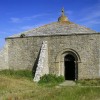
On a knoll near the coast between West Bexington and Puncknowle there still stands an unusual monument. This is The Lookout, a square building constructed as a signal-station for the Fensibles, but which may also have been used by Isaac Gulliver, who used the Bexingtons, Swyre and Burton Bradstock as landing sites after 1776.

Lyme Regis has had an especially long smuggling history extending back at least as far as the 16th century, when certain merchants were suspected of smuggling bullion out of the country by sea. In 1576 a revenue man called Ralph Lane was sent to Lyme with a deputy bearing a warrant to search ships alleged to be involved in the operations. His arrival however, provoked a riot during which the warrant was seized and Lane’s deputy was thrown into the sea. From Lyme contraband was traditionally floated up the Buddle River, often under the noses of the Preventives, who were frequently understaffed and restrained by bureaucratic regulations. Booty offloaded onto the Cobb could not be inspected until it had been carried half a mile to the Cobb Gate. Lyme is believed to be the birthplace of Warren Lisle, a customs officer who at 17 was appointed Patent Searcher at Poole and who made his first seizure of a cargo from a small vessel in Portland Harbour in 1724.

Weymouth was central to excise operations for the sea, but the town’s revenue officials had a long and shameful history of ineptitude and corruption. Enter George Whelplay, who in the 16th century failed to make any headway in countering popular local support for smuggling. Originally a London haberdasher, Whelplay came to Dorset to try his fortune as a public informer, and as such could claim a fifty per cent commission on each fine he imposed upon those he caught, but in 1538 he incurred the wrath of smugglers and fellow customs officers alike when he exceeded his remit. Whelplay twice stumbled on a cargo of horses being illegally shipped to France, but instead of coming to his assistance in rounding up the French boats the officials joined a gang of merchants and attacked him.

Around 1830 smuggling reached a climax in the Weymouth area, where, it is said; tunnels were constructed from the harbour to merchant’s houses and even to the residence of King George III. The leading figure in smuggling to be connected with Weymouth was Pierre Latour, otherwise known as French Peter, who functioned as a prominent gang-leader in the town. In Wyke Regis churchyard there is a grave of one William Lewis, a smuggler shot dead by a revenue officer on board the schooner Pigmy.

In conclusion, anyone who has anything to do with Dorset will know of Thomas Hardy, the well-known novelist-poet. Less well known is that Hardy was an authority on smuggling – and not without good reason. His birthplace cottage at Highter Bockhampton was actually a capacious safehouse for smuggled contraband that could accommodate up to 80 casks of brandy. “But this isn’tall.” When a child, Hardy was regaled with smuggling stories from his grandfather and his own father had a manservant who was actually involved in the trade. The Bockhampton cottage lay on the smugglers route between Osmington Mills and their markets in Sherborne and Yeovil.

Dorset’s Clocks and Clockmakers

The history of clock-making or horology is one of a constant battle to improve the means of timekeeping. Craftsmen in Dorset no less reflected that in their work from the earliest beginnings in the 11th and 12th centuries to the decline of hand-made clocks in the 19th century.

The earliest clocks ever made in Dorset (as probably elsewhere) were those made for churches. During medieval times smaller versions of church clocks were being hand-made for the home elsewhere in the country, but this type was unknown in Dorset. However these clocks would have been very poor timekeepers until technical advances such as the pendulum in the 17th century enabled timepieces to become reliable enough for use in the home.

By the end of the 18th century and from then until the mid-19th century technical refinement and reliability in hand-made clocks reached as far as it would ever go. Henceforth a steady decline in standards set in with the arrival of the Industrial Revolution and mass production.

Dorset exactly reflected this pattern. Its earliest known clock is that residing in Wimborne Minster, dating from 1409, though it is quite possible that this clock or another was in use well before this date. But the earliest sources of our knowledge of clocks in the county come from Churchwarden’s records. These list the names of the clockmakers and repairers – or blacksmiths or whitesmiths – who maintained church turret clocks for over 100 years.

As to when horology became clearly defined as an industry in Dorset, this is difficult to place. For example, when the borough of Dorchester organised its trades into guilds some clock-makers, though included, elected to be registered as braziers or ironmongers as late as the 19th century.

One place where the clock-maker/blacksmith connection can most clearly be seen is in Stourton Caundle parish church. A funerary hatchment of John Biddlecombe bearing the arms of the Worshipful Company of blacksmiths hangs in this church and states “With hammer in hand all artes do stand.” The blacksmith and clock-maker records were lost in World War II but an earlier John Biddlecombe left his blacksmith and clock-working tools to his son upon his death in 1741. The hatchment therefore probably commemorates John junior, who in fact made the church clock still in use today. Indeed, Biddlecombe was just the first in a long succession of smiths to style themselves as clock-makers as well.

One interesting instance of wounded pride has survived showing how clock-makers would consider themselves a cut above other trades. In a letter written in 1772 James Norman, a Poole-clock maker, replies to a complaining minister or churchwarden about his charge for installing a church clock that includes this line: “You may get bunglers or white or blacksmiths to work at a cheaper rate!” Early turret clocks needed constant attention and repair, and as public clocks the cost of their purchase and maintenance was accountable.

A little later than the earliest Wimborne record, accounts of churchwardens in Bridport record a clock in 1425 and in Corfe Castle one is recorded in 1570. It is further noted that Weymouth and Melcombe Regis bought a new clock for St. Mary’s church in 1619. In this instance the maker kept the old clock’s movements in part exchange, indicating that the church’s first clock went back at least 70 years before the replacement. It is not known whether or not these clocks were made in Dorset.

By the 18th century church clocks were being signed and dated. The earliest known signed and dated clock is that set into the tower of Sydling St. Nicholas Church and is inscribed “1593 E.T.C.”

There is no record of a domestic clock in Dorset until the 16th century, but by 1620 records show that the county clearly had clock-makers, and from then a comprehensive list of makers can begin. The earliest records are in the Dorchester Domesday Book at the time of Henry V till Elizabeth I, and the first mention of a clock-maker in the borough records minute of 15th September 1625. As expected the principle-line of clock-makers was centred on Dorchester, though Poole and Weymouth were also centres of some importance by the late 18th century.  Bridport, Shaftesbury, Sherborne, Blandford and Wimborne had a less significant, but strong and continuous tradition of clock-making, while Stalbridge, Puddletown and Bere Regis were home to minor cottage horologists. Shaftesbury and Sherborne were the earliest producers of 17th century lantern clocks.

Most domestic clocks made in Dorset were 30-hour long-case clocks fashioned to suit the lifestyle of the county, and these were the cheapest. By the 1760’s clocks powered by falling weights had appeared and the most common type after LCC’s were the so-called “classroom” or wall clocks which could indicate the time for a large number of people at once without the disadvantage of the long-case clock. Early wall clocks of the late 18th century generally had large dials, well-cast brass bezels and factory movements mass-produced in Birmingham, Germany or the US.

An Act of Parliament in 1797 taxing the possession of all clocks (and watches) – though repealed after just one year – effectively halved the number of makers as public clocks became more important. These were the “Act of Parliament Clocks” which James Kenway of Bridport and Thomas Wood of Dorchester specialised in making.

In Dorchester the earliest recorded clock-maker seems to have been Richard How, who had relations and apprentices with connections to many other makers. Also of importance in the 19th century was James Bunn, who’s clocks retained typical features of the late 17th or very early 18th centuries. However, James Wood of Dorchester (1741-1803) relied on quality of engraving for effect and specialised in making clocks of exceptionally high quality. These were probably the last of an era of true hand-made clocks before the custom of buying in more finished parts made clock-making less exacting.

But probably the county’s most innovative clock maker was Henry Ward of Blandford, who even has timepieces exhibited at the British Museum and in Rockford, Illinois. Another horologist in Blandford was Sam Pegler, who was predominantly a maker of bracket clocks that superceded long-case clocks in popularity during the 19th century, and the town’s Charles Baker made three noteworthy long-case clocks with fine marquetry casings. Members of the Bastard family were also involved in horology.

In Bridport a little-known horologist called Lovelace made a particularly unusual long-case clock in a “black-japanned” case about 1700 that was eventually sold at Sotheby’s. Also in Bridport, a maker called Daniel Freke made a clock equipped with a primitive “half-lantern” pinion drive to the count-wheel.

Weymouth’s John Harvey produced the first fine wall clock between 1790 and 1800. In the 18th century Lawrence Boyce of Puddletown was a quite prolific maker of long-case clocks, while Ralph Norman, an apprentice of Richard How, left Dorchester in the 1720’s to make timepieces in Poole of very grand styles and equal in quality to those being made in London.

There is a record of one William Clark, then clock-making in Stalbridge, but originally from Cerne Abbas or Frome, producing some 28-day clocks, while Simon Aish (1690-1735) made some clocks in Sherborne.

Finally, I can note that much more recently Geoffrey Booth of Bere Regis produced a clock for which the case was made by master carpenter and craftsman John Makepeace of Parnham House near Beaminster.

William Holloway – the forgotten poet

Ask any Dorset native to name their two most pre-eminent literary figures and most likely they would reply: “Thomas Hardy and William Barnes.” Less well known however is another William who seems to have slipped into the position of becoming the County’s forgotten third poet: William Holloway.

Holloway was born at Whatcombe, a manor in the parish of Winterborne Whitchurch about four miles from Blandford, presumably early in 1761 as there is a record of his baptism at Whitchurch on June 23rd of that year. William was the last child of Lawrence and Frances Kains Holloway, whose other children were another son, Thomas and a daughter, Elizabeth. His great-uncle, also called William, was serving as Whitchurch’s Churchwarden at the time of the poet’s birth.

Few details of William Holloway’s earliest years were recorded, other than that he was orphaned in early childhood, his father dying before William was two years old. Following the death of his mother not many years after, William was adopted by his grandmother. His years at school however, were happy ones, during which time he acquired some grounding in Greek and French, and came to admire and inwardly digest the works of Milton, Gray, Shakespeare and James Thompson.

While still a young man, William Holloway left his grandmother’s home and care to settle in Weymouth. He took up an apprenticeship with a local printer, eventually being put in charge of the printing shop attached to Weymouth’s Circulating and Musical Library owned by the obese larger-than-life public figure of John Love. It is thought that from an early age William had already begun to write verse, though his first published work, a eulogy on the local Halsewell shipwreck disaster, did not appear until 1788, when he would have been about 37. A small book of verse under the title of The Cottager appeared the following year, these early works being published by his employer John Love.

On November 1st in the year before his poem about the Halsewell was published, Holloway married a spinster of Melcombe Regis, Christian Jackson, at St. Mary’s Church in that parish. They had four children, all girls: Elizabeth, Lucy, Mary and Hannah, of which only Elizabeth appears never to have married. By this time Holloway had matured into a tall, dark quite handsome man. A contemporary print shows him as having a long swarthy face, dark eyes and a pronounced aquiline nose.

In 1798 George III and his entourage paid their first visit to Weymouth, an occasion which spurred Holloway and several local amateur poets to contribute odes on the event to the Salisbury-based Western Country Magazine. During 1790 and 1791 Holloway contributed five of the descriptive verses for twelve Weymouth views, originally published by Love in collaboration with the engraver James Fittler but subsequently collected together and re-issued as a single volume.

By 1792 The Halsewell and The Cottager had been sufficiently well received by the public to cover Holloway’s expenses, such that Love could proceed with publishing The Fate of Glencoe, a historical ballad. In his preface to this work Holloway exemplified much of the half-veiled modesty that characterised this unprepossessing bard throughout his life. He made it plain that the work was penned amid “the hurry of business” and “interruptions of active life.” Though essentially a studious and serious thinker, Holloway also relished the dramatic arts and theatrical life, once composing a short epilogue for a play staged at Weymouth’s Theatre Royal as well as the lyrics for a song to open a new theatre at Dartmouth.

But in October 1793 Love suddenly died, pitching his respectable partner Holloway into one of those dramatic life-course shifts that so many people experience. Under probate Love’s business stock went up for sale and in his will Holloway inherited his printing equipment and materials for a fee of ten guineas a year, in effect inheriting his employer’s works and library. But for various reasons Holloway was not able to avail himself of this opportunity for proprietorship. Instead he then entered upon a phase of his life which he was later to recall as a time “when fortune frowned.”

In an attempt to break free of what he felt had become a professional blind alley Holloway threw up his Weymouth associations and moved with his wife and daughters to Leadenhall Street in London. In June 1798 he landed a job as a clerk at the office of the East India Company in the same street. His position was well-paid and to all accounts not burdensome, since the clerks had privileges such as free breakfasts and postage as well as enough spare time to read papers. But it is likely that Holloway owed his position to Weymouth’s Steward family, who had close associations with the EIC, and Holloway did dedicate two poems to Francis Steward, a former mayor of the town.

Over the 33 years Holloway was in the service of the EIC the greater part and culmination of his poetry was written. Thematically he was soon reverting to nostalgic elegies on his native county such as The Rustic Farewell: a Fragment in the Dorset Dialect; The Peasants Fate (reprinted four times) and Scenes of Youth. Years later he entered into partnership with another poet, John Branch, to produce a small four-volume work on natural history.

Holloway honourably retired from the EIC at the age of 60 in 1821, though it was another ten years before the company would grant him a pension. The poet did not, as might have been expected, retire to Dorset, but to Hackney, then just a village about three miles from Leadenhall Street. Personally and domestically he was cared for by his eldest daughter Elizabeth, his wife Christian having died some years before. Holloway’s other three daughters all married London men and settled in the capital. Rock Place, his home on Tottenham Road in the Hackney hamlet of Kingsland was even then becoming enclosed by the town-house developments that would eventually absorb the village into the greater metropolis. But when he moved in, Holloway could still look back towards the fringes of London across fields of waving corn.

In 1852 Holloway had to undergo the intense emotional pain of watching his beloved Elizabeth descending into an early grave, even as he himself had begun inevitable decline. After his own end came on July 21st 1854, Holloway was buried in Stoke Newington Cemetery beneath a memorial stone mistakenly inscribed with his age as 96 instead of 93, though today almost illegible from erosion. In his will Holloway left £100 to be shared out between his surviving daughters and grandchildren. Although his obituary in The Times acknowledged his work at East India House, it did not commend, or even name a single one of his volumes of verse.

And perhaps it is this, added to the fact of his early departure from his home county that explains why William Holloway was fated to become a forgotten poet. It has been Holloway the print-shop manager and mercantile clerk the press and public had remembered – not Holloway the author of a considerable literary output. But through his poems he has kept alive such poignant vignettes of rural life in Regency and Victorian Dorset: its hay-making, dairying, crafts, maypole dancing, village weddings; the schoolboys fishing a stream or truanting to watch the village blacksmith.

Besides the aforementioned, Holloway’s other anthologies are Poems on Various Occasions (1798); The Baron of Lauderbrook (1800); The Chimney Sweepers Complaint (1806); The Minor Minstrel (1808) and the Country Pastor (1812).

Wordsworth at Racedown

For most people, it may come as a surprise to learn that William Wordsworth passed two years of his life in a Dorset manor, for he is inexorably associated with the Lake District. Indeed, the poet was a native, having been born in Cockermouth, Cumbria in 1770, the son of a solicitor. However, between September 1795 and June 1797 Wordsworth tenanted Racedown, a country house standing at the foot of Pilsdon Pen, an Iron Age hill fort in the extreme west of Dorset.

The circumstances leading to William’s occupation of Racedown owe much to the poet’s embrace of and involvement in radicalism. Through earlier sympathies he fell in with Francis Wrangham a Yorkshire-born curate of Cobham, Surrey and Basil Montagu, said to have been the illegitimate son of the 4th Earl of Sandwich. These men were engaged as tutors to John and Azariah Pinney, sons of John Praetor Pinney, an affluent Bristol Merchant member of the Bristol West Indies Trading Company.

Some years before, John P Pinney had built Racedown for his elder son John, either to occupy himself or to rent out. John Jr opted for the latter alternative and offered the home to Wordsworth fully furnished, yet rent-free. At this time the poet’s fortunes in London were severely depressed, but tenancy of Racedown seemed to hold the prospect of a literally creative diversion for himself, in company with his sister Dorothy. William had also recently inherited a legacy of £900, so in the autumn of 1795 the Wordsworths moved in with Montagu’s son – also called Basil – who they had to raise and educate for a fee of £50 per annum. The three had to make the 50-mile journey from Pinney’s Bristol home, where they had been staying, through Somerset and Dorset – a journey that at that time took almost all day.

However, the Wordsworths were not taken with the country house, which they considered an affront to their aesthetic senses. Pinney had built Racedown as an austere edifice of dark red brick with an “ugly and forbidding exterior.” A grey slate roof pitched at an unusually high angle tops its three storeys, and the squat, solid appearance is further accentuated by a large chimney block at each end. Nor is there enough area of window to relieve or break up the continuity of the brickwork. Yet there are, or were, two outside privies, a brew-house, a washhouse, a coach-house and a four-horse stable. The interior of the house however, better met the Wordsworth’s expectations, having an Axminster-carpeted dining room, a breakfast room and library, and four bedrooms on the first and second floors.

The residence was built just off a bend in a narrow lane under the lee of a steep hill rising above the valley of the river Synderford, with a view towards Taunton Deane. The nearest villages were Blackdown, where unsociable cousins of the Pinneys lived, and Birdsmoorgate, neither of which at the time consisted of more than two or three flint cottages.

Two weeks after moving in, William and Dorothy secured the services of a servant called Peggy Marsh, who Dorothy described as “one of the nicest girls I ever saw.” She was joined by Joseph Gill, a cousin of the Pinneys who served as both house and estate manager and gardener, and an unknown washerwoman who came just once a month for a wage of nine pence. This staff of three, apart from the occasional encounter with peasantry in the lane, were the only other people the Wordsworths had contact with. William could not afford a London paper, the only paper he was able to obtain being the provincial Weekly Entertainer. The isolation the 25-year-old poet felt deeply affected him and compounded his chronic insolvency. Nor could he take part in the radical events then unfolding upon the world stage or even read about them.

But Wordsworth could find solace in his well-known passion for hill walking. It was not long before he was striding up Pilsdon Pen behind the house, where he found the summit – the prehistoric enclose, at 980 feet the highest point in Dorset – commanded breathtaking views into Somerset and around Lyme Bay from Lyme to as far west as Torbay. But Wordsworth also loved the sea, and would sometimes walk from Racedown to Lyme, saying that he could hear the sea from three miles away. One memorable occasion for William was seeing the great West Indies fleet sailing by “in all its glory” only to be dashed to pieces on the Chesil during a storm. Coincidentally, though he couldn’t have known it at the time, his sea captain brother John was to perish when, as master of the Earl of Abergavenny, that ship was wrecked not far to the east in 1805.

But these ramblings were pleasant interludes during a stay at a home that was otherwise a miserable affair. Some alleviation from the gloom was provided when John and Azariah came to stay throughout February 1796 and joined William in hare coursing. But once they had left the poet suffered virtual writer’s block, only penning his Argument for Suicide. He broke off for a stay in London from June 1st to July 9th 1796 where his spirits were revived in the company of fellow radicals. Back at Racedown, Wordsworth threw himself into work on the theme of guilt, crime and punishment in his verse drama The Borderers.

Then that November Mary Hutchinson, whom William had first met at Penrith some years earlier, came for a six-month stay at Racedown. While undertaking the work of transcribing her friend’s poems a bond of love blossomed; the couple would eventually marry in 1802.

For Wordworth the Dorset peasantry now came to embody all or most of the virtues he had noticed long ago in their Cumbrian counterparts: courage, endurance, faith, compassion and love. Then it seemed that the country around Racedown burst into beauty.

Mary’s stay ended on June 5th 1797; on the 30th, William and Dorothy were picked up by William’s friend Samuel Taylor Coleridge for the 40-mile journey to Coleridge’s cottage at Nether Stowey. As they drew away from the house brother and sister may have glanced back, but they would never see Racedown or cross its threshold again. Soon after, Wordsworth left to spend several years with radicals on the continent. On his return to England he made a new home with Mary and Dorothy in a cottage at Grasmere by Derwent Water. In 1843 Wordsworth succeeded Robert Southey as Poet Laureate, dying aged 80 in 1850. Dorothy died in 1855; Mary in 1859.

Of Gloves and Silk

There is a record of glove-making in Dorset as early as the 14th century and the industry was certainly an established trade in Bridport in the 15th and 16th centuries. Glovers were also working in Beaminster, Cerne Abbas, Bere Regis and Sturminster. The industry seems to have had its heartland in the north-west sector of the county near the Somerset border, especially in and around Sherborne. This is probably related to the proximity of Yeovil, where the leather from which the gloves were made was tanned and prepared, ready for distribution to the Dorset cutters and stitchers.Before the time of surfaced roads, minimising transport distances and costs would have been especially important.

Until the industrial revolution however, glove making was wholly a cottage or home-based occupation carried on by ‘outworkers’. This made economic sense, since the demand for their product was seasonal. By the early 19th century the leatherworks in Yeovil were dispatching leather to women glovers in Sherborne for sewing. It is likely that this town also may have acted as a distribution and co-ordination centre, apportioning leather to an outworker class living in the hinterland villages. At Cerne during the same period skins were being prepared for parchment and leather goods including gloves. In Sherborne and elsewhere in Dorset and Somerset the Sugg family and its branches had a particularly strong representation in the gloving trade.

In 1820 the glove-making business of Jefferies was established. A descendant, Chester Jefferies, in partnership with Gilbert Pearce, founded a factory at Slough in 1937, but then devolved business to outworkers in Dorset and elsewhere in Wessex. CJ made gloves from South American hogskin over the next 25 years, establishing their main works at Gillingham, Dorset in 1962. The business has supplied dealers such as Dents; Fownes; Morley and Brettles, and today has markets worldwide.

By the time of the 1851 census, 1,686 people in Dorset were describing their occupation as glovers. The 1881 census returns from Bridport Union Workhouse lists one Mary Reed as being a pauper glove-maker, while the 1891 census notes that an unmarried woman named Emily Elliot was making gloves at Marnhull near Sturminster. Interestingly, by that year the number of glovers recorded in the county had fallen to 422, of which only 31 were men, with 144 married women.

There was still a thriving glove-making industry in Sherborne in the 1930’s, where H Blake & Sons; Seager Bros and Stewart Adams & Sons were the foremost manufacturers. Besides Chester Jefferies, Fownes Bros were at Gillingham in the 1930’s and George Baker was gloving in Beaminster in 1922. Dent, Allcroft and the Goldcroft Glove Company were operating in Sturminster. On the Hants border, cottagers were making “Ringwood Gloves” knitted from soft string.

Sherborne also became a centre for the silk industry, and it has been noted that the making of silk fabrics had become an established trade in Dorset by 1585 using raw silk from Italy, China, Spain and Bengal. The next reference to the industry appears to come from John Hutchins who noted that “…about 1740 a silk throwster settled here” (i.e. at Sherborne). By 1756, silk stockings were being made at Poole.

But it was principally John Sharer of Whitechapel who introduced silk-throwing when he took over a grist mill at Westbury. As the trade progressed the mill was re-built and enlarged on three occasions and Sharer went before a Parliamentary committee in 1765 to testify that he was employing 400 people. Most of his workers however, were women and young girls, child labour being common in those days. Subsidiary works were established at Cerne and Stalbridge, and silk houses, each connected by feeders, were in operation at Dorchester and Bradford Abbas.

In 1799 Thomas Bartlett, in a letter to Thomas Wilmott, expressed his desire to establish a silk works in Evershot. This led to outworker women and children silk-winders becoming established in the village (silk-winding was probably the devolved home-based part of the process, whereby raw silk was wound from the cocoons produced by the silkworms, in preparation for the spinning or weaving into fabrics at the mills). The Kings Head Inn at Wimborne once advertised for girls aged about ten to do silk winding.

By 1800 two-thirds of those employed in silk were home-based outworkers, while the other third were in the mills. Most of these workers were young women paid five shillings per week and children paid one shilling per week. It is recorded that in 1802 women were knitting silk stockings at Corfe. In 1809 Sharer’s successors acquired the Castle (or East) Mill and, five years later, the Oke Mill, both at Sherborne.

Kellys Directory for 1920 notes that A R Wright & Sons Ltd were manufacturing silk in Sherborne by this time.

‘Buried in Woollen’

Introduced during the second half of the 17th century for “the encouragement of the woollen manufacturer” the ‘Act for Burying in Woollen’ was clearly designed to increase demand for home produced woollen cloth.

The 17th century was a time of crisis for the English woollen industry and particularly so in the West Country. Here many rural workers and their families supplemented their meagre income from the land by processing and weaving wool: they relied on a local market for their production, which was mainly low quality cloth produced in the home. In Dorset this cottage industry was controlled from Dorchester where many rich clothiers had their businesses: these people prospered from the woollen industry while the labouring classes supplying them scratched a living.

During the 14th and 15th and early 16th century woollen cloth produced in Dorset was exported to Northern Europe from Bridport, Wareham, and Poole. The 16th century saw a change in fashion as linen, satin, and silk became more readily available, while the demand for woollen cloth dropped away. The Dorchester merchants protected themselves by changing the way they dealt with their rural suppliers: the end result was a better finished woollen cloth but the new terms of business badly affected the producers who, in modern day parlance, became outworkers.

As a result of these changes there was distress in the hamlets and villages during the late 16th and 17th century. But this was a national problem, and measures were needed to increase demand, improve the quality of the woollen cloth and encourage the development and production of new textiles. To this latter end specialist workers were welcomed into the country for their expertise. The monarchy was restored in May 1660 and during the reign of King Charles II an Act was passed designed to increase the use of woollen cloth.

The ‘Act for Burying in Woollen’ was enacted by Parliament in 1666 for “the encouragement of the woollen manufacturer.” This Act required that no corpse “shall be buried in any shirt, shift, sheet or shroud or anything whatever made or mingled with flax, hemp, silk, hair, gold or silver or in any stuff other than what is made of sheep’s wool only.” The Act was amended in 1678 to make it easier to enforce and imposing a fine of £5 for non-compliance. It was a requirement of the Act that an affidavit be sworn before a Justice of the Peace or a priest of the church (but not the priest officiating at the burial) and delivered within 8 days to the priest who conducted the burial. The term ‘buried in woollen, affidavit brought’ is to be seen in the burial registers of the churches after 1666.

The affidavit frequently took the following form: “Mary White made oath this 15th day of January 1698 before …one of his majesties Justices of the Peace that Jane White of the parish of Morden lately deceased was buried in woollen only according to the terms of the Act of Parliament of burying the dead and not otherwise.”

Gradually the legislation came to be ignored and the Act was repealed in 1814 during the reign of King George III. The rich usually chose to pay the fine rather than be seen dead in wool.

The Dorset Button Industry

If there is one industry that could be singled out as almost a Dorset speciality, it would be the manufacture of buttons for clothing. In the days before the industrial revolution buttony was a thriving means of earning a crust for many rural dwellers, but once there was machinery available for making buttons, the industry moved from a cottage to factory and from south to north. Yet at the peak of the industry in Dorset over 100 different types of buttons were being made, marketed and shipped abroad.

Buttons were not made in England before the 15th century; until then all clothing had been fastened using just a tie-string. It took a man who began his career as a soldier from the Cotswolds to make his adopted county a renowned centre for button-making, though he was not the first buttoner in Wessex. But it was more than knowledge of continental culture that Abraham Case picked up during his years in the Army when stationed in France and Belgium. Case was deeply impressed by the skill and high standard of the buttoner’s art in those countries and after leaving the army he settled in Shaftesbury in 1622 where he soon went about setting up his own buttony business.

From this small beginning buttony had virtually become the foremost Dorset industry by the beginning of the 18th century. It came to employ thousands of women and children and was worth £12,000 a year. Buttons were exported from Liverpool to Europe and America, where they were in great demand.

But Case lived in the days before corporate automation. Within and from Shaftesbury the industry was devolved to many outworkers, mainly women but also some men and children living in cottages. Some villages as well as larger towns became centres with depots provided for the buttoner’s finished goods. Following Shaftesbury’s lead, Blandford, Bere Regis, Lytchett Minster, Iwerne Minster, Langton Matravers and Poole all became significant centres for the industry in its initial phase.

The earliest buttons produced by Case at Shaftesbury were mainly of two types called “High Tops” and “Knobs” made from the horn of Dorset rams. A disc of horn was covered with a piece of linen then worked all over with fine linen thread, creating a conical knob shape depending on the button style required. High tops were used as the buttons for gent’s waistcoats. It is appropriate to indicate at this point that that icon of Dorset, the sheep, not only provided the wool for woollen garments but also the backing material for the “roundels” invented to fasten them with!

A broad variety of button styles, including high tops and knobs were made in east Dorset, as well as those produced in a sire-ring: Blandford Cartwheels, Ten-Spoke Yarrels; Basket Weave; Honeycomb; Cross Wheel of Spiders Web; Jaml or Gem; Spangles; Birds Eye and Mites. Mites and Spangles were very small and bore some beadwork. The Singleton was a black button made from the fine linen-covered padded ring produced exclusively by Case’s widow only between 1658 and 1682.

The finished buttons were then mounted onto cards for sale. “A-1” quality buttons were mounted onto pink cards and reserved exclusively for export. “Seconds” were put onto dark blue cards while those of the poorest quality of all were fastened to yellow cards. All buttons other than those of the finest quality were reserved for the domestic market. Any dirty buttons were boiled in a linen bag before mounting.

Outworkers would take finished buttons to be exported to their local depot on designated “button days” where they could sometimes be paid by barter rather than in cash. It was said that skilled master buttoners could make up to 144 buttons in a batch for which they could be paid 3s 9d (it was 3s 6d for poorer quality buttons.)

When Abraham Cash died the business was taken over by his sons Abraham Jr and Elias. The younger son Elias relocated to Bere Regis where he established the branch industry there and in 1731 engaged john Clayton to re-organise the production. On Clayton’s recommendation an office was established in London in 1743 to manage sales and marketing. The following year the depot at Lytchett Minster was opened. Third generation Peter Case set up depots at Milbourne Stines, Sixpenny Handley, Piddletrenthide, Langton and Wool. By the beginning of the 19th century there were depots for the cottage outworkers in all centres of the industry. Children were employed in the main depots at Shaftesbury and Bere Regis to prepare material for the outworkers.

During the reign of George II, Case’s grandson took the process a stage further with the development of the wire-ring button. The wire was brought in one-and-a-half ton bales by horse-drawn wagon from a factory in Birmingham. This wire would then be made into button rings by being twisted in a spindle before dipping the cut ends in solder. Children were employed to thread the rings onto gross bundles or to polish the finished buttons. The latter procedure had to be stopped when it was realised that the polishing was damaging the thread. At Blandford linen shirt buttons were made as well as the native style called the Blandford Cartwheel. The town’s earlier Huguenot lace industry was by then in decline, but the button makers soon found a new use for the fine lace thread.

In 1851 Prince Albert’s Great Exhibition of art & industry was held at the purpose built Crystal Palace. Among the exhibits was the Ashton Button Machine a contraption that within years would virtually wipe out the Dorset button industry, bringing unemployment and starvation to Case’s cottage outworkers and their families. Naturally, escape in the form of emigration was a much sought after alternative. Indeed, it was said that the government paid for the expatriation of some 350 families from Shaftesbury alone, to begin a new life in Australia and Canada. For those who remained Ashton’s invention became responsible for the appearance of the button factory proper at Birmingham and elsewhere.

For about the next fifty years buttony was off the commercial radar in Dorset until early in the 20th century, when Dowager Florence (Lady) Lees of the Lytchett Mission, and a beneficiary of the Case family estate, sought to revive the industry at Lytchett Minster after the death of Henry Case in 1904. Lady Lees set up a small business specialising in the production of “Parliamentary” buttons for Dorset MP’s in their respective constituency colours: pale blue for South Dorset Conservatives; purple for East Dorset Conservatives. In 1908 these buttons were in full production, but Lady Florence’s brief revival of the industry was brought to an untimely end by the outbreak of the First World War. More recently the clearance of an old cottage on the Lees estate turned up several boxes full of buttons that were then sold to Americans to raise funds for religious film productions. Lady Lees died a few months before the last of these films was completed.

It should be noted here that members of the Women’s Institute at Verwood have been working at a second revival of the industry for some time, through the method behind making high tops and knobs appears to have been mainly lost. The revival is based on the wire-ring button types, where a ring is held in the left hand and “casting” done by button-holing closely all around the ring, then sewing over the loose end at the beginning. The button-holed ridge is then turned inside by pushing with the thumb using a bored “slicker” – though it has been found that this weakens the threads. When laying the spokes of a wheel the thread must be kept taut to hold the spokes in place. These are then secured by a cross-stitch at the hub centre. The button can then be rounded off in many designs.

Specimens of Dorset-made buttons can be seen in the County Museum, Dorchester and the museums at Shaftesbury, Poole and Christchurch. Some are also displayed in the Victoria & Albert Museum, London.

The 1846 Dorset Summer Assize

The 1846 Summer Assize started with all of the usual pomp and ceremony. The Judges, Mr Justice Erle and Mr Baron Platt, arrived in Dorchester at seven o’clock on the Friday evening and were met just outside of the town on the London Road by The High Sheriff, Charles Porcher Esq., accompanied by his Under Sheriff, Thomas Coombs, Jnr., Esq., and other officials.

The Judges were then escorted in a procession led by a corps of Javelin Men in fine liveries, under the command of Mr. Mark Baker. The Sheriff and Under Sheriff followed in their official carriage drawn by four horses and the cavalcade made its way to the Shire Hall.

On Saturday morning the Judges accompanied by the High Sheriff attended a service at St. Peter’s Church where the Rector, the Rev. J.M. Colson, welcomed them. The mayor of Dorchester, George Curme Esq., was present, accompanied by the borough magistrates and members of the council. The Rev. Charles Baring Coney of Kimmeridge preached the Assize Sermon.

In an address before the commencement of the hearings Mr. Baron Platt commented “there have been great efforts made in this country of late years, by the nobility, by the gentry, by the influential traders of this land, and particularly by the ladies, which I am happy to say have had a beneficial effect.” He went on to say that there had been a real diminution of crime throughout the country but that this improvement had not extended too the southern counties, including Dorset.

The Judge said, “It happens too often that the child of crime, after conviction and suffering punishment, is cast out of prison friendless, characterless, cheerless.” He continued: “surely, gentlemen, it is useful if something can be done for the purpose of giving a reasonable means of bringing back, if possible, this individual to the station he once held in society.” We hear echoes of this today.

It is worthwhile looking at some of the cases heard and the punishments handed down.

William Rideout, aged 56, was before the court accused of stealing six bushels of potatoes, the property of Richard Paviour, at Sturminster Newton Castle. The prosecutor had put the potatoes in a box in his stable from where they were taken. The local newspaper report says “suspicion was excited, and at the bottom of the prisoner’s garden a heap of potatoes was found covered over with grass, just the quantity that was lost, and the same, a mixture of white and purple.” The jury found the prisoner guilty but recommended he be dealt with leniently on account of a long prison sentence he had already served. Mr Rideout was sentenced to be imprisoned for two months, with hard labour.

Charles Barnes, aged 16, was charged with stealing a silver spoon from his master, Mark Andrews, at East Burton. The prisoner left Mr Andrew’s employment without giving any notice; the spoon when missed was traced to a silversmith’s at Wareham. Charles Barnes had sold it for 9s 6d and told the court he had picked it up in the road but the jury did not believe him and found him guilty. He was imprisoned for 6 months, with hard labour.

On a charge of murder was James French, aged 35, found to be suffering from insanity but nevertheless guilty and sent to prison. The following extract from the evidence given by Thomas Jackson to the court provides an insight into life and the sleeping arrangements in a lodging house of that time.

“I keep a lodging-house at Lyme Regis; I knew the prisoner, who was lodging in my house on the night of the 8th instant. At half-past ten at night I saw him in the bedroom, and carried him a cup of coffee; three of my children and John Steers, the deceased, were in two other beds; I saw Steers in bed, and he was asleep at the time I was in the room; I remained about five minutes, and went down to supper, and then retired to bed about eleven o’clock; I saw that French was awake when I was going to bed, and I desired him not to disturb me again, and wished him good night.”

Perhaps the most interesting case to be heard was that of George Boyt, charged with killing and slaying Isaac Gerrard at Corfe Mullen by shooting him. He pleaded guilty and the jury returned a verdict of guilty but without malicious intent. Mr Baron Platt sentenced him to one month in prison without hard labour. Boyt was no doubt relieved at the sentence and probably a little apprehensive when a little while later the Judge called him back before him. The Judge told him he had reconsidered his sentence and because he was convinced there was no malicious intention he reduced the sentence to one week in prison without hard labour. George Boyt was released two days later on the 23rd July 1846.

The First Churchills of Round Chimneys

Whenever the name Churchill is mentioned people naturally think of Sir Winston of the Second World War, twice Prime Minister, and associate his family with Blenheim Palace in Oxfordshire. After all, this was the seat of the Churchills as the Dukes of Marlborough in the 18th century. And, true enough, it was here in 1874 that the soldier statesman Sir Winston of the 20th century was born.

Less well known (if at all) is the perhaps not-so-surprising fact that the great man’s earliest documented ancestor was another Sir Winston, though one who never lived outside of the 17th century.

But this earlier Winston Churchill was no Oxfordian; nor was he a Londoner or a native of the home counties. In fact he was of true Dorset origin, first seeing the light of day in a remote farmhouse situated in the mid north-west parish of Glanvilles Wootton, called Round Chimneys. The three evenly spaced small chimneys which give the farm its name appear in an relatively early photograph, along the apex of a roof sloping much further down at the rear than at the front, but the house also has an economy of windows and smooth-rendered walls giving it the appearance of an American-style farmhouse that would not look out of place in the Allegheny foothills of Pennsylvania.

In 1620 however, when the earlier Winston Churchill was born here, the farmhouse would likely have looked quite different. Although there appear to be no records of who his parents were, they evidently brought young Winston up in the Royalist tradition of a Cavalier. He became a Member of Parliament as well as holding a position in the Royal household known as the Board of Green Cloth. As a Royalist he fought on the side of Charles 1 in the Civil War, but following the defeat of Charles he had to forfeit his estates. As a member of the Board of Green Cloth Churchill may have had a hand in formulating resolutions such as the one passed in June 1681 that cherry tarts should be issued to the Maids of Honour instead of gooseberry tarts, as cherries were cheaper. Later he also joined the only recently formed Royal Society.

It was noted that Winston was a surprisingly superstitious man. Harking on the fact that he happened to be born and baptised on a Friday, he went through life believing it to be his lucky day. So much so evidently, that he saw to it that he married and was even knighted on Friday too, though it is not recorded whether, as he believed he would, he died on that day.

As a loyal and respected member of the Royal household Churchill received a knighthood at some time, either from Charles 1 or 11. In 1648 his daughter Arabella was born, followed in 1650 by the arrival of a son, John, then another son, Charles, after John. It was John Churchill who grew up to be the first Duke of Marlborough and who somewhat eclipsed the obscure and lesser-known standing of his father. But like Winston, John Churchill (or “Corporal John” as he came
to be known) became a Royalist soldier whose advancement was spurred on by his sister Arabella when she became mistress to the Duke of York, later James 11.

When the first Winston did die in 1688 at the age of 68, it was not before he had left a written legacy in the form of a history of the English kings titled Divi Britannici.

John Churchill, who as we have seen was also born at Round Chimneys, was brought up as an Anglican and educated at St Paul’s School in London, where the masters failed to inspire him with any tastes in literature, though he was handsome, with attractive manners. In 1678 he married Sarah Jennings, a lady-in-waiting to Princess Anne, and was raised to the peerage in 1682. He once saved the life of the Duke of Monmouth at Maastricht, though this would later prove to have been a futile and undeserved intervention. For by 1685 Churchill was second in commandof the King’s troops dispatched to suppress Monmouth’s western rebellion, and so was largely responsible for the Duke’s capture and execution. It was as if Churchill had saved a life only to take it later.

Before becoming the founder of the Marlboroughs John Churchill became 1st Baron of Sandridge. Under this title and at the head of 5000 men he defected to William, Prince of Orange in 1688, once James 11’s Catholicism had become notorious and at odds with Churchill’s Anglicanism. After campaigning in the Netherlands and Ireland, in 1701 Churchill was made 1st Duke of Marlborough by Queen Anne and sent by her as Commander-in-Chief of the Anglo-Dutch alliance to fight in the War of Spanish Succession, which brought Gibraltar under British colonial dependency.

Between 1702 and 1711 Churchill was primarily engaged in fighting the French, where his fame reached a climax in the campaign of Ramillies. He drove the French from occupation of Spanish Gelderland, but Churchill’s crowning glory came when he fought and won the Battle of Blenheim in 1704.

The outcome of these campaigns made this Dorset soldier-farmer’s son largely responsible for altering the course of European history by thwarting France’s attempts to join forces with the Bavarians. For these actions a grateful King and country rewarded John Churchill with the gift of the estate of Woodstock Manor in Oxfordshire. Here Churchill built the great palace that upon its consecration has honoured and perpetuated the place name of his crowning military triumph in its own.

Of the Duke, it was said that he never lost a battle or failed a siege. His domestic life however, somewhat tainted the success of his military career. He had to suffer intrigues perpetrated by his wealthy wife who was keeper of the Privy Purse for Queen Anne, as well as becoming her confidant. In 1711 his standing with the Whigs, upon whom he depended, was fatally undermined when, making an ill-judged demand that he should hold a Captain-Generalship for life, he gave his enemies a chance to topple him. Churchill was recalled and politically savaged in Parliament.

Rather than have to face the hostility of his compatriots, the Duke made a quiet retirement abroad. He was made Captain-General by George 1, though he was never considered trustworthy again, and after some years in declining health he died from a stroke in 1722.

Churchill’s eldest daughter was Lady Anne, who married Charles Spencer, 3rd Earl of Sunderland in 1700. Their son, also called Charles, became the 3rd Duke of Marlborough and 5th Earl of Sunderland upon the death of Lady Anne’s sister, who was Duchess of Marlborough in her own right after Anne and Charles had pre-deceased her.

So Round Chimneys Farm played a direct role as the setting for the roots of two of the country’s leading aristocratic families. However, the farm is not the only Dorset connection with the Churchill’s. Canford House, for instance, was once the home of Lady Wimborne, wife of Ivor Guest but formerly Cornelia Spencer Churchill, sister of the high Tory statesman Lord Randolph Churchill. By his American wife Jennie Jerome, Randolph was the father of the latter Sir Winston, who was therefore Cornelia Wimborne’s nephew. Furthermore, Sir Winston’s own son Randolph married Pamela Digby, heiress of the Digby’s of Minterne House.

The wheel comes full circle when we learn that after the Reformation Winchester College granted Minterne House, originally the Manor of Cerne Abbey, to none other than the first Sir Winston Churchill. He in turn left it to his younger son, General Charles Churchill, who also owned a town house in Dorchester which later burnt down in a fire in which his widow perished.

Note: We have received an email from a descendant of the Winston family informing us that the parents of The First Winston Churchill (1620-88) were John Churchill and Sarah Winston, daughter of Sir Henry Winston of Standish in Gloucestershire. Sir Winston received the ‘Winston’ from his mother’s maiden name to keep it in the family. Sir Henry Winston’s line goes back to the Winstons of Tre- Wyn, Pandy, Monmouthshire, Wales who were knights and later gentry.