Dorset Ancestors Rotating Header Image

Real Lives

Jack Counter V.C.

There was something very special about the presentation Peter Collins of St Helier Galleries made to Advocate Richard Falle of La Societe Jersiase at St Helier Museum in March 1989. It was a bar of military medals including a conspicuous Victoria Cross which Mr Collins, acting on behalf of Mr Falle, had just bid £12,000 for at a London auction house. The VC had returned to the home of the remarkable and courageous serviceman who had won it 71 years before.

But Jack Thomas Counter, the original holder of the decorations, was no native to the Channel Islands. In fact he was born in Blandford Forum on the 3rd of November, 1898 to Frank and Rosina Counter. After leaving school in his teens, Jack found a job at International Stores, a retailing business in the town. When war broke out in 1914 Counter, possibly too young then to serve, joined the action after the introduction of conscription as a private in the 1st Battalion of the King’s Liverpool Regiment in February, 1917. Posted to France, he served with his battalion, which had become engaged with the Germans at Boisleux St Marc.

On 16th April, 1918 Counter’s company faced an enemy breakout, making it critical for a reconnaissance detachment to be sent across the line to gather intelligence. A detail of five other men went out, but all were killed in full view of Jack Counter, who then volunteered to go alone after the decision was made that a lone runner would stand a better chance of surviving to report back. Thus facing almost certain death under enemy fire Counter achieved the objective of returning with the information, enabling his commanding officer to launch a new offensive to recover the regiment’s lost ground.

This alone was an outstanding act of selfless courage, but Jack Counter went on to carry no fewer than five other messages to company HQ across the battlefield under heavy artillery fire. It was following the last of these assignments that he was awarded the Victoria Cross, an occasion reported in the London Gazette of May 23rd, 1918. On the 28th of June, following his investiture by King George V, he returned home to a hero’s welcome at Blandford station, being met by the town’s Mayor, its Corporation and, it seemed, almost the entire population as a tumultuous crowd. Blandford’s Band led Counter and the welcoming party to the market square in an open landau, where Counter was made the very first Freeman of the Borough and presented with a magnanimous War savings certificate and a gold watch, a gift from his employers at International Stores.

While still in the army Counter was promoted to Corporal, a rank, friends were told, he only accepted to avoid the indignity of spud-bashing. Certainly he never contemplated making the army his profession. On being demobbed in the Channel Islands in 1922 he decided to settle and make his home there, soon finding a job as an auxiliary postman at St Ouen, Jersey.

Three years later however, he was seconded to the Post Office at Sudbury Common, Middlesex, remaining there until 1929, when he returned to St. Helier to fill the position of the town’s postman. This work continued throughout the occupation of the Channel Islands by the Germans in World War 2, by which time Jack had met and married a local Jersey woman and by her had a daughter. While still working as a postman, Counter was further awarded the Imperial Service Medal. He would remain in Jersey for the rest of his working life.

The war over, Counter retired from the postal service on April 11, 1959, although he worked for some years more for two local businesses, G.D. Laurens and R Le Ball & Co. During the years of his retirement he returned to visit the family home in Blandford’s Dorset Street several times.

Of course as an ex-serviceman it was natural that Jack Counter should join the Jersey branch of the British Legion, in his case as member 499 in 1930. Yet it was typical of this war hero that he would not be content with a mere passive supporting role out of respect for fallen comrades. He took an active part in the British Legion’s administration as a general committee member, during which time he often joined in games of tombola and housey-housey at social evenings organised at the Hotel de L’Europe.

But to the Jersey public he was a proud soldier who bore the Kings, later Queens. Standard at Armistice Day and other Legion parades. Counter also relished being in the colour-party, carrying the Sovereign’s colour in the presentation of the Festival of Remembrance. For this involvement, Counter even became known as Jersey’s VC.

Throughout his life Jack Counter was by nature a person of ever-cheery demeanour and kindly words. Former Blandford Town Clerk and Freeman Charles Lavington recalls Jack as shy and unassuming – possibly the most unlikely character credentials for a future VC holder. The many friends he made in St. Helier could attest that he was modest and jovial, a leading light in the Jersey British Legion.

But despite his valiant early years the happiness of his twilight ones were shattered by two dreadful blows. The first came in 1964 when his much-loved daughter – his only child – died before reaching middle age. Then only six years later his wife died, leaving him sole survivor of the family he created, and isolated by sea on an offshore state miles from his native county. Now alone, Jack’s nearest kin were a sister-in-law in Blandford and a sister (Mrs Gertrude Weeks) and niece living in Bristol, with whom he maintained contact through occasional visits.

Jack Counter was making one such holiday visit to his sister and niece in Bristol in September 1970, only months after the death of his wife earlier that year. After a few days together brother and sister made a day-trip to visit Jack’s sister-in-law in Blandford. Later that afternoon, when one or both women were out of the room making tea, Jack suddenly collapsed – within an hour of being about to leave to catch the return coach to Bristol. A doctor was called to the Dorset Street home, but found the 71-year-old war veteran-hero to be dead.

For the two towns of Blandford and St Helier the emerging news was devastating. Jack Counter was taken to Bournemouth for cremation, his ashes then being taken back to St. Helier, where a memorial service was held in St. Andrews Church, First Tower. A plaque put to his memory near the church war memorial reads:

To the Glorious Memory of Jack Counter VC, from his Friends and Comrades in the British Legion, 1970″

Nor were these the only tributes. Within a year of his death Counter was even portrayed on a postage stamp: to commemorate its half-centenary in 1971 the British Legion was honoured with a special issue of four from the Jersey Post Office, including one depicting the veteran with his VC. Just five years later in 1976, when the site of the former Seaview and St. Helier Cottages at First Tower were rebuilt as 15 flats for the elderly, the town council named the new development “Jack Counter Close”. Blandford honoured him with a wreath from the British Legion, and a cushioned wreath presented by his family, which were placed at the base of the war memorial in the cemetery.

In  February 1989 Blandford Museum Curator Benjamin Cox, who already held an archive of material on Jack Counter, admitted he would welcome the medal back, but could not ensure the money or security for it. The Kings Liverpool Regimental Secretary, Major Bob Baker, also considered whether to bid for the VC after it was learnt that a Canadian, who had had Counter’s VC and other medals in his collection for some years, was putting them up for auction at Glendinings in London. The Jersey branch of the British Legion were also thought to be likely bidders, but in the end it fell to Richard Falle of La Societe, through his agent, Peter Collins, to make the bid that bought back for Jersey Jack Counter’s medals. Collins, in fact, had only to bid against one other (unknown) person, who stopped bidding at £11,500.

Besides the VC and the Imperial Service Medal, the Bar also carried a British War Medal., Victory Medal, a George VI Coronation Medal (1937) and an Elizabeth II Coronation Medal (1953). No one could or would deny that Jack Counter deserved his VC. He accepted his decoration with alacrity and pride, although there nevertheless remained at the back of his mind the conviction, perhaps even guilt that it should also have been awarded posthumously to five courageous men who didn’t make it – ghost runners now – cut down on the battlefield at Boisleux St Mare that death and glory day in 1918.

We have posted a photograph of Jack Counter V.C. in the photo section.
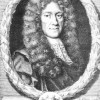
James R. Zelley 1877-1910

The day of January 15, 1910 was just another day for the crew of the pilot cutter “Spirit” and the Master T. Bennett in the Weymouth Harbour. As time ticked away, the day would end in tragedy for James Richard Zelley.

He was lost when the Danish steamer “St.Jans” crashed into the cutter. The Master T. Bennett and crew members J. Bennett and W. Tizzard survived the crash, but Zelley was lost and never recovered.

James was born in Weymouth, Dorset in 1877 to Thomas Richard Zelley and Mary Symes. He married Mary Emily Longman in 1904. He is also a grandson to Weymouth’s Richard Zelley – Mary Ann White.

Ten years earlier, James lost his Uncle William John Simpson Zelley in the Nanaimo, BC, Canada area on Sunday, February 11, 1900. Zelley the Weymouth born mariner and two friends former Nanaimo council member Richard Kenyon and John Cordell were duck hunting in Zelley’s sailboat when they were caught in a storm. Of interest, the name of one of the search party members that helped recover the remains from the Nanaimo River tide flats was a Harry Bennett.

There is a photograph of James R. Zelley in the gallery.

Prideaux Family at Forde Abbey

Saviour of Forde Abbey

In the century following the dissolution of the monasteries Forde Abbey was the property of distant owners. For decades the building was neglected and allowed to deteriorate; the Abbey Church was lost and four centuries of improvements by the monks disappeared along with much of the stone and fabric, which was looted.

In 1649 Sir Henry Rosewell sold the Abbey and estate to Edmund Prideaux, Member of Parliament for Lyme Regis, a seat he held until his death. Prideaux took his degree as Master of Arts at Cambridge University. His chief field of study was the law, something he was later to become very eminent in. He was a member of the Long Parliament and was Solicitor-General in 1648. A member of the prevailing party of the day, he did not join his colleagues in attacking the life of the Sovereign and he avoided taking any part in the King’s trial.

In 1649 he was appointed Attorney-General to the Lord Protector and remained in that office until his death. He was a commissioner of the Great Seal and practised within the Bar as King’s Counsel. Prideaux was a very wealthy individual, as besides his lucrative legal practice from 1644 to 1653 he gained great profit from his involvement with the postal service. Oliver Cromwell made Prideaux a Baronet on the 13th of August 1658; the Lord Protector died three weeks later, on the 3rd of September 1658.

Perhaps because it was the property of Mr Attorney-General Prideaux, Forde Abbey was saved from the vandalism suffered by many country mansions during the Civil Wars. Having bought Forde Abbey he spent enormous sums of money improving it. He employed the services of Inigo Jones, who was at that time attempting to introduce the Grecian style of architecture into this country. He did not live to see his designs for Forde Abbey completed, for he died in 1654, whilst work on the house was not finished until 1658.
 
Edmund Prideaux was born in September 1601 at Netherton, Devon. He was the second surviving son of Sir Edmund Prideaux (1555-1629), being descended from an old family originally from Prideaux Castle in Cornwall. Edmund Prideaux’s first wife was Jane Collins and shortly after her death in 1629 he married Margaret Ivery of Cothay in Somerset. He died on the 8th of August 1659 and was succeeded by his only son, also Edmund, who had married Amy Fraunceis of Combe Florey in Somerset in 1655 (Cromwell’s titles were not accepted after the restoration.)
 
                                           The Price of a Life: Innocent or Guilty

Edmund Prideaux was a well-educated man; for some time his teacher was Bishop Tillotson, later Archbishop of Canterbury. Edmund’s contemporaries referred to him as “the walking encyclopaedia.”

In view of the high profile his father had during Cromwell’s rule, we should not be surprised there was no place for him in government after the restoration. He appears to have lived quietly at Ford Abbey.
 
Towards the end of 1680 the Duke of Monmouth visited Forde Abbey during a tour of the West Country, where he was treated by Edmund Prideaux to a very splendid supper and given a bed for the night. This hospitality was to return to haunt Edmund, cost him great expense and nearly his life.

In 1681 Edmund Prideaux was elected one of the Members of Parliament for Taunton. We learn from a note in his own handwriting that on the 16th of July 1683 his home was searched for arms. Two muskets, one brass blunderbuss and four cases of pistols were removed.
 
The year of 1685 was memorable, particularly in the West Country after Monmouth landed at Lyme Regis. Edmund Prideaux, it is said, remained at Forde Abbey. News reached London that during this time Prideaux received a visit at night from a group of eight men led by Thomas Dare of Taunton; they were given horses and arms. Furthermore it was reported that one of the party, Malachi Mallock, drank the health of Monmouth.

Mallock was later arrested and appeared before Judge Jeffreys at Dorchester on September 10th and was condemned to death and should have been hanged at Bridport on September 12th. Mallock bargained for his life by offering to give evidence that would implicate Edmund Prideaux in the Rebellion.

We know from a private pocket-book kept  by Edmund Prideaux that on the 19th of June 1685 he was taken prisoner by a messenger, Mr Sayell; the entertainment of Monmouth in 1680 had caught up with him. He was released by Habeas Corpus on the 12th of July, only to be arrested again on September 14th following Mallock’s evidence against him, and transferred to the Tower.

Judge Jeffreys was of the opinion that some Royalists had been ruined by the Rebellion and should be compensated from sums raised by the sale of prisoners, something Jeffrey’s did not engage in himself, with one exception: Edmund Prideaux.

Prideaux was in custody and instead of being brought to trial he was given to Jeffreys to agree his own terms with the prisoner, who had not been charged with any offence. Jeffreys insisted on a huge bribe to obtain a pardon, which was granted on the 20th of March 1686. Jeffreys used the £15,000 he got from Prideaux as part of the price he paid for his Leicester estates.

After the accession of William III, Edmund Prideaux presented a petition to Parliament for leave to bring a Bill to charge the estates of Lord Chancellor Jefferys with the restitution of the £15,000 he paid for his pardon. Following fierce opposition from Lord Chief Justice Pollexfen, trustee for the children and creditors of Jeffreys, the Bill was not carried.

His fortune greatly diminished, Edmund Prideaux lived out his days peacefully at Forde Abbey. His only son, Fraunceis Prideaux, died at Oxford aged 19. He had three daughters: Amy, who died at a young age; Elizabeth, who was married to John Speke of Somerset, and Margaret, who was married in 1690 to her cousin, Francis Gwyn of Glamorgan in Wales.

Edmund Prideaux died intestate on October 16th 1702 and, his wife having renounced, letters of administration were granted to Margaret Gwyn, his sole surviving daughter and heiress.

Edwin Childs (1859-1934)

Mrs. Mary ‘Polly’ Roberts (1857-1935)

Families were large, wages were small and life was a struggle for the working classes in Victorian Britain, especially in rural communities. The well-being of the family often depended as much on the resourcefulness of the wife as on the hard labour of the husband. Mary Roberts was born into the Wareham family of Iwerne Minster and as she grew up her mother instilled in her all the skills and virtues to be a good wife and mother.

She was born Mary Eliza Wareham in 1857 at Iwerne Minster, but known as Polly. The daughter of agricultural labourer Benjamin Wareham and his wife Sarah, she was the sister of William Wareham about whom we have written elsewhere on the site. (see: William Wareham 1860-1961 in the Real Lives Category). During her teenage years she spent a little time in Battersea, London, with Joseph Aldworth, an Irishman, and his Dorset born wife Ann, whose mother was Irish.

In 1878 at the age of 21 she married a young man from her village named Frank Roberts. He was employed as an agricultural labourer on the Iwerne Minster estate, though in the early days of their marriage they lived at Shroton (Iwerne Courtney), until a cottage became available on the estate. Here at Till Hayes Cottage, they lived for many years. Polly and Frank had twelve children including two twin girls; sadly one died aged one year and the other aged 12. They also lost a son to the First World War. Later, when her eldest girls had left home and gone into service, Polly took in two homeless children. Later, she brought up her orphaned granddaughter, who wrote warmly about her grandmother:  “This patient, kind woman lived the religion she professed every moment of every day, day after day. No matter how demanding and exhausting her own troubles and household duties, she made it her Christian duty to go to help, freely, anyone in the village who was ill or in need.”

Life was a constant struggle for the lowly paid agricultural worker and his wife. Their little bits of furniture were mainly the work of Frank Roberts who, though not a carpenter, had a talent for woodcarving.

They kept chickens, a pig and grew their own vegetables. Each year after the grain had been harvested and with the farm Bailiff’s permission, Polly took the children into the fields to glean the ears of corn left on the ground; this was fed to the chickens. For a while the family had a goat that, by all accounts, was quite a character and fond of slipping his tether and trotting off to meet the eldest lad from school.
 
On occasions the family was so hard-up Polly had to keep the younger children away from school because they had no boots to wear; footwear for a family of twelve was a big item to come out of the family’s small budget.  Her granddaughter tells of Polly walking the twelve miles to Blandford and back to buy boots for the children and recalls: “one evening on her way back from Blandford Polly decided to take a short cut across a field at Steepleton. It seems she fell over a cow that was resting peacefully in the darkness.”  We don’t know who was the more surprised – Polly with her upturned pram or the cow!

In those times of austerity Polly was rarely able to serve meat to the family, except when the family pig was killed and at Christmas when the estate owner gave his workmen a joint of beef. In the kitchen, hanging over the fire a large pot of stew would be cooking: it was made by boiling some bones with vegetables and dumplings.

Always having to think ahead, Polly would make as much jam as she could during the season from the plentiful fruit in her garden. She would make large apple dumplings and boil them in cloths in the copper. Her granddaughter tells us:  “she made what the children called ‘stirred in’ apple puddings,” that were made the same way. She had a small bread oven but often took the bread, wrapped in cloth, in a wheelbarrow to be baked along with her sister-in-law’s loaves. The family could only afford to have butter or margarine on Sundays. At the start of a meal each child had to eat one thick slice of bread as a filler before being allowed any jam or dripping.

Saturday was a particularly busy day for Polly. She cleaned and dusted the Baptist Chapel, did all her own housework and cooking and made sure all the mending was complete. Scissors and needles were put away on Saturday night as were all tools. Polly laid out everyone’s best clothes and polished all the family boots and lined them in a row ready for Sunday when all the family would attend all of the services at the Chapel.

During the autumn of 1905 there was an epidemic of diphtheria.  Polly’s husband, two of their boys and three of the younger girls were all ill. Day and night Polly nursed them all but the family lost the second of the twin girls.

Polly would be the first to help others in difficulty: she was present at most births and deaths in the village, acting as mid-wife, nurse and friend. This was before the network of District Nurses was set up. Those she helped often sent gifts of second hand clothing to her cottage and, as she could afford to buy new clothes only occasionally, she would get busy with her needle and scissors, altering these gifts to fit the family. Although poor, her children were always turned-out neat and tidy. She took in sewing and washing from the gentry to subsidise her meagre housekeeping allowance and to make ends meet.

Polly was often heard to say: “Where there’s a will, there’s a way” and “Waste not, want not,” was another of her favourite expressions, as was: “Shan’t let myself be beaten” and she rarely was. This ingenious and resourceful lady confronted the trials that a hard life sent her way. She was a good woman, good mother, good wife and she taught her children to reverence God and to pray.
 
At the age of seventy-two, having been a widow for fourteen years, this
wonderful lady became worn out with physical effort and took to her bed, where she lay ill for six long years, attended by two of her devoted daughters.  Mary ‘Polly’ Roberts passed away in the spring of 1935.

The Passing of a Village Store

Today we lament the closing of our village shops, forgetting it is we who are ultimately responsible by choosing the supermarket. The demise of the village store is not a new phenomenon; it has been happening over many years. This is the story of a little Provisions Store in the village of Fontmell Magna and the people who ran it until it closed about sixty years ago.

It was not unusual for small village shops to be a part or corner of a cottage. What is unusual about this shop is it had no shop-window in which to display its wares, just a glass-fronted entrance door above which was a shabby little sign reading “E. BECK, PROVISON STORES.” The thatched cottage, judging by the solid grey-stone and faded bricks, some of them built into a herringbone pattern, dates from the late seventeenth to early eighteenth century.
 
We know from the 1841 census the cottage was occupied by George and Sarah Hart and their one-year-old daughter Anna. George Hart was a cordwainer (a shoemaker) who would walk 40 miles each way to Bath to collect leather for his business. The following decade was eventful for the family: George opened a bakery on the premises and during this time three sons and two more daughters were born.

In those days Fontmell Magna was a busy place familiar with toil and enterprise for it had a vibrant local economy. People were employed on the estate and in the woods, as well as in the brewery, malthouse and foundry.

Few cottages could boast any baking facilities. Cooking was usually done in a large iron pot suspended from the ceiling by a chain over an open fire on the hearth. Everything went into the pot: swedes and turnips from the fields joined garden vegetables and bacon from the family pig. Occasionally a rabbit or a hare might add to the feast and some might even have known the taste of venison. Poaching was not unknown in these parts.

The Harts were an enterprising family. The 1861 census confirms George Hart continued to repair footwear and make boots, helped by his 16-year-old daughter, Kezia, who is described in the census as a shoe binder, while his older daughter, Anna, made straw bonnets. Sons George and Samuel, respectively 18 and 14, were employed as agricultural labourers.  The youngest children – Mary, Stephen and Frederick were still at school.

The 1871 census reveals that sixty-year-old George is concentrating on his shoemaking business and is leaving the running of the bakery to his sons Samuel and Stephen, who are assisted by their sister Mary. During the next decade there are further changes at the bakery, which expanded and was selling provisions. Ten years on, George is back assisting his son Stephen with the bakery as well as working a five acre farm. George’s wife Sarah passed away in 1883 aged 71.

It was not unusual for people to bring to the bakery their cakes, tarts, pies and their meagre joints to be baked in George Hart’s oven. Over the following few years it is likely the young daughters of Tom and Jane Beck would have been sent to the store on errands for their mother and for two of them the bakery-come-village shop was to play an important part in their lives.

At the age of 80, George was still making boots and farming his five-acres. Stephen Hart is 39 years of age and, still a single man, he had sole responsibility for the bakery and provisions store. George Hart passed away in 1898 at the age of 87. About this time another bakery opened in the village.

With the advent of the 20th century, Stephen is running the bakery and shop alone; his brother Frederick, a tailor and a widower, is living with him. Stephen is an officer of the village Methodist Chapel.
 
The Beck family were also members of the Chapel. Tom Beck and his brothers John and Joe and his nephew Charlie from Iwerne Minster would lead the carol singers as they went round the village. Tom also played the cornet and was the unofficial village barber, charging a penny a trim; in the winter one of his daughters would hold a candle for him. Tom was employed as an estate woodman.

In 1901 Tom and Jane’s daughter Emily, who was born in 1877, was working away from home at Bournemouth, where she was a domestic servant in the household of an Auctioneer and Estate Agent. Her sister Bessie, who was born in 1882, is still living at home with her parents in their little cottage beside the millpond.

When Emily returned to the village she became Stephen Hart’s housekeeper and moved into his cottage and soon became involved with the running of the provision store and sometime after 1911 she became Stephen Hart’s business partner.

 When Stephen passed away in 1927 Emily decided to close the bakery side of the business and concentrate on the shop. Her younger sister Bessie had been helping to run the shop and looking after their aging parents. Tom Beck passed away early in 1928 aged 81 years. Bessie and their mother, Jane, moved in with Emily but about eighteen months later their mother passed away, aged 82 years.
 
The enterprising sisters started a guest house in addition to the shop and they continued throughout World War II and the fifties. Early in the sixties the sisters bade farewell to their last guests, served their last customers in the shop, and retired.

Village shops used to sell everything from bread, cheese and bacon to cards, buttons and bows, often all over one counter. Shopkeepers usually provided the comfort of a chair for customers while they prepared their purchases and passed on the latest news and gossip circulating in the village. In places like Fontmell Magna these scenes are distant memories.

Emily and Bessie Beck gave a lifetime of service to the village of Fontmell Magna and they were both in their eighties when they retired from their business. Emily was a Sunday school teacher at the chapel and Bessie kept it looking spotless and was part-time organist there for 50-years.

Emily was known as Miss Emmie – she died in 1969 aged 92; and Bessie died in 1977 having reached the age of 95 years.

We have placed a photograph of Emily and Bessie Beck in the photo section.

Thomas Morton Colson 1833-1908

The Revd. John Morton Colson and his wife Julia had a daughter and a son; a small family for the early 19th century. We might have expected their daughter, Julia, to marry and have a family and their son to follow his father, grandfather and great grandfather into the church. It was their daughter who championed the Christian cause and spent her life doing good works and helping others, but what did their son, Thomas, make of his life? (See our story Miss Julia Colson of Swanage in the Swanage Category.)

It was clear from an early age that Thomas was not going to take up an ecclesiastical vocation. Early in 1851 when the census was taken we know this small family was all together at the family home in Swanage. Thomas is described as a midshipman. Thomas’ father died in 1863 and his mother passed away two years later.
 
We have not found Thomas in the 1861 census but we do know he married Sarah Wardley early in 1861 at Islington in London. Sarah was from Suffolk but in 1851 at the age of 15 she was working as a servant in a coffee house at 15 South Street, St. Marylebone, London; it seems Thomas did not hold with convention and married below his station.
 
Thomas and Sarah named their first child Louisa Story, Story being a reference to the maiden name of Thomas’ mother. The child was born at Poplar in London in the first-half of 1864. The couple named their second child, Julia, again after Thomas’ mother; the birth was registered at Mile End Old Town, London in 1867. We believe the couple had at least one other child that did not survive infancy.

A year later their third child, another daughter, Florence Maude was born at Netherbury in Dorset. Then in Somerset in 1869 Sarah delivered a son who was named after his father, Thomas Morton Colson. A year later another daughter, Mary, was born at Creech. These events suggest something of a turning point in the fortunes of Thomas and Sarah. The 1871 census shows the couple living at Creech St. Michael, Somerset. Thomas is described as a landowner – no occupation. Here in Somerset Thomas and Sarah benefited from the help of two servant girls but it seems they did not stay long in Somerset. By the first quarter of 1872 Thomas had moved his family back to Dorset and they were living in Radipole near Weymouth. It is here that their next child Robert Worgan Morton Colson was born.

We do not know how long they stayed in Dorset but by 1881 the family had moved to Linkenholt in Hampshire. The census for that year reveals that Thomas is a Farmer Landowner occupying 1030 acres and employing thirteen men, eleven lads and two women. All of the children are with their parents and in education except their eldest, Louisa, who is a pupil at a boarding school at Littlehampton.

A decade later we find the family back in London at 3, Adam Street, St. Martin-in-the-Fields where they own a small hotel run by Sarah who is described as a Hotel Keeper; she is assisted by daughters Louisa and Florence. Thomas Junior is an Electric Engineering Student; Mary is a clerk in an envelope addressing office and Robert is a clerk in a stained glass works and their father is working as a clerk in a newspaper office. Ten years on and we find Thomas and Sarah still running their hotel; with them is their daughter Mary who works as a clerk. Judging by the guests registered at the hotel in the 1891 and 1901 census returns the hotel was not a tremendous success.

Thomas Morton Colson was baptised at St. Mary’s, Piddlehinton, on the 10th of April 1833. His death was registered in the first quarter of 1908 at Wandsworth, London; he was 75. Three years later we find his widow on her own, a lodger at 24, Sydney Road, Richmond, Surrey: she is said to have “small private means.”  Sarah’s death was registered early in 1913 at Chelsea, London, she was 73 years old.

Thomas Morton Colson appears to be a man who did not play by the rules and conventions of the day. We wonder what his father, who for forty years was the Rector of St. Peter’s, Dorchester, would have made of his son’s journey through life. Marrying for love his entrepreneurial spirit was, perhaps, kick started by an inheritance that does not seem to have grown under his guardianship.

Lane, Moore & Bravel Pt.2

Thomas Bravel (1616-1655) had also studied at Oxford. He too had become rector of Compton Abbas, but later became more famously known as the leader of the “Clubmen,” the men who fought Oliver Cromwell’s forces on Hambledon Hill. The Clubmen were countrymen from various parts of the country; men who resented the “un-natural” English Civil War and who were becoming increasingly exasperated as they witnessed the opposing armies trample their crops and loot both their livestock and their stores. It is said they wore a white cockade by way of uniform and their banners proclaimed: “If you offer to plunder or take our cattle be assured we will bid you battle.”

This motley force, armed in the main with clubs (hence the name “Clubmen”) and with other agricultural implements such as scythes, were particularly well represented in Dorset, and having been earlier harried by Cromwell’s roundheads, some two or four thousand of them became entrenched on Hambledon Hill on the 2nd of August 1645. It was here they made their last stand, led by the rector of Compton Abbas, the Reverend Thomas Bravel.

Against them was Cromwell’s army of some 1000 men, fresh from the siege of Sherborne Castle. On Hambledon Hill, Cromwell attacked from the rear and the Clubmen were routed, despite reports that Thomas Bravel threatened to “pistol whoever gave back.” Of course, they were no match for Cromwell’s more professional and disciplined soldiers, and the Clubmen were trounced, many taken prisoner, including four rectors and curates. The leaders, including, presumably, Thomas Bravel, were locked-up overnight in the church of St. Mary’s at nearby Shroton (Iwerne Courtney.) Cromwell, described them as “poor silly creatures,” and after allowing them to be first lectured he ordered their release next morning with no further punishment.

Although there appears to be little surviving written record of the “battle” itself, Thomas Bravel gives an impression of a somewhat fiery character, and the transcribed Minutes of the Dorset Standing Committee 1646-1650 are possibly testament to this. In 1646, the Committee at first effectively sacked Thomas Bravel as rector of Compton Abbas for his association with the Clubmen, and or “words by him spoken in abuse of the favour of this Committee towards him.” He was told he could not “officiate in any Cure within the Countie until further order.” But then he appears to have been demoted rather than sacked and although ordered to leave Compton Abbas with his wife and family, was given the living of Poorstock instead. A Mr Ed. Wootton, a “godly and orthodox divyne clerk,” was awarded the parish of Compton Abbas in his place, but it appears the parishioners refused to pay their tithes and taxes to this particular gentleman, and Thomas was reinstated at Compton Abbas after only six months absence.

When I first read the story of Thomas Bravel I at first imagined him as an older man, perhaps white haired, in black cassock, swarthy and forthright in both body and deed – very much like the Father Collins character played by Trevor Howard in the film “Ryan’s Daughter.” But of course, Thomas was only in his very late twenties at the time of Hambledon Hill, and he died a relatively young man in 1655, aged only 39. In his will he appoints his wife (given name unknown) and his brother-in-law (presumably his wife’s brother, rather than a sister’s husband) as executors. The brother-in-law is named as William PYM, tailor of St. Martin in the Fields, London. We believe this to be the same William Pym, tailor in the Strand to Samuel Pepys and mentioned in his famous diaries.

The Oxford alumni records Thomas Bravel originating in Chipping Campden, Gloucestershire. At that time Chipping Campden and the surrounding area was an extremely wealthy and influential part of England, the prosperous wool trade producing many wealthy merchants, many of whom later found political influence in London.

Thomas’ father was also Thomas Bravel (1568-1639.) This Thomas had been born in nearby Saintbury, a pretty little village overlooking the Vale of Evesham. Two more Bravel generations are to be found there, Thomas snr’s father John (1550-1601) and his grandfather Thomas, who died in 1582. Both the later gentlemen are described as “Husbandmen of Saintbury” in their respective wills. Thomas the elder was my 11xG grandfather.

The search for the Bravel surname and its origins then leads to Charlton Kings, near Cheltenham. Here, the name and its variants certainly existed, and although the link to Saintbury is really conjecture rather than fact, tantalisingly, several other Bravel – connected names such as BALLARD and HORSEMAN appear in Charlton Kings and both Saintbury and Chipping Camden. For example, the elder Thomas Bravel of Saintbury had married a girl of surname Ballard. In any event, within the records for Charlton Kings there are numerous mentions of the name Bravel/Brevell/Bravell as far back as the fourteenth century. Contained in a document of unknown origin, a Walter Brevell was assessed at 2s 8d in 1327. A second Walter held a messuage and half-virgate called ‘Brevells’ c1380, and after him a third Walter c1410, and fourth c1450. Another document describes how the Brevells have left their name in the surviving timber-framed and plastered house called ‘Brevell’s Haye.’

Returning back to what I feel is the “safer ground” of Chipping Camden, I discovered from wills and other documents that Thomas Bravel (the rector) had at least four siblings. These include an older brother Richard (1608-1655;) he, unlike his more adventurous brother, appeared content to stay at home in the Market Square of Chipping Camden, taking over from his father – his house and his money. Among three sisters, Anne (1612-1656) married a Thomas BONNER in about 1605, and this branch of the family appeared to do very well for itself indeed.

Older brother Richard had six known children, and the eldest, another Anne, died unmarried. Consequently her 1657 PCC will is extremely informative, as it mentions a great many people both by name and relationship. It is, I think, one of the saddest wills I have come across while researching my family history, because at the age of only 23 Anne knew she was about to die.

From the various and numerous wills generated by this Chipping Camden family, and from other sources such as parish records and the IGI, I have been able to draw-up a pretty convincing Bravel family tree. Names connected to the family include Horseman, READ, LILY and HARRISON, and these names (including Bravel) crop up in a story of mystery and intrigue that surrounds the village of Chipping Camden to this very day. “The Camden Wonder” is an enigma that has remained unexplained for nearly 350 years. Set in one of the most turbulent periods of English history, in the mid-seventeenth century, the story revolves around a prominent local man, William Harrison, who had been out collecting rent money for his employer, but had inexplicably failed to return home.

A John PERRY is sent out to search for Harrison, but Perry does not find him. John Perry then gives a strange account of his actions, and largely on the strength of this – and the fact that Harrison does not return – John is accused of his murder. He implicated his own mother, Joan, and both were hanged on Broadwey Hill near Chipping Camden. Less than two years later, Harrison returned to Chipping Camden, with a seemingly unlikely story, claiming to have been abducted by pirates and sold into slavery in Turkey. Although there has been no shortage of theories about this strange tale, the case has never been satisfactorily resolved, and the more one reads about it the greater becomes the enigma! Conspiracy theories involving those in the highest office of the land have even been proposed. The time of Harrison’s disappearance in 1660 is set against the backdrop of the English Civil War and the Restoration, and so it is indeed fertile ground for speculation. The tale of the Campden Wonder is a mystery, and with the unlikely prospect of additional evidence emerging at this late stage, it is almost certain to remain just that.

Throughout my personal journey I have learned a great deal of history, some social history and some geography as well. I have visited places in England where I had no reason to go before, and I have met interesting and almost-always friendly people along the way. Most remarkably of all, my unknown ancestors have “come to life” in a way I find hard to believe, as I discover more and more about them.

Nowadays we are told we are but merely part of each of our forebears, passed down to us through their DNA. I am not religious, but I find it incredible, if not a little humbling, to recognise that I exist – as must we all – not merely by a fluke of luck, but by a million and one little turns of fate.

Whatever! It has been an astonishing journey, as I hope you will agree.

Lane, Moore and Bravel

A closer look at some family connections

It is I believe a common conception that those who research their family history are hopeful they might stumble upon at least one famous, and preferably wealthy, ancestor. This never once crossed my mind; I just needed to know who my ancestors were and where they came from. In the event it was enormously gratifying to discover that those of my direct male line were almost certainly farmers as far back as the early sixteenth-century, and that much later on there was a smattering of both wood-working and sea-faring blood in there too. All this makes perfect sense to me. And I now know exactly who I am, and to some extent, why I am the person I am. It is a great feeling, and I am sure many others researching their family history will concur.

During the process I have made some surprising discoveries, a few involving blood ancestors, and also some other more tenuous ancestral connections to well-known historical figures, places and events – even to writers of literature and to poets, no less. History, particularly as taught in my school-days, had singularly failed to inspire me; but now, with the search for my previously unknown family history, it has suddenly come alive.

I learned that my paternal 3xG. grandfather was another John Lane (1769-1840) a yeoman farmer of Lower Bridmore Farm, Berwick St. John in Wiltshire. Berwick St. John is a quiet, sleepy little village close to the Dorset border, a west-country picture-postcard village as one might easily imagine it – of quaint thatched cottages set against tall and colourful summer hollyhocks, or in winter, of wispy blue smoke curling up from stone chimneys into the cold still air of a frosty day. And whereas many a researcher might need to be content with a few documents such as parish records, BMD certificates and the odd will if they are lucky – I managed to hit an absolute goldmine.

John’s landlord was Thomas GROVE of Ferne. His daughter, Charlotte (1783-1860,) through her mother’s PILFORD family, was first cousin to none other than the poet Percy Bysshe Shelly. Rather late in life Charlotte married the village rector Richard DOWNES and between the years 1811-1860 she kept a diary, of which most years survive. Searching through the original diaries, now held at the Wiltshire Record Office, I found members of my Lane family mentioned in perhaps four hundred separate daily entries. As the squire’s unmarried daughter and later the rector’s wife, Charlotte had a tendency to treat parishioners as her very own, taking a great deal of interest in their everyday lives, whatever their social standing, and writing about them in her journal. So now, almost two hundred years later, I am able to draw a sketch, if not paint a picture, of John and Mansel Lane and their eight children – how they lived and farmed, who they loved and how they died; their frequent illnesses, their primitive education and the books they read. Recorded too were the tenant’s dinners – with the predictable effects of too much punch – dancing on the village green at Whitsuntide, parties, visits to Salisbury, or even to London, and trips to Shaston Fair.

I am greatly indebted to the present occupier at Bridmore for showing me around the farmhouse, which has remained tenanted and therefore virtually unchanged since those early times. There still are the eighteenth century white-painted panelled doors with original handles, the stairs leading up to the servants’ quarters in the attic and perhaps most poignantly for me, the window seats set into the thick stone walls. Here, if only in my imagination, once sat the three little Lane girls, Mansel, Betsey and Mary Ann, laughing and giggling as they sewed or read, or taking it in turns to play their piano; or where perhaps later, as young ladies, they huddled together and whispered in hushed tones the latest secrets of their respective “lovers.”

Mansel Moore Lane (1806-1861,) the first-born of these three girls, married James BRINE of Tolpuddle in 1838. A farmer of several hundred acres, James was thought unlikely to be of the same family as his more famous namesake, James Brine, the Tolpuddle Martyr. But further research revealed they were in fact first cousins. James Lane, my twice great grandfather and younger brother to Mansel, was working as a miller at Tolpuddle in 1851.

James Brine and Mansel had one child, Betsey Lane Brine, and sadly she died in 1854 aged just 14. All three are buried together at Tolpuddle with others of the Brine family on the south side of the churchyard. The badly-eroded limestone gravestones are covered with lichen, and already the inscriptions are mostly unreadable, as the stone begins to crumble and itself disappears into the past.

John Lane had married Mansel MOORE (1781-1857) at Fontmell Magna in 1805, Mansel being the only child of farmer Stafford MOORE (1781-1817) and Leah WAREHAM (1751-1795.) The Moores were part of an old-established family that had lived in and around Dorset’s Blackmoor Vale for many generations. Several Moore family wills testify to the established pattern – they were millers and yeoman farmers, and from settings similar to those as described in Thomas Hardy’s books – places and villages that include Kings Mill, Marnhull, Stalbridge, Todber, Stour Provost or Sturminster Newton. It is strange to think my ancestors might once have lived and worked in the very same dwellings, farms and mills, or perhaps frequented the inns and taverns that inspired Hardy enough to describe them in his now classic and timeless stories.

In 1640, Robert Moore (1605-1697,) my 8 x G.grandfather, was churchwarden at Marnhull, as presumably befitted his status in the community, as was later William, his eldest son. My 6xG.granfather Robert Moore (1680-1745) of the following generation, married Margaret BRAVEL at Stourpaine in 1711. At first the name Bravel meant very little to me, except that it cropped-up with increasing regularity in my research, both as a surname and as a given name, also that it was annoyingly ambiguous in its varied spelling – or more probably, mis-spelling. Nevertheless, Bravel, Bravell, Bravil, Braville or another variation, appears a most unusual name, and therefore worthy of further investigation.

Robert and Margaret had eleven known children, including an obligatory Stafford, a Mansell, a Palmer, a Bravel and a Richard Bravel. The first four of the eleven were baptised at Compton Abbas, at the church now left ruined in East Compton – to be found today down a little narrow winding lane, where there is also a farm and very little else. The remaining seven were baptised at Stour Provost, indicating perhaps a move by the family in about 1720, or possibly that the earlier children were baptised in the mother’s old parish, as was sometimes the customs in those days. Margaret, herself, was the eldest of two known surviving daughters of Richard Bravel (1650-1694,) a rector of Compton Abbas. Richard had studied at Oxford, the alumni records him as once Chaplain to the garrison of Tangiers, and later as a vicar of Welton, in Yorkshire. An interesting fellow perhaps, but as it transpired, nowhere near as interesting as his father Thomas.

To be contined…

Rebecca Payne (nee Sparks): 1829 – 1885

She was the first child of James and Maria Sparks and the eldest sibling of Tryphena Sparks, who, it is generally agreed, had a romantic connection to Thomas Hardy, although there is little agreement about how serious the affair with Hardy was or how long it lasted.  Hardy was a cousin of the Sparks children; his mother was Maria Sparks’ sister, Jemima.

In 1962 Lois Deacon contributed Tryphena’s Portrait Album to the Monographs on the Life, Times and Works of Thomas Hardy series and in it asserts “Rebecca Payne (nee Sparks,) the supposed eldest sister of Tryphena, but almost certainly her mother.” Ms Deacon also claims that Rebecca was herself the illegitimate daughter of Jemima Hand, the mother of Thomas Hardy. Then there is her sensational claim repeated in her book written with Terry Coleman: Providence and Mr Hardy, that Tryphena and Thomas Hardy had a child. We have not been able to find any documentary evidence to support this and Hardy biographers give it no credence.

Lois Deacon is right to point out that Tryphena Sparks was baptised when she was about six years of age and uses this to hint there may be reason to wonder about who her mother was.  Maria Sparks registered Tryphena’s arrival in this world just a week after her birth in 1851.  As for Rebecca being anyone other than the child of James and Maria Sparks it is worth noting that her parents married on Christmas Day 1828 and Rebecca was baptised on the 25th of October 1829.

By all accounts Rebecca Sparks was a very good seamstress and dressmaker. In 1871 she was living in Puddletown with her widowed father, James Sparks. Tryphena was at a teachers’ training college in London. The following year Tryphena left the college and moved to Plymouth where she had accepted a position as headmistress of a school and, at the age of 43, Rebecca married Frederick Payne of Puddletown , a man several years younger than herself and, puzzlingly,  she immediately left him.

Rebecca probably returned home to live with her father who died in 1874. It is thought that at some time she was with her sister at the school in Plymouth teaching needlework. On the 15th of December 1877 Tryphena married Charles Gale and gave up teaching ; we know from the 1881 census that Rebecca was living with her sister and her family in Devon.

In the Gale household Rebecca was known as aunt Bessie because there was a Gale relative named Rebecca. Her niece, Tryphena’s daughter, Eleanor, described her aunt as “a very quiet, prim and proper ladybody”.  Eleanor was only six years-old when her aunt Rebecca died in Devon in 1885.

There is a photo of Rebecca Payne in the photo section.