Dorset Ancestors Rotating Header Image

2010:

What the Papers Said

In January 1901, the captain of a Spanish steamer died after his ship was swept against a breakwater in Portland Roads. The lifeboat was manned and launched but could not get near the breakwater on account of the sea which was being swept by a violent gale.

The steamer named the Encourt, was from Bilbao and was bound there in ballast from Rotterdam. The crew of 26 were taken to the breakwater fort, and later on board another Spanish vessel. Their ship was badly holed and lay with a list, and sank in nine fathoms of water with the skipper on board.

Along the coast, the seas were high in West Bay, where a boat sank in the harbour. The gale blew down trees, took the roofs off houses, and made the streets dangerous.

Watchnight services had been held in the churches, reported the ‘Bridport News’ of January 1901. There the last moment of the dying year and the opening of the new, were spent in worship and in the parish church the hymn ‘O God our help in ages past’ was sung. Services were also held in the Wesleyan, Baptist and Unitarian chapels.

Meanwhile, far away in South Africa the Boers were making determined attacks and British officers were being killed and wounded. During a fog the Boers were repulsed with a loss of 24 killed including four officers.

In New York, influenza was raging, and a typical headline was: ‘Grip’ reigns in New York.’ Grip was the popular name for ‘flu. It was estimated that nearly 200,000 people in and around the city were suffering from it and it was now in an epidemic state all over the country. Even President McKinley was a sufferer but was recovering.

A great century of progress had closed, with momentous events concerning the British Empire. It was hoped that the enemy would lay down their arms. Dorset had provided horsemen and foot soldiers, meanwhile the Ashanti campaign had been brought to a close in West Africa, and an international force had defeated the aims of the Boxers in China.

Many Bridport bluejackets were in the thick of the fighting in the attempt to relieve Peking. While down under, Lord Hopetoun had been appointed the first Viceroy of Federated Australia. The Indian famine called for public subscription, and Paris had held its great exhibition, though at this point in history Great Britain had more friends in Germany than France. Away East, the Spanish had lost the Philippines to the United States.

Here in this country, the Conservatives had been returned to power and Lord Salisbury was Premier. Dorset again returned a quartet of Conservative members. Mrs. Gladstone, widow of the famous Prime Minister, was buried beside her husband, and the death of Sir Arthur Sullivan, called the greatest of British composers and a marvellous musician, had occurred. He was buried in St. Paul’s. The Bridport paper reflected on all this news.

On that south Dorset coast and going back a century, on August 19, 1800, three women and an infant were struck by lightning, and the infant, who turned out to be the fossilist Mary Anning, was resuscitated by being put into a warm bath. What would have been lost to archaeology if she had not been put in that bath?

Early in the 19th century fossils began to attract local geologists, especially John Crookshanks (alias Lock,) who committed suicide in 1802 because his yearly stipend for collecting fossils was discontinued! And Richard Anning (father of Mary) fell over the Charmouth cliffs by night, did not kill himself, but died soon after, in 1810, of consumption.

It was in the following year, 1811, that Miss Anning found her famous ‘crocodile’ fossil, and sold it to Mr H. Henley, lord of the manor, for £23. It was later presented to the British Museum.

The population of Lyme in 1800 was 1,535; in 1810 it was 1,925. In 1803, three seats were set up a yard from the precipice above the sea beyond the churchyard. The Church Cliffs in those days formed “the great place of resort, the Mall of Lyme, where the belles of the place and the sons of the aristocracy enjoyed the sea breeze.” There was no marine walk then.

People in the early 1800’s were still talking about  “a very singular fish” 14 feet long with a tail three feet wide, a circumference of six feet, and with long jaws, which came into the Cobb and was taken. In 1803 a great fire destroyed 42 houses near the Independent Chapel. It started at a baker’s.

In 1817, a breach of 192 feet was made in the southwest part of the Cobb, and several vessels were driven ashore or sank. The Cobb had to be repaired, and work costing well over £30,000 was carried out in the next nine years. Between 1810 and 1816 the annual average of vessels entering the Cobb harbour was 318.

We should be making a mistake if we thought that indecency offences were new: that Bridport paper at the beginning of the 20th century reported that at Weymouth County Police Court in early 1901 a sub-postmaster was summoned “in several instances for such offences of a serious character against young men.”

And a Royal Commission had been appointed to make investigations regarding the “beer poisoning epidemic.” Sickness and death had been caused in England and Wales through poisoning by arsenic.

Newman Flower – Publisher of Distinction

Within the great cradle-roll of Dorset’s famous sons the name of Newman Flower is one not likely to be immediately recognisable as are, say Thomas Hardy and William Barnes. Yet in his chosen career he achieved outstanding success, and without him and the other practitioners of his profession the works of the great literary giants like Hardy may never have reached the printed page.

Newman Flower was born in the village of Fontmell Magna in July 1879, the eldest son of the village brewer. Being the elder son it was his father’s wish that he should succeed him in the business, but young Newman was a cerebral lad with far loftier leanings towards the literary world. These aims were further fostered at public school, especially when the boy was required by his father to help him out with the gruelling brewery work during his holidays. Then came the fateful day when he would at last confront his father and tell him that he did not wish to make his living as a brewer, but as a writer and publisher. So when his schooldays were over Flower took the “long white road” out of Fontmell shook the Dorset chalk from his feet and went to London.

As a consequence of following up a job lead he had spotted advertised on a board in an alley one hot summer day, Flower landed his first position as an editorial junior on a military paper called ‘The Regiment.’ Over the time he worked on this paper he acquired a yearning to break into Fleet Street to edit a magazine. To supplement his income in the meantime, he wrote articles for various publications as a freelance, though at first most of these were rejected by the editors he sent them to. However a feature he wrote about train drivers, as well as a few other articles were eventually accepted.

Then came his first big break when W.T. Madge, the proprietor of ‘The People,’ had Flower recommended to him as being the ideal man to write a weekly military column for his daily paper. Ideal, because during his years on ‘The Regiment’ Flower had acquired a considerable wealth of military knowledge. Having passed the test of a specimen article, the ambitious young sub-editor then left ‘The Regiment’ to join the staff of ‘The People’ for the next sixteen years under the alias of “Tommy Atkins.” Flower had realised his ambition: he had arrived in Fleet Street.

But then a more draconian initiation into journalism awaited him; Flower received an invitation from a Harmsworth press editor called Charles Sisley to join the company, which would eventually become Northcliffe Press. Sisley needed a new sub-editor for one of his magazines. Newman then agreed to join Harmsworth’s on the condition that his salary should be supplemented at reduced rates for what he wrote. But Flower had entered a hard school, and Sisley was a hard and humourless taskmaster. He invariably had some criticism about Flower’s weekly paste-ups for the magazine he was working on. Then in 1905, three years after Flower joined Harmsworth’s Sisley had a major disagreement with Alfred Harmsworth (later Lord Northcliffe) and resigned. The “apprentice” was then left to run the magazine as best he could.

Largely out of desperation about the uncertainty of his position, the acting editor wrote to his friend Max Pemberton, asking if he could arrange for him to meet Sir Arthur Spurgeon, then General Manager of the Cassell publishing company. Its founder John Cassell, a Manchester temperance preacher, had built up the business from printing the labels for the tea he was buying up and re-selling in shilling packets as a weapon to fight alcoholism, among the northern industrial masses. But at the time of Newman Flower’s application Cassells was in the red and making heavy losses through incompetent management at board level. After telling Spurgeon that he had decided to accept an offer he had made to join Cassells, Flower learnt that the publishing house had made a £16,000 loss the previous year and the following year’s figures would be worse still.

Yet gradually the paper on which young Newman was employed began to see a revival in its sales. Encouraged by this turn-around Spurgeon invited Flower to design a new fiction magazine. During a holiday in Normandy the latter sketched out the format for the periodical the two men would name ‘The Storyteller.’ This magazine had to be brought out on a shoestring budget of just £1,600, yet it took newsagents by storm. When Flower resigned its editorship 21 years later he found that his creation had netted for Cassells £262,000. Flower had succeeded where the “greybeards” of the board had failed; he had put Cassells back in the black.

Flower then gave up the editorship of all his magazines and bought Cassells from Lords Camrose and Kemsley so that he could devote himself to his growing interest in developing Cassells as a book-house. It was then 1928 and he was 49. He had been publishing magazines for a quarter of a century, and would be publishing books for a quarter of a century more. Through ‘The Storyteller’ he had already published part works of Rudyard Kipling (whom he had met on a train;) G.K. Chesterton, Somerset Maughan and Phillip Oppenheim. But the 25 years or so he would be publishing authors inevitably brought him into intimate contact with many great literary figures.

Under Flower’s management Cassells published Churchill’s ‘Second World War.’ He saw into print Earl Jellicoe’s ‘The Grand Fleet,’ Frederick Treves’ ‘The Elephant Man,’ and H.H. Asquith’s ‘Fifty Years of Parliament.’ He further published or befriended among others R.C. Hutchinson, Lords Curzon and Birkenhead, H.G. Wells, Stefan Zweig, Sir Evelyn Wood, and edited the journals of Arnold Bennett.

But Flower was no mean writer himself, and through Cassells he published several books including some about the two great loves of his life: classical music and gardening. These were ‘G.F. Handel’ (1923;) and ‘Through My Garden Gate’ (1945.) From 1914 to 1920 he was honorary editor of ‘The Dorset Yearbook;’ in 1938 he was knighted.

During the Second World War, La Belle Sauvage, the ancient building off Ludgate Hill which Cassells, occupied was struck and burnt down by a German bomb. In 1947, the horror over, Flower decided to retire from active directorship of the company to make a new home with his wife and son Desmond at Tarrant Keyneston near Wimborne. Here he wrote what is probably his best-known book ‘Just as it Happened’ (1950) which virtually serves as his autobiography-cum-memoirs.

In his business dealings the reputation of Newman Flower is of one considered to be a stern critic but enthusiastic promoter. He was shrewd yet kindly, always willing to give new writers constructive advice. Flower also was actively involved in animal welfare and indeed made several bequests to animal organisations in his will. His propensity for readily seeking out, and befriending authors, even those who did not publish with him, is legendary. One memorable instance of this came during the First World War when he called on Thomas Hardy at Maxgate, the house the author had designed and built for himself, to commission from him a poem for ‘The Dorset Yearbook’ which, as has already been mentioned he was then editing. Hardy gave him the poem “…and something that was far richer: his friendship to the end of his days” as Flower later wrote. Some years later – towards the end of Hardy’s life – Flower, his wife and son, took Hardy and his wife Florence on a memorable picnic by car one blazing summer day, during which they covered many miles of rural Dorset.

The Cassell chief’s general good fortune was well demonstrated on another occasion, this time in 1912 when beneficent fate intervened with an illness and operation. By the time he had recovered, the Titantic – on which he was to have booked a passage – lay broken in two on the bed of the Atlantic. Flower’s operation paradoxically had, of course, saved his life.

After fifty years in publishing (40 with Cassells) and 17 years of fruitful retirement Newman Flower died at his home in Tarrant Keyneston on the 12th of March 1964, aged 85. Such was his fame by that time that on April 1st a memorial service was held for him at St. Pauls, in the presence of noted authors, editors and publishers, as well as of course the then Chairman, Directors and staff of Cassells. The author Ernest Raymond, who’s first book ‘Tell England’ had been published by the company after 11 rejections from other publishers, and whose later works were accepted by Flower personally, gave the address at the service. The music of Handel, which Flower had loved so much, was played on the organ.

William Hall – Gamekeeper

William Hall was the son of Leah Hall; he was baptised at East Burton, a chapelry of Wool, on the 13th of September 1867. In 1861 Leah, a laundress was working at Melbury House, in Melbury Sampford, the home of the Earl and Countess of Ilchester. She was one of twenty-four servants: the Earl’s bailiff and gamekeeper had cottages on the estate. Later in his life William Hall would be employed by Ilchester.

Leah Hall later married Josiah Pople but it seems William did not live with his mother. The 1881 census for East Burton by then in the parish of Winfrith Newburgh, has him living with his grandfather Joseph Hall and aunt Isabella Hall. There is nothing to suggest he was ever adopted by Josiah Pople.

William married Sarah Anne Longman in 1889. Usually the column on a marriage certificate referring to the father is left blank in the case of an illegitimate child marrying. However, in this case William declares his father was William Hall (deceased) – was this for appearances sake? We are left to wonder. A strict interpretation of the baptism entry at East Burton suggests he was baptised William Hall Hall and his civil birth certificate leaves no doubt about his illegitimacy. The practice of using a surname as a middle name was often used by single women to name and perhaps shame the child’s father.

The Overseer’s records for Wool and Winfrith have not survived and it is impossible to say if a bastardy order was ever issued against anyone in respect of William. Interestingly, if we could say for certain that no bastardy order was issued that might tell us something, but it seems we will never know.

In a conversation with William’s son Frank and daughter Elsie on 25th of August 1970 at Lympstone in Devon, I learnt “He was a gamekeeper and worked for Lord Ilchester in Dorset. Then, he worked for the Honourable Mark Rolle in 1899. The family lived in Torrington (Devon) for 8 years. Then, he worked for Lord Clinton who inherited from the Rolle estate. He was working for him in 1911 when the picture of him standing with his gun and dog was taken.” (Photo in the gallery.)

William Hall, gamekeeper, lived in Evershot and Gershot, Dorset, until at least January of 1892 when his son, Fred, was born at Gershot. Sometime thereafter the family moved to Somerset where a daughter, Mabel, was born at Queen Camel. Then before the birth of son Frank, in April 1899, the family moved to Torrington in Devon where daughter Elsie was born in April 1907. The family lived in Merton, Devon at some point.

After starting his working life as a groom, William became estate gamekeeper to Lord Rolle and Lord Clinton on their Devon estates. William is listed in the 1901 census at Greater Torrington, Devon, aged 33, his occupation given as gamekeeper and that record confirms he was born at Winfrith, Dorset. He is described as a gamekeeper on the marriage certificate of his son William, in 1916.

His grandson, Norman Hall, told me during a conversation in July (2006) that William “used to train wild dogs – domesticated them…he had a special way with animals.” After his retirement, he used to visit his eldest son, William, and his family every Saturday, coming from Colaton Raleigh with chickens, eggs and butter for them.

He was 75 when he died and his occupation is listed as Estate Gamekeeper. His eldest son registered his death. William Hall is buried in the churchyard at Colaton Raleigh with a holly tree nearby.

Note: There is a photograph in the gallery of William Hall with his wife and children.

Charlie Brown

“Speak up boy.” The sound of Mr Justice Burrough’s bellowing voice travelled round the Dorchester court room at the Summer Assize court of 1818.  The instruction was addressed to the eight year-old boy standing in the witness box. The boy was Charles Brown, a witness for the prosecution at the trial of 28 year-old John Gallop accused of “feloniously, wilfully, and maliciously, and with malice aforethought, assaulting a woman with both his hands at the parish of Bere Regis and by squeezing her throat, mouth and nose, caused a suffocation, whereof she almost instantly expired.” The murdered woman was Priscilla Brown, the boy’s mother; she was killed on the 14th of May 1818. It seems days earlier Priscilla had told John Gallop that she was pregnant with his child.

Charlie, his head, just visible over the witness box, was examined by Mr Banks, counsel for the prosecution. Charlie told the court that he knew the prisoner and had often seen him at his mother’s house. On the Wool Fair Day, Charlie went on, “The prisoner called him out – I was pretty sure it was he by his voice; it sounded from the back door, which leads to the garden.” His mother was at work in the house and there were stones flung three times against the door. Charlie said “my mother went first to the front door then to the back door. Then the prisoner spoke to her; she went out at the back door and went up the garden.”

John Gallop called Thomas Clinch to contradict Charlie’s evidence even though the Judge advised him to consider what he was doing before he called the witness. After Clinch had given evidence Mr Justice Burrough observed that instead of contradicting the evidence of the boy he had confirmed it. Gallop had sealed his own fate.

Several people from Bere Regis were called to give evidence for the prosecution including Thomas Homer, a farmer; John Sexey, Ann Loveridge, Elizabeth Rose and Benjamin Romain with whom John Gallop lodged. Page Ross, a servant, Elizabeth Harris who lived at Affpiddle and Sarah Welch of Bere Regis also testified against Gallop.

Charlie had concluded his evidence saying “She had no bonnet on; she never came back any more. Some time afterwards she was brought home dead.” Gallop was found guilty of murder and hanged.

Eight years earlier his arrival into the world was announced with these words; “16th of December 1810 Charles, bastard son of Priscilla Brown,” They appear in the register of baptisms at the church of St. John Baptist, Bere Regis. Here he spent his life, a life that spanned the allotted three score years and ten and three more, all spent working as an agricultural labourer and bringing up a family.

There was little doubt Priscilla’s boy would be a charge on the parish chest and the Churchwardens and the Overseers to the Poor would have examined Priscilla Brown to establish who Charlie’s father was. On the 15th of June 1811 six months after Charlie’s baptism the Justices made an order against Thomas Welch who they were satisfied was the boy’s father.

Welch was ordered to pay the sum of forty shillings “towards the costs of the lying-in of Priscilla Brown and the maintenance of Charlie to the date of their order.” Additionally, the father was to pay two shillings a week for Charlie’s maintenance.

After the death of his mother he would have had little option but to get on with his life. Any counselling amounting to little more than sympathetic whispering behind his back and this would have quickly evaporated. We don’t know who looked after Charles in the years to adulthood and the events of 1818 were, it seems, quickly forgotten, overtaken by the instinct to survive.

The next milestone in Charlie’s life was his marriage. The church registers inform us that on the 3rd of March 1834 Charles Brown and Elizabeth White were married. According to censuses Elizabeth was born at Bloxworth or Kingston, both places near to Bere Regis. Their marriage was witnessed by George Phillips and Isabella Stickland and sealed a partnership that was to last half a century.

Charles named his first child after his mother. The 1841 census has Charles (30); Priscilla (25); with Elizabeth (7); William (4), and Charles (2). (We have to accept the enumerator switched Priscilla and Elizabeth when listing the family.)

Priscilla earned a living as a button maker and in 1851 she was living in Bere Regis but not with her parents and siblings. By 1861 she was working as a cotton Glover and is back with her family at No.1, Tower Hill, Bere Regis. A search of the records at Bere Regis revealed nothing further about her only that she witnessed the marriage of her brother George Brown in 1865.

Priscilla had three sisters and five brothers. The sisters were Maria born in 1849; Sarah born in 1855 and Charlotte born in 1857. We know that Maria and Sarah died and were laid to rest at Bere Regis on the 7th of October 1855 and the 24th of August 1862. Charlotte moved away. The brothers were William born in 1837; Charles 1840; James 1843; George 1846, and Thomas born in1852.

Elizabeth Brown who survived her husband by 17-years, lived to see the dawning of the 20th century and could look back with some satisfaction over the half century she spent with Charles. Two of their children died in their single years and she out-lived at least one of her grown-up children but for the times this was not unusual. She was blessed with seeing grandchildren married and the arrival of several great grandchildren and it is worth looking back over some of their lives.

Of the boys, William was the first to marry in 1862. Next was Charles in 1863, his bride being Mary Hawkins of Winterbourne Kingston. Charles and Mary had two sons and four daughters. Then on the 15th of March 1865 George married Agnes Cheesman of Winterbourne Kingston. We know from the 1881 census that William married Mary a girl from Wool and in 1881 they were living in Battersea where William was working as an Engine Driver at a factory. Records show they had taken in two lodgers.

In 1871 Charles and Elizabeth were living at 7 West Street, Bere Regis; their daughter Charlotte who was working as a cotton Glover, was with them. Ten years later Charlotte was in Holdenhurst, Hampshire, where she was employed as a domestic servant to a wholesale grocer. Next door at 8 West Street was their son George, his wife Agnes, and their three children: Henry James, Amelia Mary and George – in 1882 another son, Tom, was born.

Of Charles’ grandchildren we know that Sarah Ann, the eldest child of his son Charles, had a child, Alfred Charles, in 1881; he died in 1882. On the 3rd of February 1887 Sarah Ann married John Bright, a widower. Sarah’s grandmother, Elizabeth, signed the register as a witness.  John was 12 years-older than Sarah and brought a son and two daughters, all under 10, to the marriage, so Sarah had to adjust in short order to being a wife and a mother. She would have had some experience with children as her siblings were between 10 and 18 years younger than she was. In 1891 John and Sarah Ann had a child they named Edwin John. Over the next decade they had another son Charles and two daughters; Louisa and Florence.

Neither her father nor her grandfather was alive to witness the marriage of Mary Jane Brown, a dressmaker, the daughter of Charles Jnr (he passed away in 1892) to grocer’s assistant Walter Langdown. The ceremony took place at Bere Regis on the 15th of August 1898 and a year later they had a son, Frederick, and early in 1901 a daughter, Mabel.

There can be little doubt Charlie knew who his father was but he chose to be known throughout his life by his mother’s name. He passed away on the 1st of August 1884 aged 73, just five months after celebrating with Elizabeth 50 years of marriage. He died of a diseased heart and his death was registered three days later by his daughter-in-law, Agnes, wife of his son George. Elizabeth, who was known as Betsy, lived for another seventeen years passing away early in 1901 aged 92 years; she spent the last few years of her life living with her son George and his wife Agnes.

His mother’s death is recorded in the registers of the church of St. John Baptist at Bere Regis without mention of how she met her death and whether or not she was with child. The entry reads “Priscilla Brown was buried May 17th 1818, aged 32 years.”

Elizabeth Muntz

People out walking along a path near the Purbeck coast for a time during the late 1940’s may have been surprised by the regular appearance of a woman in a duffel coat and boots, riding a pony with a spaniel keeping pace beside them. The woman was Elizabeth Muntz, then almost 40, and her rides along the coast path in those years were not simply for pleasure, but to undertake more work on an ambitious piece of craftsmanship: one of many which she would become famous throughout her adopted county and far beyond.

Certainly to many, Elizabeth Muntz would have been regarded as a Dorsetian. For most of her life her home and her base of operations were in Dorset. Several of the splendid sculptures of her life were made for, and reside in Dorset. Muntz lived with her sister, and both women died and were buried in Dorset. Yet this renowned sculptor was born and raised in Toronto, Canada – over three thousand miles from the county in which she made her home so early in her life.

She studied at the Acadamie Grand Chaumier and Boudelle in Paris, as well as in London under Frank Dobson RA. Her work was first shown publicly in 1928, a piece in yellow Mansfield stone, though Muntz also worked in bronze and some other metals. One of her bronze sculptures – a double figurine of a woman and a baby – prompted the famous sculptor Jacob Epstein to remark that it was “decidedly the work of a woman”. But she was an all-rounder of great skill, a polymath of the arts. Small wonder that many architects found in Elizabeth’s work the inspiration for works of their own.

With her sister Isabelle Hope Muntz, a noted historical novelist, Elizabeth settled in East Chaldon (Herring), acquiring two adjoining Elizabethan cottages she knocked into one to accommodate her studio using, it is said, timbers from a Spanish Galleon wrecked during the Armada. She named this cosy retreat Apple Tree Cottage, because at the time of the purchase an apple tree was the only thing to be seen growing in the garden. But possibly her choice of this home was a strategic one, for it was conveniently close to the Portland and Purbeck quarries from which she would obtain the stone for her remarkable sculptures.

Though she never married or had any of her own, Elizabeth Muntz had a lasting affection for children, who were so often the inspiration for her drawings, paintings and sculptures. Once, a seven-year-old local boy sat for her as she produced a series of sketches of him. For a time during her long years at Apple Tree Cottage her studio doubled as a successful summer school for enthusiastic young people to come and learn painting, pottery and sculpture. Flowers, fruits and cheeses also particularly inspired her. Elizabeth even co-authored a story for children called ‘The Dolphin Bottle,’ which she also illustrated.

Other subjects for her sculptures were decidedly more unconventional, yet they nevertheless demonstrated her versatility. One of these was a replica of Margaret Alice, a cutter that used to be seen sailing in Lulworth Cove and Ringstead Bay. She expended four years in producing a replica of a Cotswold Manor called ‘Child Court,’ was then presented to the Heritage Craft Schools and Hospitals for crippled children in Chaley, Sussex.

1936 also saw Muntz holding winter instructional classes on Sculpting at a school in London. But it was around 1949 that she undertook one of her most demanding commissions. Llewylin Powys, the youngest of three literary Dorset brothers, desired to have a memorial in stone set up to him. He invited Elizabeth to his home to produce an extensive series of drawings which would be used as a blueprint for a sculpture carved from a single one-ton block of Portland limestone. Before his death in 1939, Powys had chosen the location for his memorial: a cliff-top vantage point near White Nothe in Purbeck.

Since the Powys memorial had to be sculpted in situ, Elizabeth Muntz had to journey to the site from Chaldon each day to see the work through to completion. Taking her food and drink for the day, and with Rumple, her beloved spaniel alongside, the sculptor rode the three-and-a-half kilometres on Merrylegs her pony for a four-hour shift of hammering and chiselling at White Nothe.

The Powys commission, if not the most portable of Elizabeth’s pieces, is probably the most southerly located. But she undertook several other noted commissions for works in Dorset. These included mural panels in carved stone for Broadwey School near Weymouth, Griffins for the entrance gates to Lulworth Manor and lead candlesticks for Eric Kennington’s effigy of Lawrence of Arabia, which resides in St. Martin’s Church in Wareham. She also produced the Dodington memorial in Purbeck stone for the churchyard in Chaldon Herring.

But probably the most unusual sculpture Muntz ever produced was in remembrance of the only cat ever to be awarded the animals VC. Simon was on-board mascot with the Royal Naval sloop ‘Amethyst’. In 1949 the ship was deployed on the Yangste River when the first bombs dropped by the Chinese Communists struck the vessel. In the attack Simon was wounded, his courage later being recognised through the special honour bestowed upon him. The Muntz memorial to Simon’s fortitude took the form of a plaque for the PDSA centre in Plymouth.

In 1949, close to the time that the ‘Amethyst’ was being bombed, an exhibition of Elizabeth’s work was held in London’s West End. In the post-war phase of her creative life she produced, apart from the Simon memorial, a plaque commemorating the late Sir Oliver Lodge’s father for a village in northern England, and a stone effigy of King Harold which now stands in Waltham Abbey. Other works went on display at King’s College, Cambridge and Manchester and Bristol Art Galleries. There was a major exhibition of Muntz works in Dorchester during the summer of 1971.

In later years also, her sculptures won her peculiar honours and worldwide recognition. She was nominated as the first woman freeman of The Ancient Order of Purbeck Marblers & Stone Cutters and was a founder member (and first woman member) of the Guild of memorial Craftsmen, a body formed to maintain and further the standard of memorial sculpting.

At the end of her productive life Elizabeth Muntz died in East Chaldon on 30th of March 1977 in her 82nd year. Possession of her enormous collection of sketches, drawings, paintings, notes, photographs, manuscripts and family memorabilia went to her sister, Isabelle Hope, who lived on at the cottage. When Hope herself died in 1981 the Muntz collection was entrusted to Catherine Morton, a friend who had by then moved in with her. In February 1988 Catherine bequeathed the entire collection to the County Museum in Dorchester. In her will Elizabeth had left £65,116.

Elizabeth was buried in the churchyard of St. Nicholas, East Chaldon, where today the graves of her sister and a life-long colleague-companion, Andre Bonnamy, lie nearby. As already mentioned this churchyard is the home of Muntz’s Dodington memorial, though some may consider it could just as well double as a memorial to Elizabeth herself. It is of course not the sole monument to represent Dorset’s legacy of the works of her hand.

Sir Frederick Treves

SURGEON BY ROYAL APPOINTMENT

With heavy hearts a small band of elderly men stood around a small grave in Dorchester cemetery on a bleak afternoon of wintry drizzle. It was January 1924 and the mourners were paying their last respects to a figure of great philanthropy and achievement, born 70 years before in Dorchester. They watched as a small box of ashes was lowered into the deceased chalky native soil. The man they were saying farewell to was Sir Frederick Treves, one of the most remarkable of men from an age of giants and one of the greatest luminaries in the progress of medicine and surgery.

Treves was born in Dorset’s county town in February 1853; the son of a cabinet maker and furniture dealer who had a business on the premises now occupied by No 8, Cornhill. A housemaid fondly recalled that in his earliest days at school Treves’ shyness led him to hide behind the coats in the cloakroom after lessons. In 1860 however, he began attending a school run by the poet and Rector of Winterbourne Came, William Barnes, in South Street.

His famous pupil remembered Barnes as: “…an old clergyman of great courtliness, ever gentle and benevolent, who bore with supreme simplicity the burden of a learning, which was almost superhuman.” Thomas Hardy, who’s family lived only a few miles from William Treves’ furniture shop, early became an inevitable acquaintance; it was a friendship which would last for the rest of young Frederick’s life.

Upon the death of his father William, Treves’ mother Jane sold the shop and moved with her children to London. After attending the Merchant Tailors School and University College, Treves with his two elder brothers embarked upon a medical career. In 1871 he became a student at the London Hospital, where his hard work and dedication saw him rise to become Licentiate of the Society of the Royal College of Surgeons.

In 1877 Treves married Elizabeth Mason, a brewers daughter. That year he joined a GP practice in Cheshire, but soon after fell out with the senior partners over their objections to his suitability to attend the confinement of an upper class socialite. For Treves, the social caste of the baby to be delivered matter not at all, but the principle did. He threw up his practice and returned to London in 1879, living first in Sydenham.

From this time he held a succession of posts over the next 20 years. He became an authority on anatomy and surgery, specialising in the abdomen. On one occasion he wrote to The Lancet urging the importance to public health of the registry of disease by hospitals. He was an effective lecturer, able to communicate well with both academics and undergraduates, and encouraged his students to take notes in the wards as well as in lectures. He also founded the Students Union at the hospital.

One of the several curious and unusual cases of his career during these years came when he was summoned to the home of the American millionaire J.P. Morgan. A new-born baby in the Morgan family was evidently dying from an undetermined cause, which baffled all the specialists present. After examining the baby Treves had to admit that he too was baffled by the condition until a second examination revealed the head of a needle which had penetrated the heart. After seeking permission to perform a dangerous operation Treves opened the child’s chest and removed the needle. As he later stated: “..there was only one thing to do: make a grab for it. If I got it there was some hope. If I missed…. but I got that needle!.”

In 1884, Treves encountered Joseph Merrick, a man born with a hideous deformity of the face caused by an abnormal accumulation of spongy tissue, which also included a curious of the nose, so earning him the name of Elephant Man. At that time a travelling showman, an indignity that incensed Treves and led him to rescue the accursed man from his showman master, was exhibiting Merrick for profit as a side-show freak.

He was examined, but Treves was only able to offer minimal treatment. The physician had to rely entirely upon his kindness and humanity in offering Merrick a better life, which he did by taking him to the Dury Lane Theatre and to visit Princess Alexandra.
Treves later wrote, “…I suppose Merrick was imbecile from birth. The fact that his face was incapable of expression, that his speech was a mere spluttering, and his attitude that of one who’s mind was void of all emotions and concerns gave grounds for this belief. It was not until I came to know that Merrick was highly intelligent, that he possessed an acute sensibility and a romantic imagination that I realised the overwhelming tragedy of his life.”

On another occasion he attended Sir Henry Irvine after the great actor had accidentally swallowed the nozzle of a throat spray. Treves examined Irvine and then had x-rays taken, but on his second visit the doctor discovered that his patient had coughed up the nozzle and needed no surgery to remove it.

Treves left the hospital in 1897 to concentrate on private practise and to develop a career as a writer. Upon the outbreak of the Boer War he was appointed consulting surgeon to a South African field hospital. Here Treves found himself defending the Royal Army Medical Corps against criticism that it was dealing inadequately with sickness. This in turn drew criticism upon himself, though he was active in pressing for improvements. One case in particular during this conflict that would leave a lasting impression in Treves’ mind, and one of many demonstrations of the depth of his human understanding, was his deathbed comforting of Frederick Roberts, son of Lord Roberts of Pretoria, who had been mortally wounded during the battle of Colenso.

In the winter after the soldier’s death Treves upon visiting the grave, found that the heat had drawn Robert’s stark corpse from the ground. The doctor – entirely alone – re-interred the body himself. In 1900, before the end of the war Treves’ services in South Africa were recognised in Dorchester when he was made a Freeman of the Borough. In 1903 he opened an operating theatre in the County Hospital.

But the act of duty he is best remembered by came in 1901, when he was appointed to operate on the as yet uncrowned Edward VII for peritonitis. Treves recalled how, to allay public suspicions that anything was wrong with the King on the eve of his coronation, he was allotted a code number, alias and casual disguise, even disembarking from the train at the previous station and walking the rest of the way to the royal residence.

After the operation Treves joined the King on the royal yacht. In gratitude for literally saving his life Edward made the surgeon a Baronet, Knight Grand Cross of the Victorian Order and gave him a grace and favour house, Thatched House Lodge in Richmond Park. It was here that he was once visited by his great friend and fellow countyman, the Cassells publisher Newman Flower, about a matter of publication. Flower lovingly recalled in his ‘Just as it Happened’ how he found every chair but one in the living room piled high with papers which, upon enquiring, discovered were the pages of an Italian dictionary the doctor was compiling, but which was never published.

In 1904 Treves retired from surgery to concentrate on travel and writing books, medical papers and letters to The Times. That year he also undertook a visit to Japan, where he was presented to the Emperor, an event, which inspired one of his greatest works ‘The Other Side of the Lantern.’ On a later occasion he also met the President of the USA. In the summer of the following year (1905) he made a phenomenal blanket cycle tour of every settlement in Dorset, which became the raw material for his ‘Highways & Byways of Dorset’ (1906.) The retired doctor wrote vividly of his impressions of what he saw in the countries he visited, and in one of his letters to the Times expressed his reservations about the nature of the restoration work being carried out on Puddletown Church.

He held the first presidency of the Society of Dorset Men in London, standing down three years later to make way for Thomas Hardy, though he continued to contribute several articles to its Yearbook thereafter, including ‘William Barnes the Dorset Poet’ and ‘Dorset Seventy Years Ago.’

Treves was a humanitarian, a man intolerant of humbug or deception. He was never slow to temper at any injustice yet had great reserves of kindness and compassion. He did not mince his words over matters, which animated or angered him, such as the standard of medical care in hospitals. During his hospital years in London he could still find time to put in an hour or so of writing each morning before his daily work on the wards began. He was a genius of surgery, yet found time to pursue a wide range of other interests. He was keen on sailing and gained a qualification certificate as a Master Mariner. He is said to have sailed the Channel to France and back every Boxing Day. His coterie of friends included many famous men of books and letters such as Edmund Gosse, Thomas Hardy, William Watkins and William Barnes.

After the First World War failing health led Treves to spend most of his time on the Continent, first at Monte Carlo, then Vevey near Lausanne. Here he was visited by Newman Flower, who encouraged him to write ‘The Elephant Man & Other Reminiscences,’ the book which more than any other documented the extraordinary casebook of his career and his distinguished clientele. Other works were ‘The Lake of Geneva’ and ‘Tale of a Field Hospital.’ On a visit to England in November 1923 he joined Newman Flower for a dinner in London in the company of Edmund Gosse. It was the last time the trio of friends would ever meet up together. In the first week of December that year Treves went up the hill above Montreux to watch a football match. Possibly aggravated by the weather, the great surgeon was taken ill with peritonitis upon his return and after several days in a state of delirium he died in the hotel at Vevey.

William Watkins, who had founded The Society of Dorset Men in London, arranged the funeral in association with Thomas Hardy. But the ceremony had to be postponed twice because of bad weather on the Continent and a delay caused by having to produce the death certificate. After the funeral Newman Flower returned to have tea with the Hardy’s.

Later Lady Treves approached Flower with the suggestion that he should write the official biography of her husband, but the widow later had second thoughts about allowing Treves’ court connection to be publicised and withdrew the request. Since then no biography of Sir Frederick Treves has ever been written.

The Fifth of November and Christmas in the Workhouse 1860

A report in the Dorset County Chronicle of 8th November 1860 comments “Just as the legislature appears determined to suppress the commemoration of ‘The Gunpowder Plot’ the custom has revived in spirit so far as Dorchester is concerned.”

Under the dateline “The Fifth of November” readers were told that “not for some time have the streets of Dorchester witnessed such scenes” squibs and crackers flying about in all directions, and several large tar-barrels and fireballs being rolled along amidst crowds of small boys and “children of larger growth.”

The main event, however, was a torchlight procession, in the midst of which a large effigy of the Pope was borne along, suspended from a gallows. The scene reminded the Chronicle’s reporter of Carnival: people dressed in a variety of “outlandish” costumes including representations of Victor Emmanuel and Garibaldi escorting a youth in women’s attire as “Young Italy,” at the head of the procession.

The large crowd paraded along High West Street and South Street during which the liberator of Italy was loudly cheered. Then onto the Maumbury Rings where the effigy was burnt surrounded by the revellers whose faces were eerily lit by the light of the torches and all the while squibs were being thrown about.

“Young Italy” was borne triumphantly back into the town “the streets of which resumed their ordinary quiet aspect after the assemblage had exhausted their store of fireworks.”

Around the 19th December 1860 the weather turned: promising Dorset a white Christmas, heralded by a severe frost. ‘The Chronicle’ reported that a gentleman had written to ‘The Times’ telling that the temperature in his garden had reached 8 degrees below freezing.

The cold spell ended over the New Year. “There was a heavy fall of rain and the snow, which had covered the ground to a depth of several inches, disappeared on Sunday with a rapidity that was truly astonishing and must have caused considerable inconvenience by flooding the land in various localities.”

At Wool the pressure of water was so great it damaged a culvert near the railway station making the line dangerous to trains. A telegraph message was sent to Dorchester and a “body of men were set to work so as to temporarily make the line good.” The newspaper’s report continued “W.Meare, Esq., the able superintendent, made arrangements for engines to meet at the spot, so that the traffic was conducted with only a short delay, and the trains were able to run as usual on Monday.”

At Bridport a building that was being erected was blown down. The building some 400-feet in length had been constructed to a height of two storeys and roofed, but the “ends were open and thus the wind found play and the place was rendered a complete wreck.”

The unusually severe weather brought plenty of wild fowl into the extensive waters between Wareham and Poole and many fell to the guns of the locals living along the shore.

The weather did not stop those more fortunate from providing some Christmas cheer for their poorer neighbours. On Christmas Day all the inmates of the Dorchester Union workhouse had roast beef, plum pudding, with beer and tobacco for the men. A round of festivities continued ’till New Years day.

Mrs. Herbert Williams of Stinsford who was of the habit of having the children from the Dorchester Union house visit her residence at Stinsford for a feast had instead to take liberal amounts of plum pudding, sweet cakes and tea to the workhouse.

The old folk of the union house were entertained to dinner by the Rev. T. R. Maskew where they “thoroughly enjoyed themselves over plenty of roast beef and plum pudding with plenty of other delicacies.” The following day it was the turn of Captain and Mrs. Kindersley, of Syward Lodge who treated all the inmates with cakes, the women with tea and sugar, the men with tobacco and a variety of toys for the children. On the Monday after Christmas the Misses Campbell gave the children cakes and toys and the women tea and cake.

On New Years day Dorchester’s mayor J. F. Hodges Esq., provided a substantial dinner and tea for the workhouse inmates. He granted the women a store of tea and the men a quantity of tobacco. He also gave to the residents of the Almshouses tea, sugar and a quantity of beef, “with which to enjoy themselves at this festive season.” The Chronicle commented “The care shown by Mr Hodges for the poor, and his solicitude for their comfort and welfare, are most praiseworthy…”

Elsewhere around the county there were similar acts of kindness. At Gussage All Saints the better off parishioners, at their own expense, provided for the carriage from Poole of coal for the poor. The coal paid for by The Earl of Shaftesbury and The Provost and Fellows of Queen’s College, Oxford.

On Christmas Eve, Colonel Lutterell, “the proprietor of the valuable and much admired Wootton Manor” gave to the deserving poor of the parish of Wootton Fitzpaine, a large quantity of good beef.

At Wimborne Minster a Special Offertory was given on Christmas Day for distribution amongst the poor. At Charmouth after Christmas a large quantity of bread was given to the poor families of the parish and this was made possible by means of a bequest by the late John Bullen Esq. Good warm clothing was distributed to the poor by the charity of the late Mrs Marker.

A “notorious” poacher named Dicker who lived at Milborne St. Andrew was arrested and taken before magistrates at Blandford charged with shooting at one of the county police while in the execution of his duty.

Mary Anning – Fossil Collector of Lyme Regis

Visitors to the Dorset resort of Lyme Regis in the 1820’s would most likely have noticed a diminutive brunette in a dark dress with cloak and bonnet, holding a basket in one hand and a claw-hammer in the other, picking her way over loose boulders wasted from the cliff. Probably they little realised that they were watching Mary Anning, and her business on the shore in those distant days was more than just a past time. The girl was out beach combing – not for the man made artefacts of her own time, but the astonishing profusion of fossils being weathered out by wind and waves from the wasting cliffs.

The girl began in a small way, collecting the numerous bivalves locally known as “Devil’s Toenails” (Gryphaea) and the bullet-shaped shells now known as belemnites (the skeleton of an early form of squid) but popularly called “Devil’s Thunderbolts.” Other popular names for the various fossils were “Ladies Fingers” “John Dories” or “Crocodile Bones.”

Mary was born in the town in 1799, the daughter of Richard Anning, a man living a lowly existence as Lyme’s carpenter and cabinetmaker. The family was not wealthy, and Richard and his wife (also called Mary) and their two children spent much of the time living on parish relief. Looking for a means to supplement his income, Anning conceived the bright idea of collecting and washing the myriad fossils to be found along the beach, to sell to tourists. Daughter Mary was a bright girl who took an intense interest in her father’s collecting. Before she was ten years old, she too was going out onto the beach with hammer and basket, the intention being to increase her father’s sale stock displayed outside his shop. In these forays her brother Joseph was often to be seen at her side.

Her first big break however, came in 1810 when she was eleven. In that year Richard Anning and Joseph discovered what seemed to them to be the head of a crocodile, worked loose from a recent cliff-fall. The carpenter felt certain the rest of the skeleton must have been left behind in the cliff, so he advised Mary to watch out for it when out on her regular collecting forays. But only a few months later her father was dead. In the meantime Mary continued to collect from Black Ven and Charmouth beaches. Then four months after her father’s death a violent storm caused a landslide, and the much prized “crocodile” skeleton was revealed. Mary skilfully traced out the fossil, hiring help to transport it, but it was several years before the 30-foot long creature was reconstructed.

What Mary had found was the first in a series of marine vertebrate finds which would make her name. It was in fact an Ichthyosaur, a now extinct marine reptile of the Jurassic period. Mary sold the Ichthyosaur to a Mr Henley for £23, a man who in turn would later sell it to the British Museum for twice as much. The specimen is now in the Natural History Museum. Ichthyosaurs were reptiles with a dolphin-like body, paddles, a fish-like tail and large eyes, but without a neck.

The next big find came in 1811, when Mary and Joseph unearthed the first Plesiosaur, a creature broadly similar to Ichthyosaurs, but having a long flexible neck and larger rear paddles. It could reach up to 40 feet in length. This skeleton first went to a natural history museum in Piccadilly before being purchased by the British Museum in 1819. In 1824 Mary made the discovery of the first Plesiosaur in perfect condition, though this specimen was much smaller than 40 feet. She sold this specimen for £120 guineas.

But there was to be another remarkable find in 1828; not a sea reptile this time, but a flying one. With a wingspan of 4 feet (up to 26 feet in an adult) this was the first Pterosaur, a creature called Dimorphodon, to be discovered virtually in tact. The fourth finger of each hand was elongated and supported a flight membrane. Dimorphodon probably flew by gliding.

Mary made the last important discovery in 1832, when another fine specimen of a 30-foot Ichthyosaur emerged from the Jurassic clay on the shore. On this occasion an amateur was accompanying her. This is now in the Natural History Museum, Kensington.

The fulcrum of Mary Anning’s collecting and discoveries was principally the need to make a living in hard times. As she searched Mary encountered many other people higher up the social scale than herself, who were nevertheless interested in her work. The Annings were poor, but on one occasion they did have a lucky break when Lt.Col. Birch of Thorpe Hall in Lincolnshire, hearing of Mary’s work and the family’s plight, gave the Annings £400 from the sale of his own fossil collection. She made the friendship of two sisters called Philpott, who often came to Lyme Regis to collect fossils themselves. Two men in particular, Sir Henry De la Beche, who founded the Geological Museum and School of Mines, and William Buckland, a clerical West Country geologist were influential in winning for Mary her enduring reputation and success.

In Mary’s day Lyme was becoming a popular resort and collectors were finding rare curiosities. The Anning fossils were regularly being bought by visitors arriving off the horse-coaches at the Pilot Inn. But the growing interest in the ancient animal remains was at a time when geological knowledge was in its infancy and very much framed within literal interpretation of the Bible and Creationist orthodoxy. The fossils being collected by Mary Anning and others were considered to represent thousands rather than millions of years, or were perhaps the remains of creatures, which perished in Noah’s Flood. Over the course of her short life, Mary’s work would make her well known and respected by many famous geologists of the day. She was aware – possibly ahead of her time – that fossils were not just curiosities, but were things of greater significance in the understanding of life on earth in its remoter antiquity.

Mary’s later years were spent in relative comfort. But she had never been robust, and by 1845 she had become morose and ill tempered, a trait which may have led to her becoming a lone beachcomber. The underlying cause of her disagreeable nature was probably the cancer, which was eventually to kill her. Nevertheless, this did not prevent her worth being appreciated by the scientific establishment, and she was elected a member of the Geological Society in recognition of her help to geologists of her day.

After her death in 1847 a stained glass window was dedicated to her memory in Lyme Church.

Swyre and Holy Trinity Church

“A small grey village rather like Cornwall” is how some writers have described Swyre, in its picturesque and rather privileged position near the coast in West Dorset. Swyre in fact lies about half a mile inland from the coast path just beyond the western end of Chesil beach, on the B3157 roughly midway between Bridport and Abbotsbury. It is a settlement of the distinctly linear type, which has grown up along a narrow unclassified lane linking the coast road with the main A35 road to Bridport from Dorchester.

The allusion of Cornwall probably arises from the colour and texture of the cottages and houses which, unusually are confined to the west side of the main street and are a curious mix of the old, modernised old, and the modern. At the southern end are situated the Manor Farm and Holy Trinity Church.

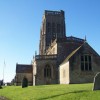
This building is of stone in the Early English style. Holy Trinity was originally built in 1505, and is therefore Tudor and around 200 years later than many other churches in the county. It is rather plain and unadorned building of which only the tower and the chancel arch survive from the 16th century. However, the entire remainder of the church was re-built in 1863, a time when many other parish churches were rebuilt.

The Dorset History Centre holds the baptism registers from 1587/8 to 1998, marriage registers from 1588 to 1926, burial registers 1588 to 2001 (there is a gap in the records between 1812-1814) and the register of banns 1754 to 1915. The Bishop’s transcripts date from 1732 and there are overseer’s accounts 1601 to 1667 and from 1722 to 1837. The Parish of Swyre covers an area of 1081 acres, and had a population of 154 in 1891. The area around the church is a conservation area and some adjoining agricultural land was allotted to the churchyard in 2002.

Of the Church’s Rectors, there are no surviving records before 1297. It was at this time that one John de Candel was the incumbent, but the most distinguished Rector of Swyre was probably the noted Dorset historian John Hutchins. Hutchins was instituted to the living in 1729, and is noted for having repaired the chancel at his own expense during the period of his ministry.

Inside the church can be seen some early 16th century brasses commemorating the Russells, a Dorset merchant family and the principal land owning family associated with Swyre. John Russell rose to be a courtier in an unusual way. In 1506 a ship bearing the daughter of the king and queen of Castille ran aground at Weymouth in a storm. As John Russell could speak Spanish, he was called upon to act as interpreter for the Princess and her husband, Archduke Phillip of Austria. He then accompanied the royal couple to the court of Henry VII at Windsor, where he came to the notice of the king. Henry made Russell a courtier, from where he rose to other positions of high standing over the next thirty years.

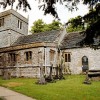
Today Holy Trinity Church stands within a broad rectangular churchyard, bordered and well enclosed by mature trees. Access from the road is via either of two gates in the stone wall at the tower (west) end of the church. The visitor will notice that the majority of headstones date from the late 18th and early 19th centuries, and in most instances their inscriptions are entirely obliterated by lichen. One very curious feature of these headstones is that there are two to be seen broken clean in two, as if deliberately struck with a sledgehammer in an act of desecration. Many of the grave-slabs too, are in a ruinous and pitted condition.

Unusually, the church has on display inside a ground plan showing the positions of the graves, which are numbered to correspond with a list of names of people buried in the ground. This document is kept on a lectern near the tower, a copy of which is also held by the Dorset History Centre in Dorchester.

A Day Out at Lyme Regis

“Lyme doesn’t pretend to be anything other than what it is: a quiet seaside resort with a small fishing and pleasure boat harbour. The hilly countryside above it is like parts of the Cotswolds. In many ways the place hasn’t changed in 1,200 years.”

The speaker grew up in Lyme Regis, which is nearly in Devon, and often does a three hours drive to get there for a week in a hotel. He reminded me that ships sailed to meet the Spanish Armada from Lyme, where a stone rampart sticks far out to sea at the Cobb.

So I had to see Lyme Regis.

Starting from the church, I walked down the hill and found myself outside the Pilot Boat Inn, where once the landlord’s dog gained fame by licking the face of an apparently drowned sailor and brought him back to life. The sailor was from the torpedoed battleship “Formidable,” which went down in the bay in 1915. It is a friendly place, but the bartender I spoke to knew nothing about the dog or the battleship, although the walls were lined with pictures of ships and even the tablemats have a nautical theme.

Outside again, among painted houses and too much traffic for comfort, I could tell where the beach was from the smell of the salt-laden air. So I strode out across the sand and shingle for the Cobb, to the west, the tiny port with a forest of masts and stout walls of Portland stone.

It is too shallow for larger shipping, but once it saw a trader loose her ropes and set sail for nearby Charmouth, anchoring in the bay to await King Charles II who was fleeing to France. The next part of the story may have originated in a local bar-room, but it is said the skipper’s wife, fearful of revenge by the Roundheads (for sympathies were with them here) locked him in his cabin so that he could not get to either anchor or wheel.

On the way to the Cobb I passed a few gay awnings, rows of electric bulbs, the odd hot-dog and ice-cream stalls, but nothing more ostentatious that that. Fifteen castles, mermaids and other marvellous creations from sand awaited the competition judges and people gingerly picked their way around them to admire.

Hereabouts are cannons pointing out to sea and a 10-foot anchor given by the former Portland Navy Base “in memory of Lyme Regis men and women who made their living from the sea.”

People were fishing off the sea wall for “flatties” and two boys from Seaton and Axminster emerged from the falling tide in wetsuits, intending to do some snorkelling on a full tide. And all the time a sea mist hung over the town above the beach – an indication, I was told, that Lyme was in for a hot period. “It always happens,” said the ice-cream lady. And so it was to prove.

Beyond the Cobb is a beach where the Duke of Monmouth came ashore with his men in 1685 to lead a revolt against King James on religious grounds, only to be defeated at the Battle of Sedgmoor in Somerset. A dozen of those men from Lyme who joined him were hanged where the inhabitants of the town could see their bodies. Very ugly. Worth comparing with violent times today.

The Old Watch House looks out over Lyme Bay – and now the mist lifted, revealing dramatically high cliffs along the coast to the east. Upper and lower promenades lead back to the town centre three quarters of a mile away. Once there, a little way back up the hill is the parish church of St.Michael the Archangel, with its centuries-old-Flemish-woven tapestry and its three-foot model of a lifeboat with sails and oars, circa 1925.

Only 20 yards beyond the east wall are the Church Cliffs, where the sea has eroded the land over the centuries. The cliffs have to be stabilised from time to time: the church itself goes back to Saxon times, when the building must have been far from the sea. The view on a fine day stretches from the Cobb to Golden Cap Cliff, and the Isle of Portland, a lady in the churchyard told me.

In the museum at the bottom of the hill I learned of the town’s decline as a port in the 19th and 20th centuries, after 600 years, as ships became larger. Yet even today it has a boat building yard. Passing through the town names like Marine Parade are seen, continuing the maritime theme.

Back on the beach I went for my second ice-cream, while people changed in tiny plastic beach tents to go into the sea, most only paddling. I saw no more than 30 people paddling and swimming at once along the whole beach. Then the sun came out again.

As it happened, it was Lifeboat Week, and parachute, helicopter, lifeboat and coastguard displays had been set out, with some spectacular flying by the RAF Red Arrows and even a tug o’war between coastguards and life boatmen. A smugglers tour, fireworks at sea, illuminated boats and a Yetties concert were designed to keep up the interest. The stage sound system belted out the decibels, and Lyme let its hair down.

“The Pearl of Dorset,” they call Lyme Regis. It hasn’t been commercialised as larger resorts have, yet it is not under-developed as a coast attraction like the neighbouring seaside place of Bridport’s West Bay is. Lyme was on a major Roman road, was a besieged Roundhead fortress, and 50 years ago was described as “a quaint old-world place nestling at the foot of the hills.” I don’t think my friend from the Cotswolds would disagree with a word of that.

Here we are on the Jurassic Coast, with outstanding geology attracting people with hammers: world famous fossil-hunting country and the South West Coast Path. Here is a fully restored working water-mill, and Gun Cliff, where artillery once sent away a raiding ship with a single shot.

Besieged in 1644, it is peaceful today with galleries, cafes, craft and antiques shops. Yes, the “Pearl of Dorset,” everyone seems to agree.